
Castles in Wales
Castles in Wales can be purchased for around £600,000. The most famous Wales castles are large heritage sites like Caernarfon or Conwy.

Castles in Wales can be defined as an intersection that comprises the oldest, largest, and best-preserved castles in Europe. Without a closer evaluation, this statement doesn’t check out. After all, Wales doesn’t claim the record for the biggest castle in the world (that’s actually Malbork in Poland), neither for the oldest (some argue that one’s in France.) But due to its tradition of clashes between Normans, Welsh Princes, and the Crown, no other country in Europe has, arguably, so many castles that are so massive, so old, and so well-preserved all at the same time.
Wales has over 600 known castles, ruins, and fortified sites scattered across its mountains, coastline, valleys, and ancient market towns. Even if it’s half the size of the Netherlands, Wales has one of Europe’s richest and most dramatic castle landscapes which include Iron Age hillforts, Norman strongholds, and mighty medieval fortresses built by English kings.
A look at current listings in Wales reveals that the castle market offers good value, especially for mid-range buyers. Wales offers buyers the opportunity to acquire castellated mansions for around £600,000, whereas a similar budget in England would likely yield a castle penthouse in a renovated building.
This guide uncovers all the questions you might have about Welsh castles, including, how many castles Wales has, why so many were built, the most famous and historical sites, and where to look into Welsh castle heritage today.
How Many Castles Are in Wales?
There were over 600 castles built in Wales throughout history. Now, there are only around 100 castles in Wales that are still standing, either as ruins or as restored buildings. Experts estimate that only 50-60 Welsh castles are restored or well-preserved, but those well-preserved castles are still extraordinary visits. They’re a very high-quality sample.
Wales is often called “the land of castles,” and for good reason. The concentration of castles in Wales surpasses any other region in Europe. There is one castle for every 13 square miles, that’s even more than Germany or France (which has the most castles in the world).
Why Wales Has So Many Castles
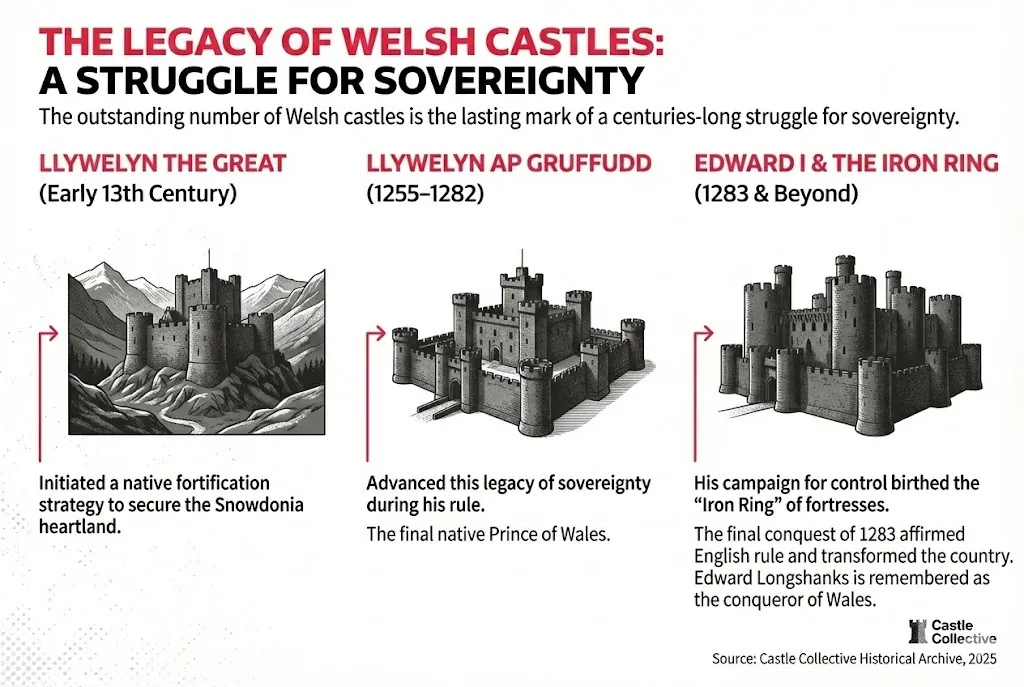
Wales has many castles because it was a battleground for centuries. The Normans, the Welsh Princes, and the English Crown have all fought to dominate this western region of the British Isles. All three groups sought to tame the land by spreading fortresses across this mountainous region as they battled military control.
Normans and Marcher Lords are credited for building the majority of the castles in Wales for defense against each other and the invading armies from the East. Llywelyn the Great was a Welsh Prince who helped build and rebuild some of the most famous Welsh and Norman castles.
Edward I of England (Edward Longshanks) has been credited for building some of the largest and most advanced castles in Wales. Yes, this is the same Edward who fought against the Scottish resistance, led by William Wallace and Robert the Bruce. Some of the most iconic castles in Wales that tourists visit year-round were commissioned by Edward, including, Caernarfon castle, Conwy Castle, and Harlech castle. The distinction here is that these are English castles in Wales and not of Welsh-origin.
History of Castles in Wales
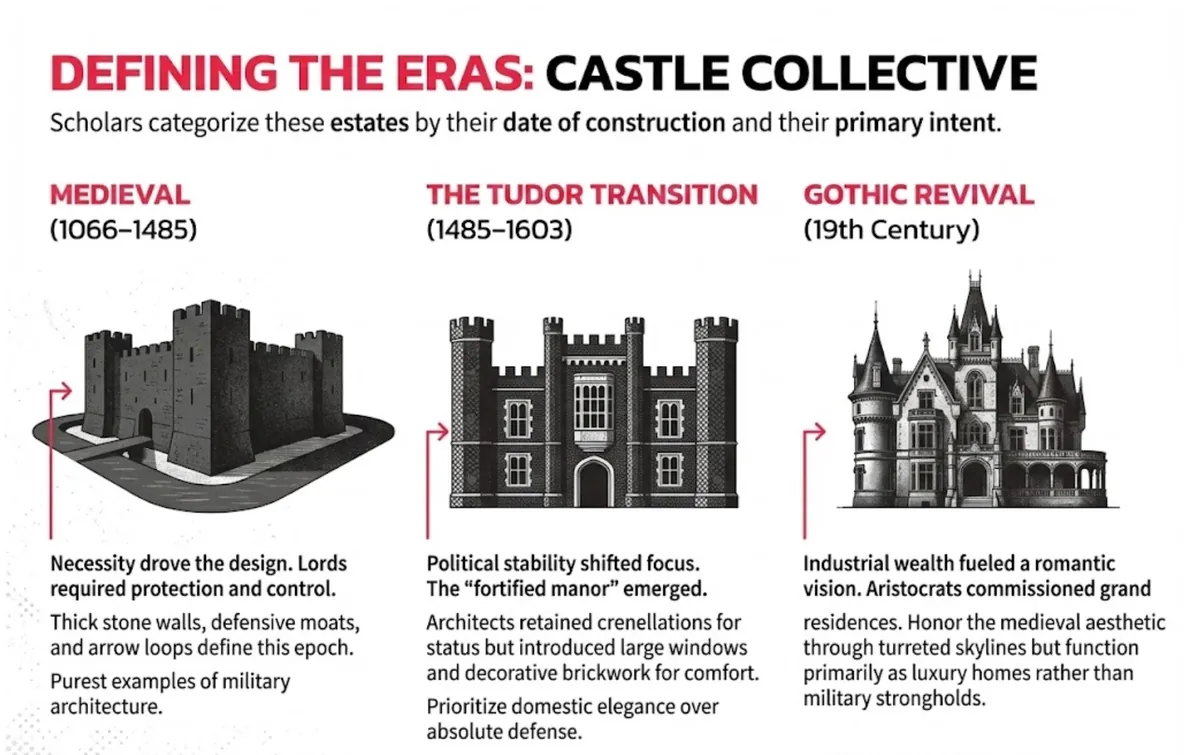
Scholars categorize these estates by their date of construction and their primary intent.
Medieval (1066–1485)
It starts right after the Battle of Hastings. Necessity drove the design of these fortresses. Lords required protection and control above all else. Thick stone walls, defensive moats, and arrow loops define this heyday. These structures remain the purest examples of military architecture in the region.
The Tudor Transition (1485–1603)
Political stability allowed for a shift in focus. The "fortified manor" emerged during this time. Architects retained crenellations for status but introduced large windows and decorative brickwork for comfort. These estates prioritize domestic elegance over absolute defence.
Gothic Revival (19th Century)
Industrial wealth fueled a romantic vision of the past. Aristocrats commissioned these castles in Wales as grand residences. They honor the medieval aesthetic through turreted skylines but function primarily as luxury homes rather than military strongholds.
Oldest Castles in Wales
Some early fortifications in Wales date back nearly 1,000 years. All of the castles mentioned here, even if they’re some of the oldest in Great Britain, are open to the public today. Notable ancient sites include:
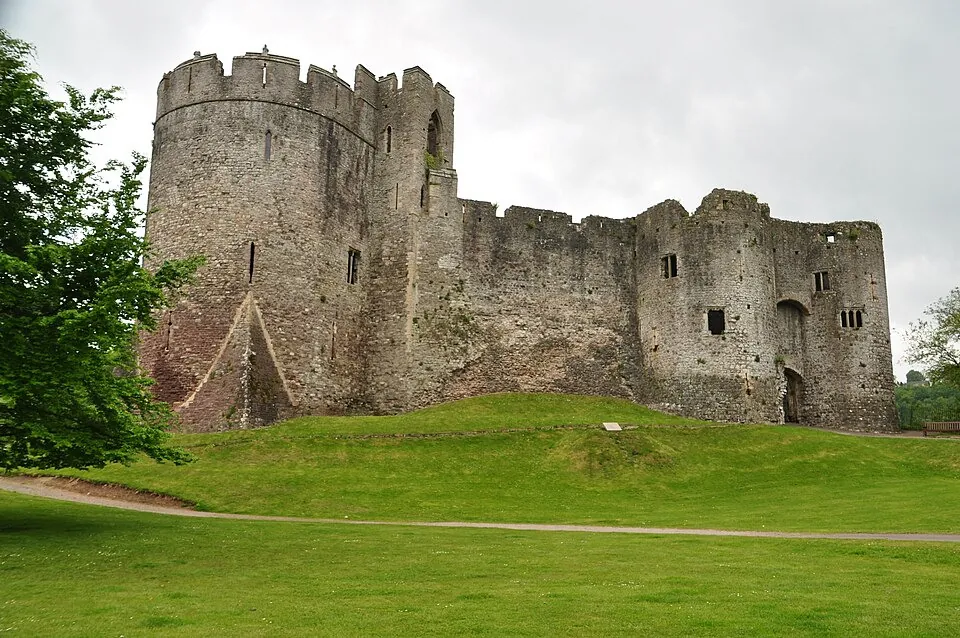
1. Chepstow Castle (Monmouthshire)
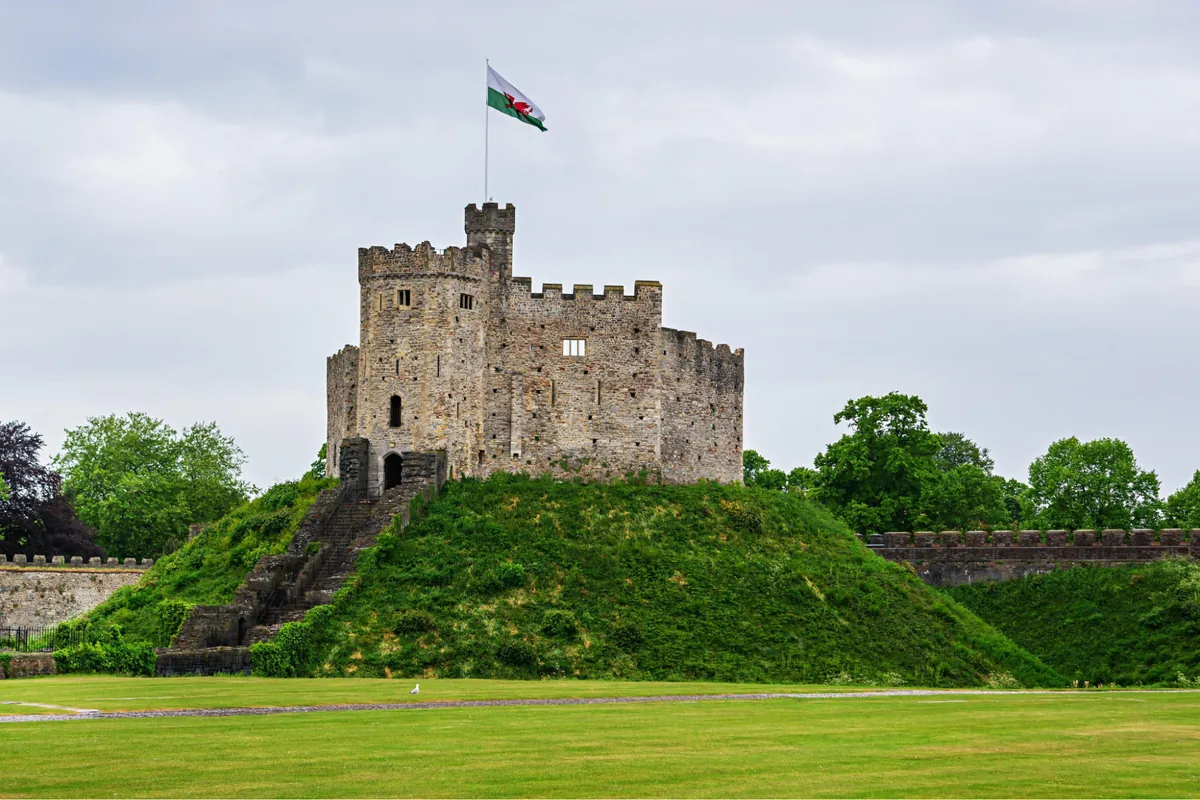
2. Cardiff Castle (Glamorgan)
3. Pembroke Castle (Pembrokeshire)
The enormous size of Pembroke Castle makes it stand out in the water. It holds distinction as the birthplace of Henry VII, the founder of the Tudor dynasty. In the ground below the stone halls is the Wogan Cavern, a natural cave that shows people lived there before the castle was built.
4. Dolwyddelan Castle (Conwy)
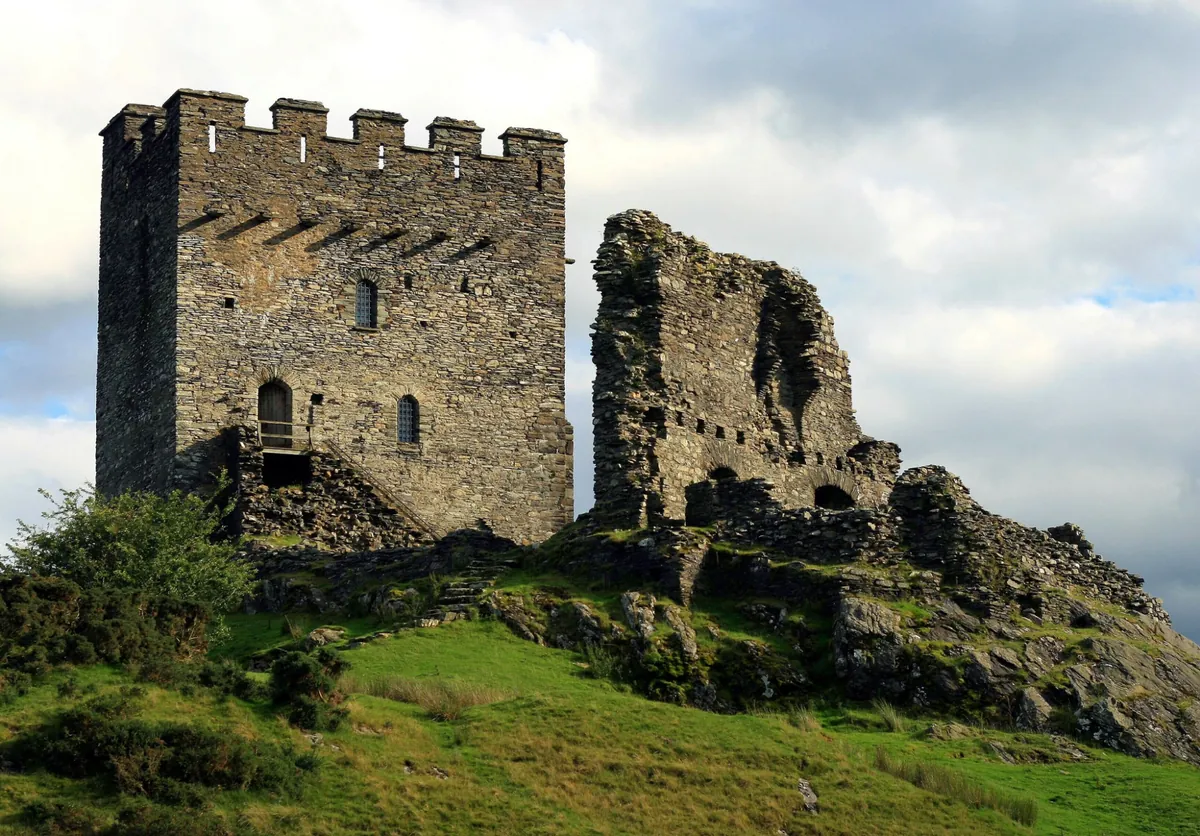
5. Raglan Castle (Monmouthshire)
Raglan Castle recounts the change from a military bunker to a luxurious home. Sir William ap Thomas initiated construction in the 15th century, prioritizing grandeur and comfort. This late medieval masterwork's distinctive geometric elegance is on display in the hexagon-shaped Yellow Tower of Gwent.
Types of Castles in Wales
The types of castles in Wales are the English Iron Ring, the Welsh strongholds, and the defensive cities. These types of castles show how opposing groups vied and fought to control this territory. That many of these castles are still standing shows that their defensive design was realised.
The Iron Ring
King Edward I commissioned a chain of fortresses to encircle the north. These structures, known as the Iron Ring (also called the Ring of Iron), are a permanent military presence. Many generations later, they still hint at the vast resources of the English crown during the 13th century. The scale of these builds remains remarkable today.
Native Strongholds
The Princes of Wales constructed their own defenses to protect their heartland. Castles such as Castell y Bere and Dolwyddelan utilize the rugged, mountainous terrain to their advantage. These sites often sit atop craggy peaks. It makes them difficult to approach… and also oversees the valleys below.
Defensive Novelty
This period marked a major shift in design. Architects moved beyond simple keeps to complex, concentric plans. Walls within walls created layers of defense. This adaptation turned castles into self-contained cities capable of holding off the onset of attackers.
Medieval Castles in Wales
The Middle Ages left their mark on the Welsh skyline with military architecture that was unmatched in its complexity. These strongholds were designed to withstand extended sieges by using creative concentric layouts and enormous curtain walls, which were refined at Beaumaris and Caerphilly. As defensive tactics developed, the imposing polygonal towers at Caernarfon and the enormous twin-towered gatehouses defending Harlech were added. Many builders took advantage of the land's natural features to make their forts safer. For example, they built Kidwelly on steep riverbanks or built large water defenses around them.
The location of these stone sentinels is determined by geography. The most internationally recognized sites are in North Wales. The UNESCO-listed Iron Ring, which includes Conwy and Caernarfon, is one example. Early on, the Marcher Lords took control of Glamorgan and Monmouthshire in the south. They left behind a legacy of Norman power at Chepstow and Cardiff. The rough coast of Pembrokeshire in the west is home to impressive water-based fortresses like Pembroke and Carew, which protected trade routes and put down local uprisings.
The Most Famous Castles in Wales
Certain estates command global recognition for their preservation and scale.
1. Caernarfon (Gwynedd, Wales)
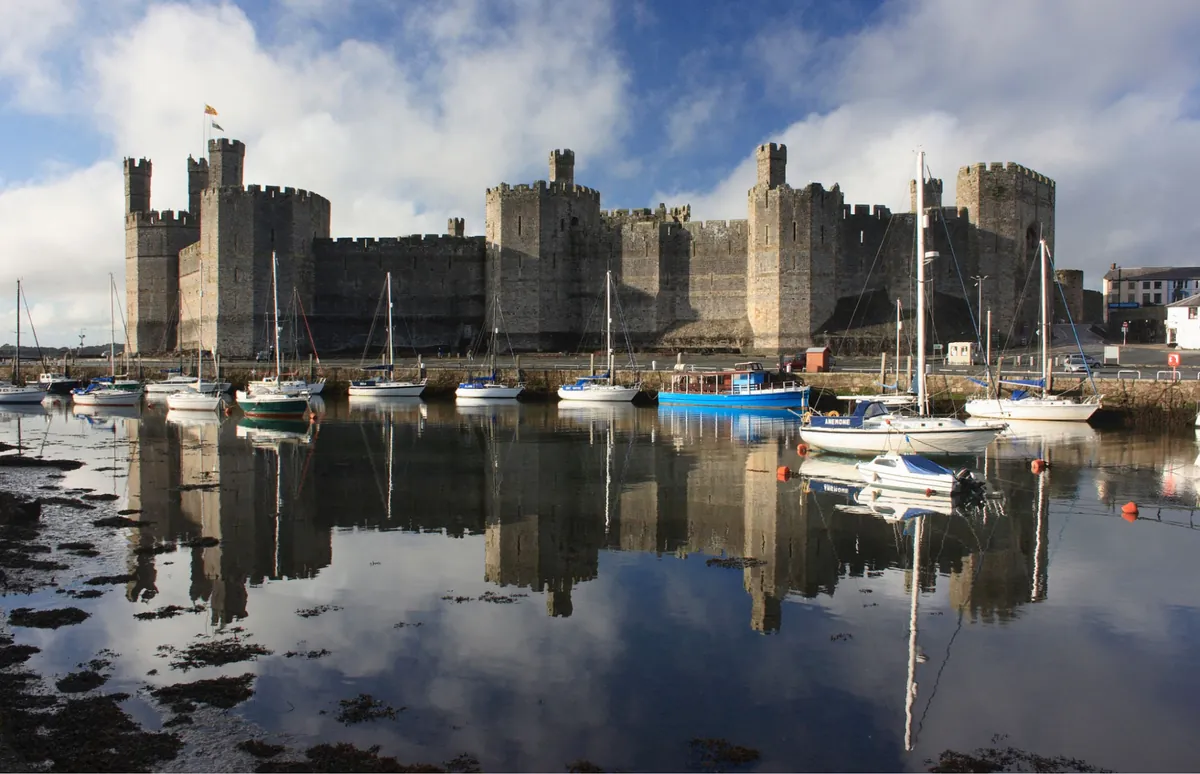
Caernarfon castle is a medium-large castle by European standards, and one considered to be the strongest in Wales with exceptionally thick walls, massive gatehouses, and a commanding position over the Menai Strait. Caernarfon was designed as a political statement: its polygonal towers and banded stonework deliberately echo the walls of Constantinople and Roman imperial architecture to symbolize English dominance.
When estimating the property value of a heritage property like Caernarfon, there are complications, chiefly, it has never been sold and therefore no data to suggest a retail price. What we do know is how much it cost to build the castle. Edward I spent £25,000 building Caernarfon which, accounting for inflation, is roughly £12.5B in 2025. That’s about half the net worth of successful entrepreneur Peter Thiel.
Although it cost King Edward $12 Billion to construct, that doesn’t necessarily equal its retail value today. In a rough estimate of the cost of rebuilding the castle, it’s tourism value, land value, UNESCO multiplier, and insurance value, we arrive at a lower estimated value of £500 million – £1+ billion.
2. Conwy Castle
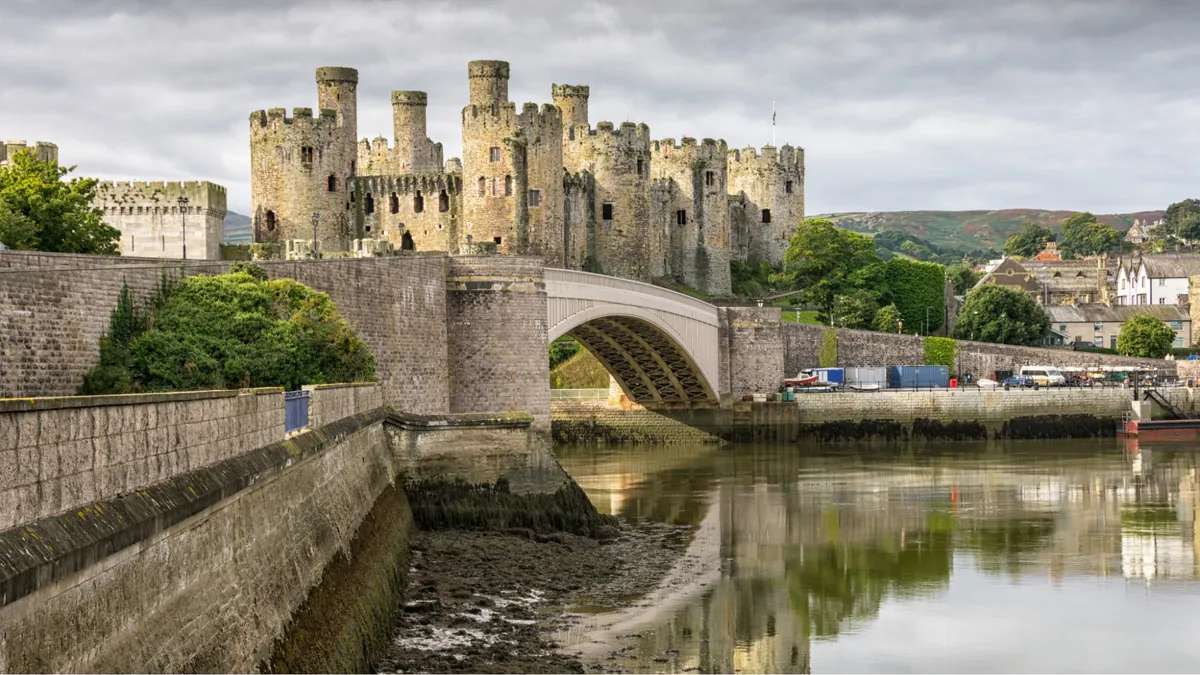
Its high curtain walls and eight massive towers create a silhouette of unbreachable strength that dominates the estuary.
3. Beaumaris (Anglesey)
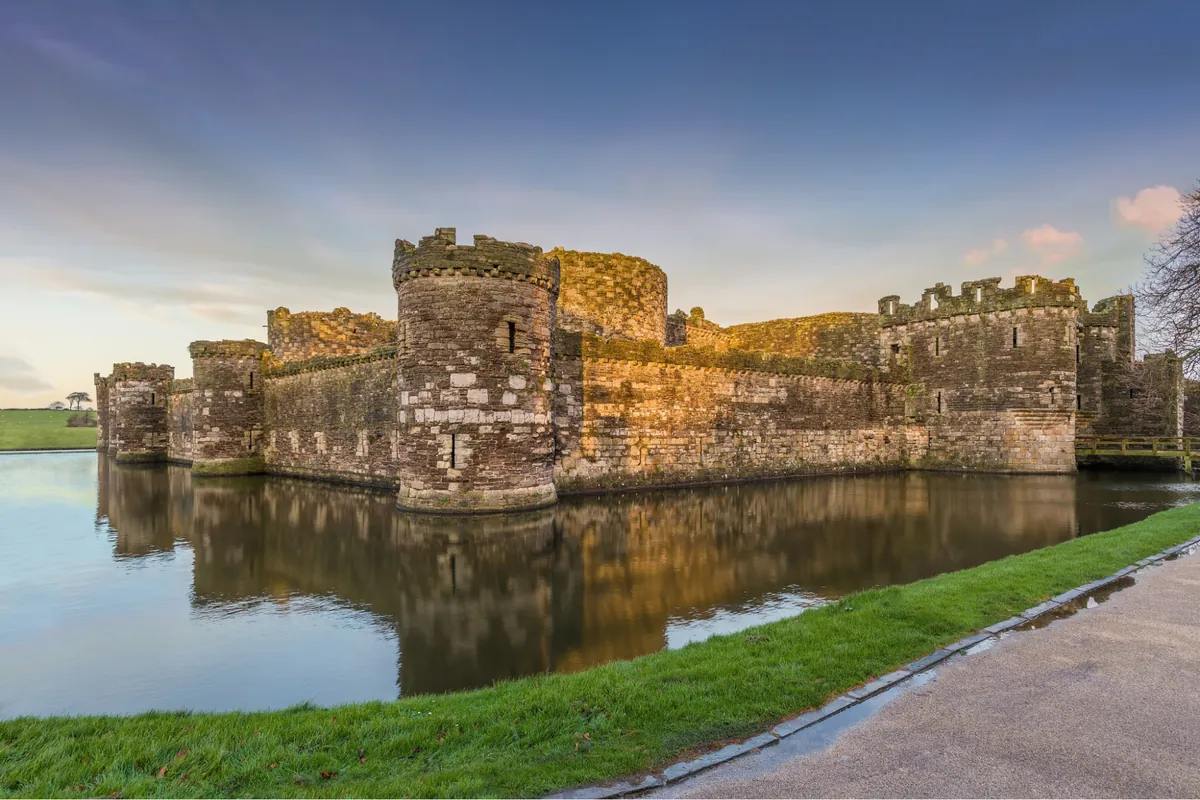
The building still has a moat filled with water around it, which adds to its serene, nearly floating appearance. It is an important part of the "Iron Ring” and it brings numerous heritage tourists to Anglesey.
4. Powis (Powys)
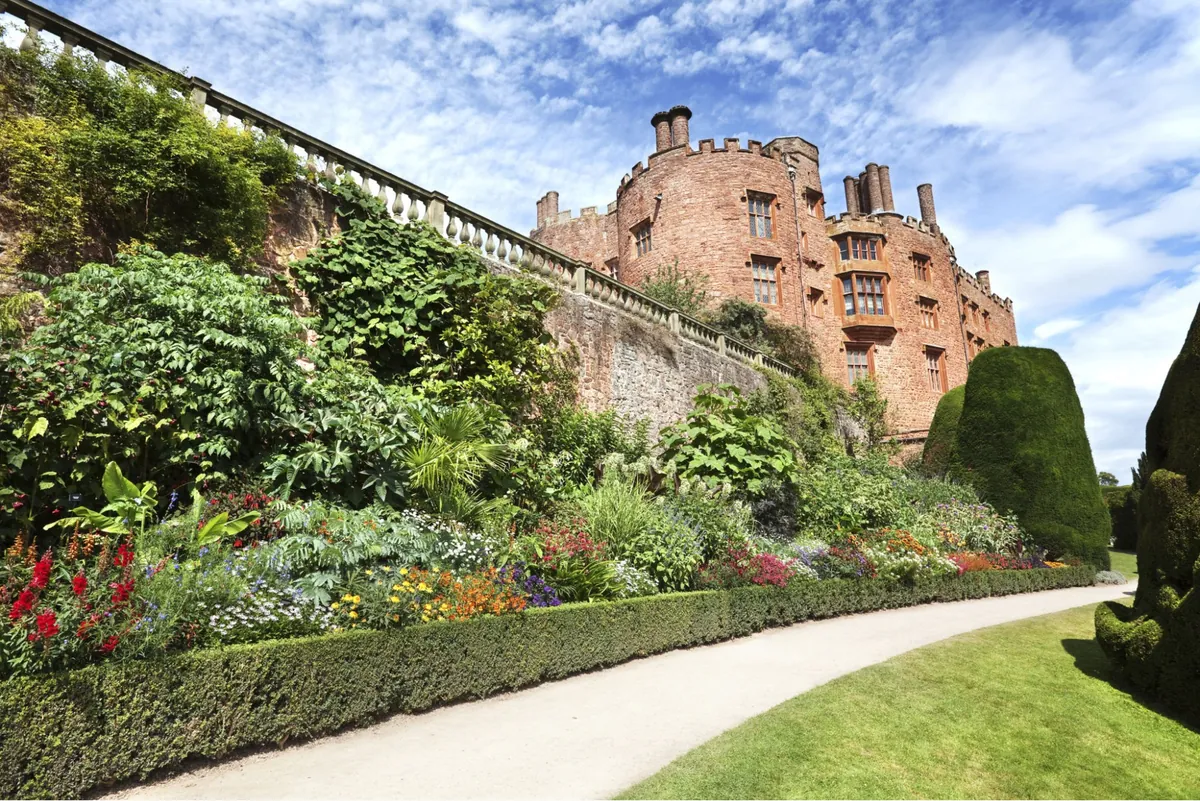
The Herbert family acquired the property in 1587 and began a centuries-long transformation. By the 1660s, the structure had turned from a military stronghold into a Baroque country house. The estate holds the Clive Museum, which houses one of the UK's most significant collections of South Asian artifacts, amassed by the Clive family in India.
5. Harlech (Gwynedd)
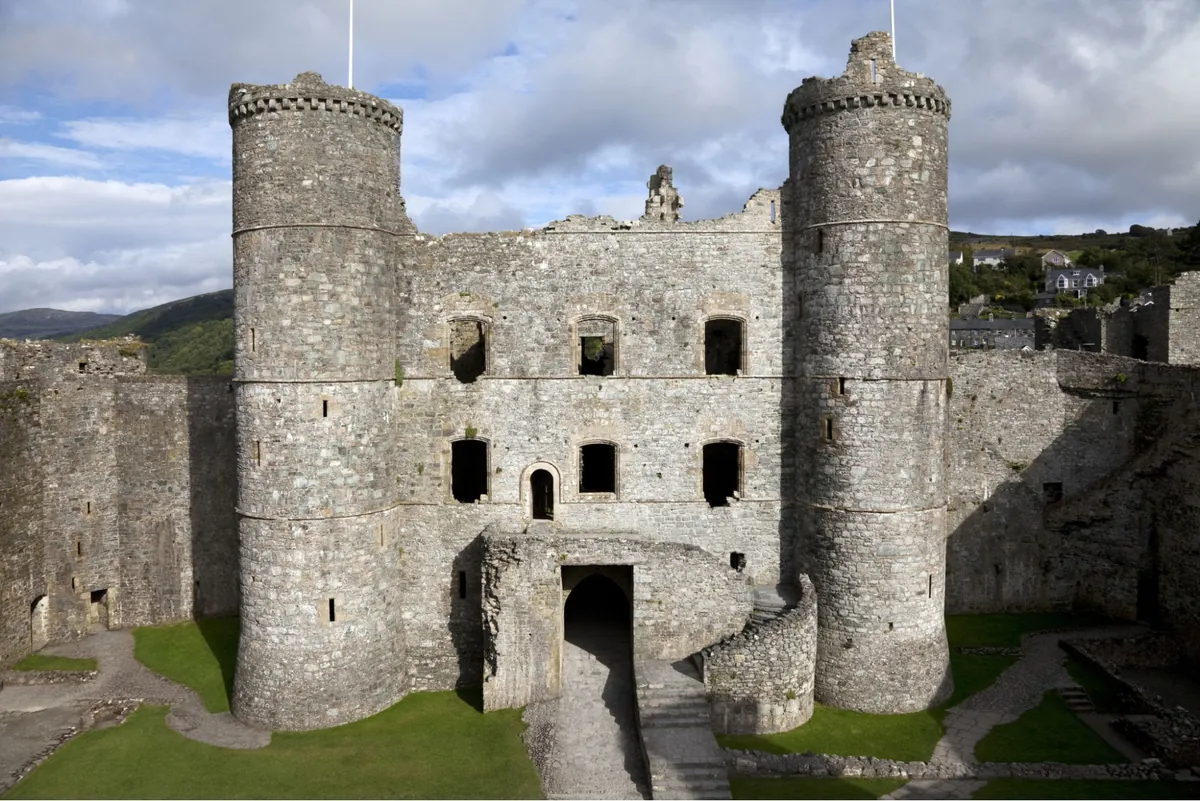
The connection between the natural cliff and the man-made stone forms a striking profile against the skyline. It remains a pivotal site for understanding the military history of Edward I’s campaign.
Small and Lesser-Known Castles in Wales
Wales has many smaller fortifications that aren't as busy as the country's most famous landmarks. Manorbier Castle overlooks the Pembrokeshire coast and blends domestic elegance with military strength. The Carreg Cennen castle sits on top of a limestone cliff in Carmarthenshire, and Kidwelly is a perfect example of a concentric defence. Denbigh Castle retains its atmospheric outer walls and town defences. These estates show the kind of high-quality heritage property that sometimes comes up for sale on the private market and which are waiting for a new owner to take care of it and keep it safe.
Castles for Sale in Wales
There are several castles for sale in Wales if one learns where to start looking for them. In recent years, private investors have secured significant heritage assets across the principality. Gyrn Castle, a Grade II-listed estate in Flintshire, recently entered the market for the first time in 150 years with a guide price of £2 million. Similarly, the "Welsh Versailles," Kinmel Hall, was auctioned for £950,000, though its low entry price reflects the need for extensive, multi-million-pound renovations to save it from decay.
Becoming steward of a Welsh castle confers a rare privilege. The market presents occasional opportunities for purchase. These properties usually have large grounds and elegant interiors.
When buying a castle, buyers have to deal with certain financial situations. Wales applies a Land Transaction Tax (LTT) instead of Stamp Duty. The top rate for residential properties over £1.5 million is 12%, but purchasing a second home or investment property triggers a higher rate of up to 17%.
Even so, owning a "listed" building stipulates access to Cadw’s Historic Buildings Grants, which can fund up to 50% of eligible repair works for assets at risk. Cadw also stipulates strict renovation rules and required materials for renovation. That’s why it’s always advisable to speak with a specialist who can walk you through what the restoration process looks like before acquiring a property.
Ownership of a Welsh castle confers a rare privilege, whether for private residence or commercial adaptation. The market presents occasional opportunities for stewardship. And heritage estates in Wales often trade at values that offer significant square footage compared to English counterparts. Smaller castellated mansions or "fixer-upper" projects can list between £500,000 and £800,000. Fully restored castles with extensive grounds and income potential typically command prices from £1.5 million to £3 million.
Castle Tourism in Wales
Wales's tourism industry is a major source of income for the country, and heritage sites are essential to this. In 2023, the sector generated nearly £5 billion in expenditure, and Cadw (the Welsh historic environment service) reported over 1.1 million visits to its staffed monuments. Castles function as the primary anchors for this traffic. For instance, Conwy Castle alone welcomed 227,000 visitors in a single year. Tourist numbers are back to where they were before the pandemic, and Cadw's commercial income hit a record £9.6 million. This shows that heritage estates can be developed as durable, money-making assets instead of mere static monuments.
The Most Elegant Castle Routes
For those seeking the ultimate heritage drive, the North Wales World Heritage Castles Trail links the UNESCO-listed "Iron Ring" fortresses of Beaumaris, Caernarfon, Conwy, and Harlech along a 75-mile route. Visitors preferring a coastal backdrop should follow the Pembrokeshire Coast Castle Route, an itinerary that connects cliffside strongholds like Manorbier and Pembroke with the wild beauty of the National Park.
In the southeast, the Monmouthshire Castle Loop, known as the Three Castles Walk, connects the Norman tri-lateral defense of Skenfrith, Grosmont, and White Castle along a 19-mile trail. Alternatively, the Marcher Lord Castles Trail traces the historic England–Wales border and involves key defensive sites like Chepstow and Raglan that once controlled this volatile frontier.
Best Time to Visit Castles in Wales
May through September offers the ideal window for travel, as the mild weather allows for full exploration of roofless ruins and exposed coastal paths. Visitors arriving in October will see autumn foliage frame the stone walls of sites like Castell Coch in dramatic red and gold. For a winter atmosphere, December transforms the grounds of Cardiff Castle and Cardigan Castle into festive venues hosting atmospheric Christmas markets and winter fairs.
Castle Events in Wales
Wales gives heritage lovers a lot of different ways to connect with its history. Witness the "Medieval Mayhem" at various sites or specific reenactment weekends by checking Cadw's event schedule for upcoming battles and displays. Experience the sport of kings at Falconry Experience Wales near Powys, where guests handle eagles and hawks in a historic setting.
For luxury immersion, Roch Castle in Pembrokeshire offers panoramic coastal views from a 12th-century fortress. Alternatively, guests can stay at Château Rhianfa on Anglesey for a French-style fairytale experience. Those interested in a deep dive into border history can explore the curated "Marcher Castles Way," with guides and route maps available via Cycling UK. Finally, photographers can take pictures of the dramatic meeting of stone and sea at Harlech or Criccieth, where the ruins are set against the Irish Sea in the shape of a silhouette.
Learn About More Castles in Europe
If you admire the massive stone rings and cliffside forts of Wales, you will find similar grit in England or Scotland. We scout heritage homes across the continent.
Interested in a castle in Wales? Join our list to hear when a site hits the market.