
Castles Near Munich
The best castles near Munich are Neuschwanstein Castle, Nymphenburg Palace, Schleissheim Palace, and Blutenburg Castle.
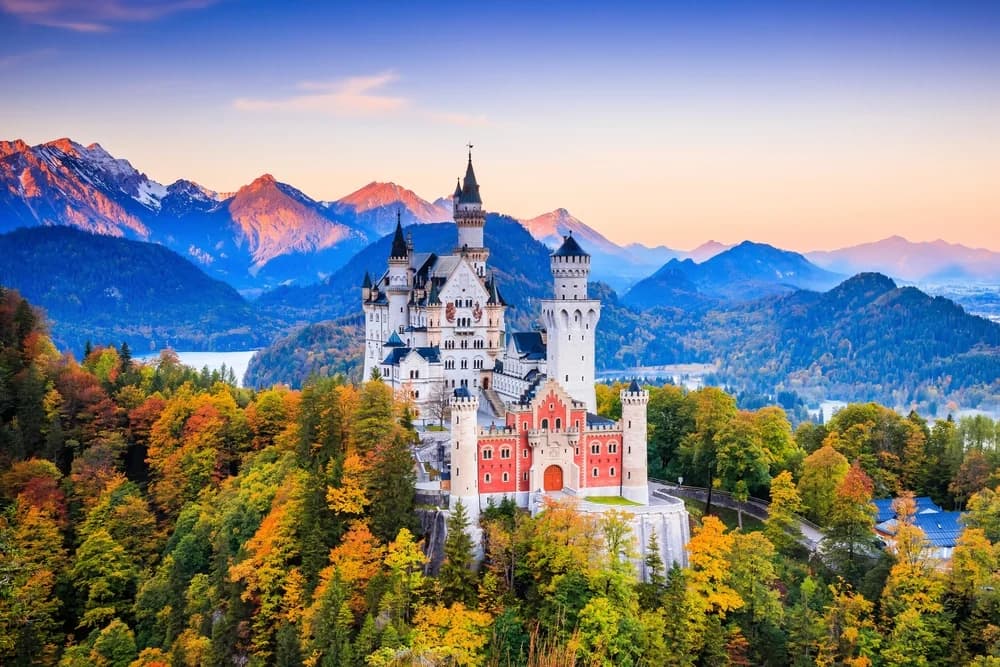
Bavaria is castle country, and Munich sits at its heart. King Ludwig II built some of the most extravagant palaces in European history, and three of them are reachable in a single day trip. The fairy-tale towers of Neuschwanstein rise in the Alps. The gilded halls of Linderhof glitter nearby. These palaces transport visitors into the romantic imagination of the “Mad King.” Add medieval fortresses, Alpine scenery, and Baroque masterpieces, and Munich becomes one of Europe’s richest destinations for castle visits.
Here are the best castles and palaces to visit from Munich, grouped by travel time. Most of these sites are easy day trips from Munich.
Castles Within 1 Hour
These palaces are close to the city center and easy to reach by public transport.
1. Nymphenburg Palace
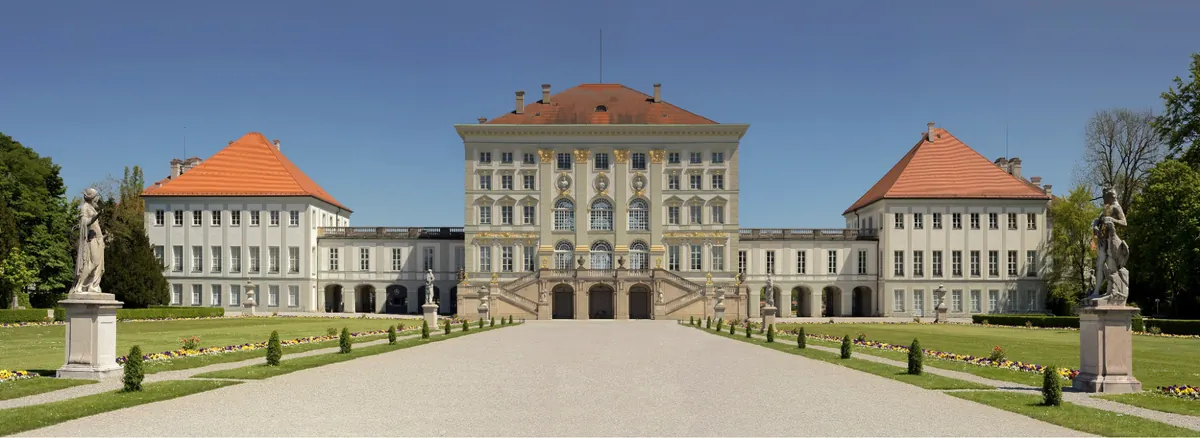
Nymphenburg Palace is a vast baroque palace where you can stroll through the formal gardens and visit four smaller park palaces scattered across the grounds. Visitors can also see the famous Gallery of Beauties, portraits of the most beautiful women of the era commissioned by King Ludwig I. The Marstallmuseum inside displays ornate royal coaches and sleighs.
A combined ticket costs €14 and covers the main palace, museums, and park palaces. Trams and buses run directly from the city centre.
2. Schleissheim Palace
The Schleissheim complex has three palaces to visit. Visitors can tour the grand baroque New Palace, see old master paintings in the gallery, and walk through the formal French-style gardens. It is one of the few large palace complexes near Munich that does not get crowded.
Adult tickets cost €7, or €11 for all three palaces. It is an easy drive from Munich.
3. Blutenburg Castle
Blutenburg Castle is a medieval castle with a beautiful Late Gothic chapel that still has its original 1488 stained-glass windows. The chapel is open to visitors, and the castle grounds on the banks of the River Würm are free to walk around.
The castle is reachable by tram and bus from Munich Central Station in about half an hour.
Castles in the Bavarian Alps
The castles in the Alps are the most famous in Bavaria. These are the fairytale castles that King Ludwig II built.
1. Neuschwanstein Castle
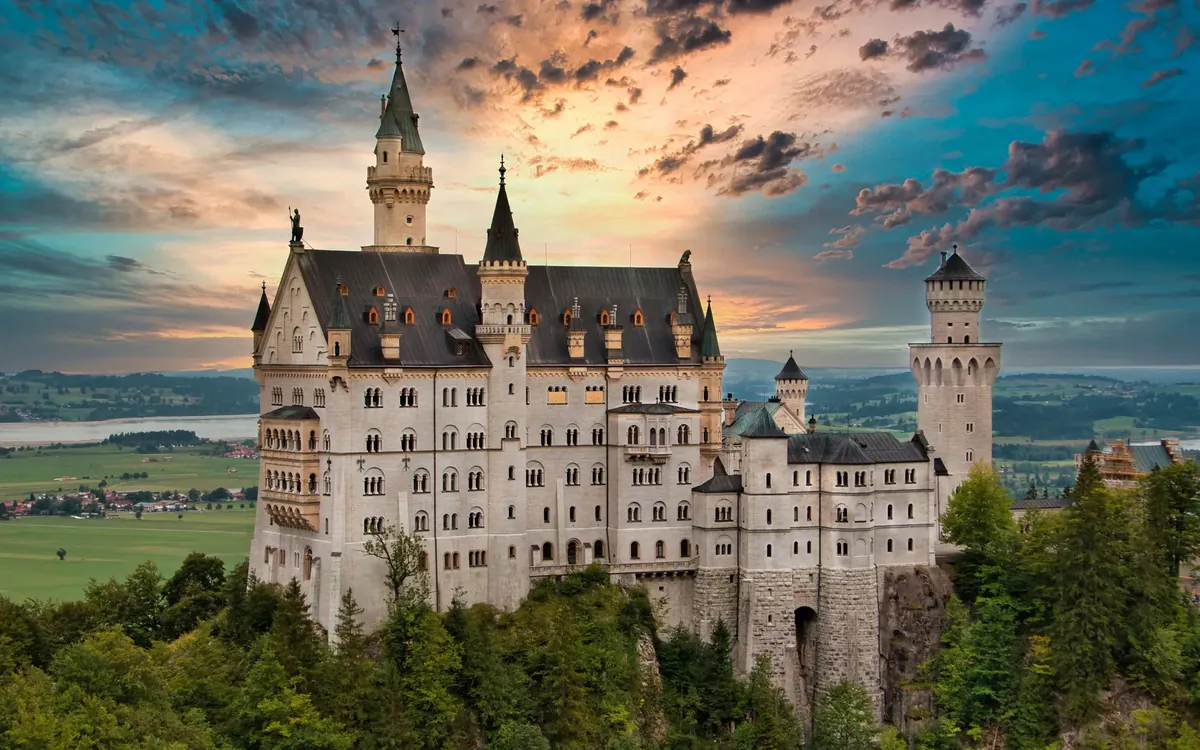
Neuschwanstein is the most famous castle in Germany. This is the castle that inspired Disney’s Sleeping Beauty. Neuschwanstein rises from a forested cliff in the Bavarian Alps. Its white limestone towers and turrets look like something from a medieval legend. King Ludwig II built this dream palace between 1869 and 1886, and he filled it with scenes from Wagner operas and Germanic mythology. The castle became a UNESCO World Heritage Site in 2025.
Guided tours last 30 minutes and take visitors through nearly 200 stairs. The Throne Room, Singers’ Hall, and Ludwig’s private chambers are the highlights. The Throne Room alone features Byzantine-inspired gold mosaics and a massive chandelier that weighs over a ton. After the tour, the Marienbrucke bridge offers the famous postcard view of the castle against the Alps. A hike through the Pollat Gorge reveals dramatic waterfalls and mountain scenery.
Book tickets well in advance. This is especially true from May to October, when up to 10,000 visitors arrive daily. Tickets often sell out before lunch. Admission costs €20 for adults. Children under 18 enter free. The castle is about two hours from Munich by train and bus. Nearby Hohenschwangau Castle, where Ludwig spent his childhood, makes a good addition. Linderhof Palace is another option for a full day out.
Adult admission is €21. Trains from Munich to Füssen take about two hours, then a bus takes you to the castle.
2. Linderhof Palace
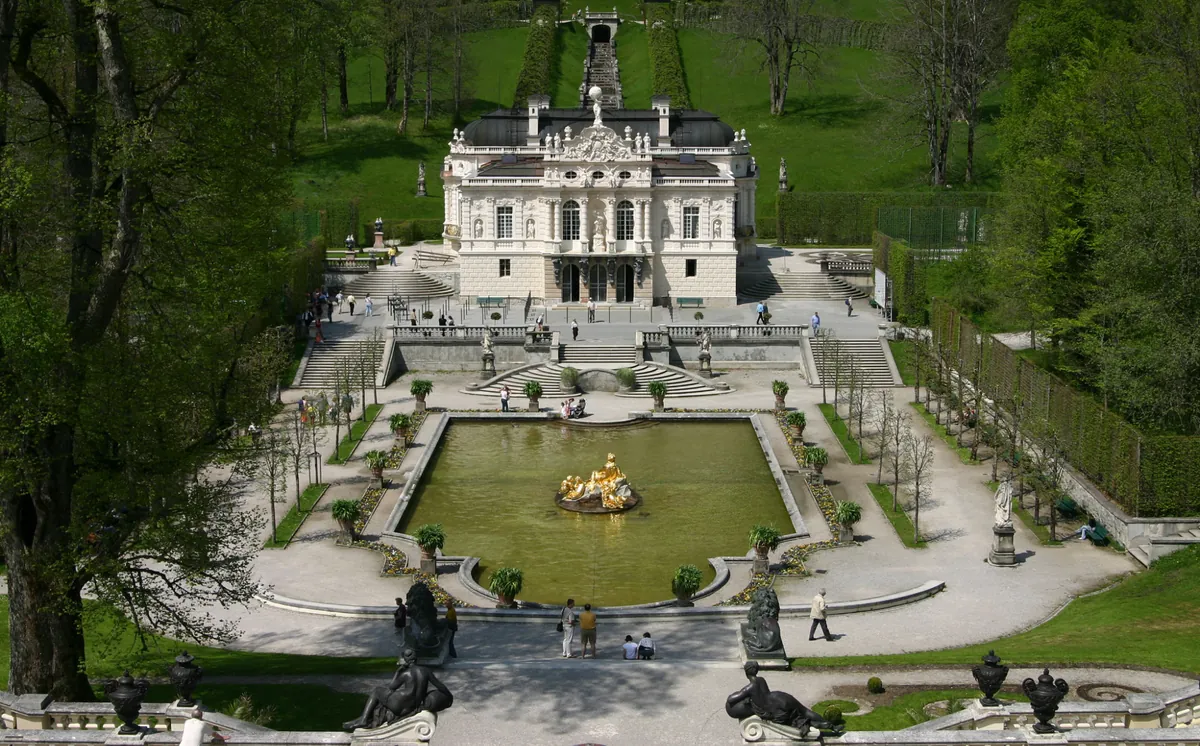
Linderhof was King Ludwig II’s favourite palace and the only one he finished. Visitors can tour the ornate interior including the famous Hall of Mirrors, then visit the Venus Grotto, an artificial cave with a lake and shell-shaped boat where the king watched opera performances.
A combined ticket costs €18 and includes the palace, Venus Grotto, and park buildings. Linderhof is about 90 minutes by car from Munich.
3. Hohenschwangau Castle
Hohenschwangau Castle sits directly across from Neuschwanstein, making it easy to visit both in one trip. Tours take visitors through the rooms where young Ludwig grew up and see the wall paintings that first sparked his obsession with medieval legends.
Adult admission is €21. A combination ticket covers both castles.
Famous Castles Slightly Farther Away
These castles are a bit farther from Munich but worth the trip.
1. Herrenchiemsee New Palace
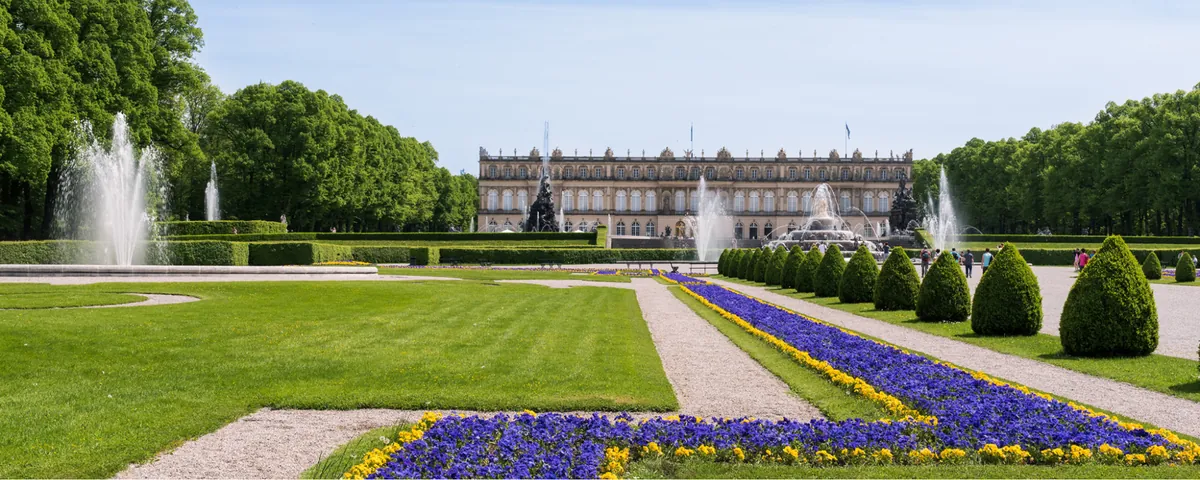
Herrenchiemsee New Palace is Ludwig II’s tribute to Versailles, built on an island in Lake Chiemsee. A boat crosses the lake to the palace, where tours show off the opulent state rooms, including a Hall of Mirrors even longer than the one at Versailles. The palace was never finished, so the unfinished wings with bare brick walls are also open to view.
Adult admission is €11 (boat tickets sold separately). Trains run from Munich to Prien am Chiemsee in about an hour, then you take a boat to the island.
2. Burghausen Castle
Burghausen Castle is one of the longest castle complexes in the world, stretching over a kilometer along a ridge above the Salzach River. Visitors can walk through the six courtyards and climb the towers for views over the river and into Austria.
Adult tickets cost €10. The castle is about 90 minutes from Munich by train.
3. Nuremberg Castle
Nuremberg Castle was once a residence of the Holy Roman Emperors. The Sinwell Tower offers panoramic city views, the 50-meter Deep Well is open to peer down, and the double Imperial Chapel is worth a visit.
Adult admission is €7. Trains from Munich take about an hour.
More Castles in Europe
Bavaria has an incredible range of castles, from medieval fortresses to fairytale palaces. If you fall in love with this part of the world, you might even consider owning your own piece of history.
Interested in owning a castle in Germany? Join our mailing list, and you’ll receive updates when an interesting opportunity enters the market.