
Castles in Ireland
Castles in Ireland can be purchased from around €950,000. The most elegant include Dublin Castle, Blarney Castle, and Kilkenny Castle.
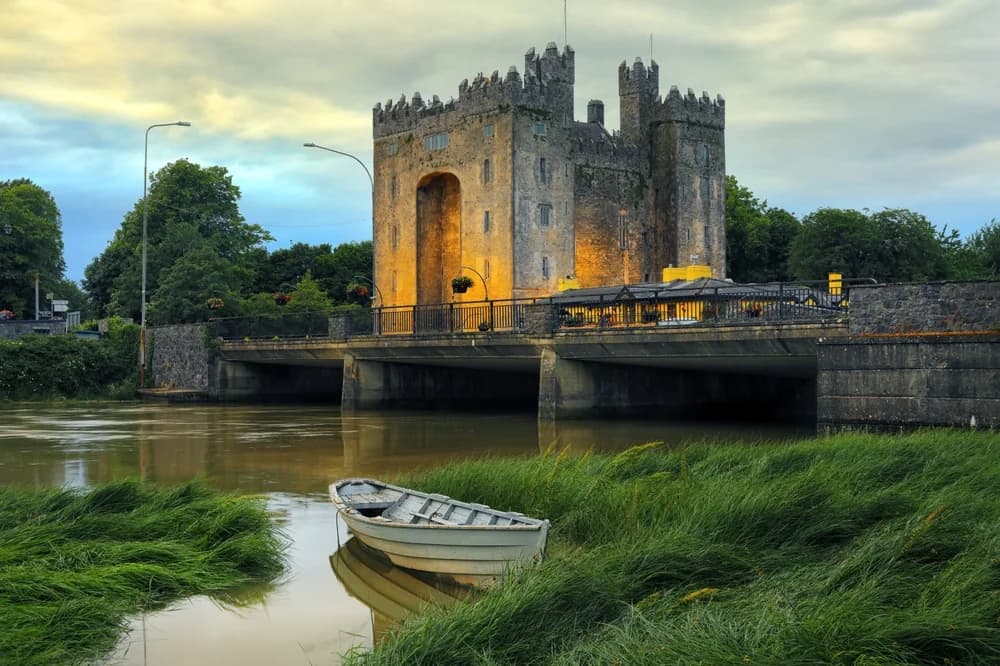
Ireland’s countryside echoes centuries of defensive construction, with thousands of stone fortifications built between the 12th and 19th centuries. These structures encompass Norman strongholds, Gaelic tower houses, and Victorian-era restorations. The island country has one of the highest densities of medieval fortifications in Europe, with specific regions such as County Limerick containing over 170 identified tower house structures.
The country maintains a distinct historical profile because it has had no native royalty for the last millennium. As a result, these buildings functioned as fortified residences for clan chieftains or administrative hubs for Anglo-Norman settlers. Today, these estates serve as historical monuments, luxury hotels, and private residences, a pattern that contrasts with the royal palace traditions found in France or the court-centered fortifications of Germany.
This guide answers the key questions about castles in Ireland and Irish heritage. It explains how many survive, why they dominate the landscape, which sites attract international attention, and how collectors can secure a historic castle today.
How Many Castles Are in Ireland?
Ireland has over 3,000 castles. The country contains one of the largest concentrations of castles and fortified sites in Europe. Broad surveys estimate that up to 30,000 castles and castle ruins exist across the island, a figure that includes intact fortresses, castle hotels, tower houses, and thousands of archaeological sites reduced to foundations. But more conservative heritage registers place the number closer to 3,000 standing structures.
The difference reflects classification rather than disagreement. Some sources count every known fortification site dating from the Norman invasion, while others include only castles that remain structurally intact or habitable.
Despite these variations, Ireland ranks among the European countries with the highest densities of historic fortifications. Ireland is frequently referred to as the “Land of a Thousand Castles” due to this remarkable concentration within its 84,421 square kilometres.
Oldest Castles in Ireland
The oldest inhabited castle in Ireland is Castlegarde Castle (c. 1190) in Limerick. However, older structures exist, like the Stone Age monument Newgrange (c. 3200 BC) or Norman ruins such as Dunlough Castle (1207).
The transition to stone castle construction in Ireland began with the Norman invasion in 1170. Prior to this, Gaelic fortifications primarily consisted of wooden huts, earthen mottes, and paste made from plants, dung, and clay.
Some of the earliest surviving fortifications date to the medieval period. Notable sites include:
Trim Castle (1173): Located in County Meath, Trim is the oldest and largest Anglo-Norman castle in Ireland. Hugh de Lacy built the massive stone keep and extensive curtain walls overlooking the Boyne Valley to serve as a primary administrative hub. The castle enclosure occupies seven acres of land.
Killyleagh Castle (1180): Situated in County Down, this structure is one of the oldest inhabited castles on the island. The Norman John de Courcy erected the first fortifications as a defence against Viking incursions.
Kilkenny Castle (1172/1192): Strongbow built a wooden tower on this site in 1172. His son-in-law, William Marshal, replaced it with a stone castle featuring four towers in 1192, three of which remain today.
Dublin Castle (1204): Commissioned by King John of England, it functioned as the seat of British power in Ireland for over 700 years. The Record Tower, which dates to 1258, stands as the oldest surviving part of the original structure.
Ashford Castle (1228): Founded by the de Burgo clan on a monastic site, this 13th-century fortress was later expanded into a Victorian neo-Gothic estate. The estate reached 26,000 acres under the ownership of Sir Benjamin Lee Guinness.
Cahir Castle (1142): Built on a rocky island in the River Suir, this is one of Ireland’s largest and best-preserved medieval sites. The Butler family took possession in 1375 and maintained its military features, including a working portcullis.
Famous Castles in Ireland
Ireland’s most recognizable castles typically feature historical legends or high-tier preservation as visitor attractions. This list purposely leaves out the “oldest” castes we already alleged to.
1. Blarney Castle (Cork)
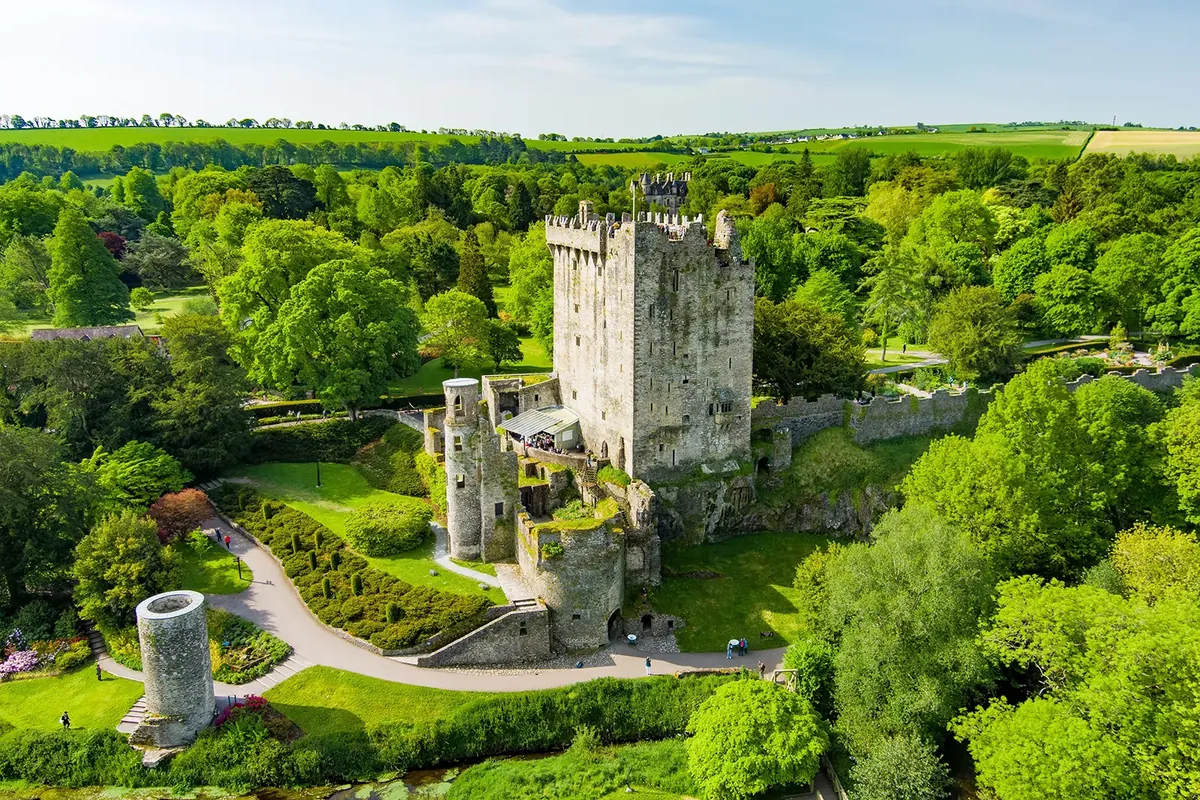
The castle is one of Ireland’s most visited heritage sites. It recorded approximately 490,000 visitors in 2024. With standard adult admission priced at €23, the site generates significant annual tourism revenue through ticket sales and garden access.
2. Bunratty Castle (Clare)
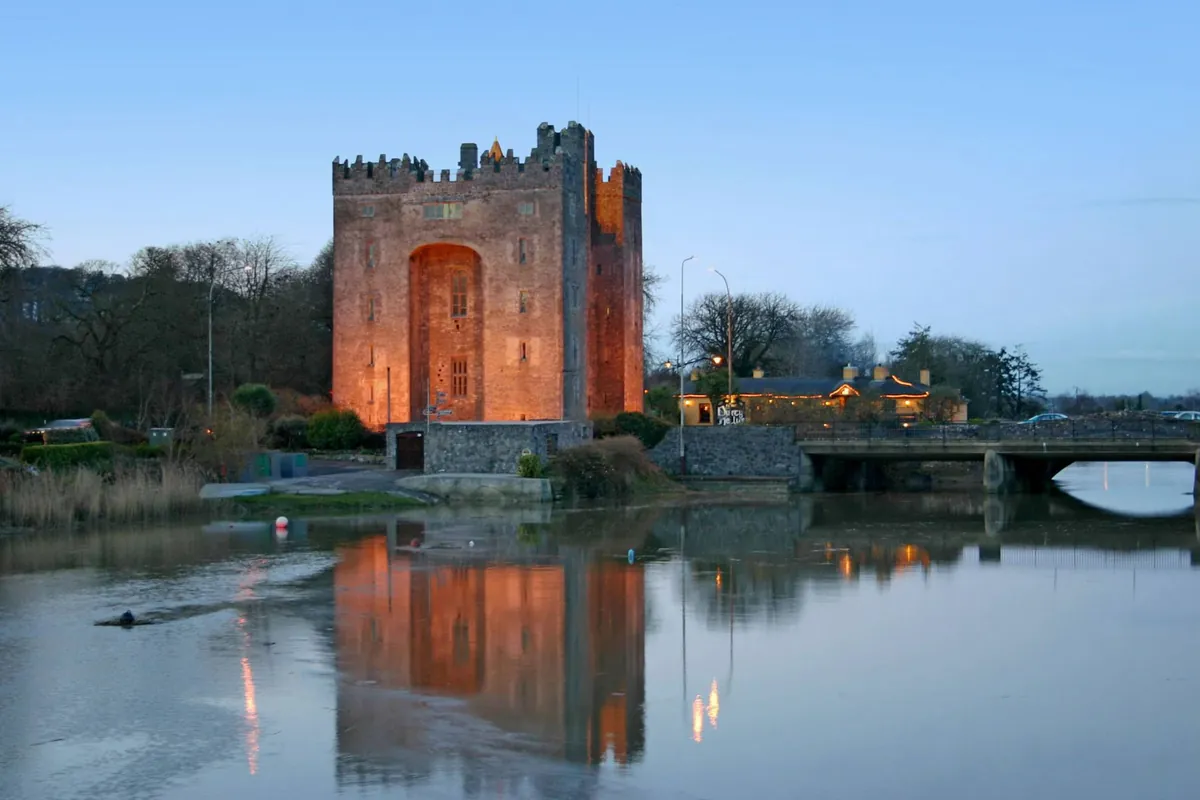
The site welcomed approximately 344,000 visitors in 2023, supported by its integration with Bunratty Folk Park. Standard adult admission is €10, with additional revenue generated through the ticketed medieval banquets and seasonal events.
3. Rock of Cashel (Cashel)
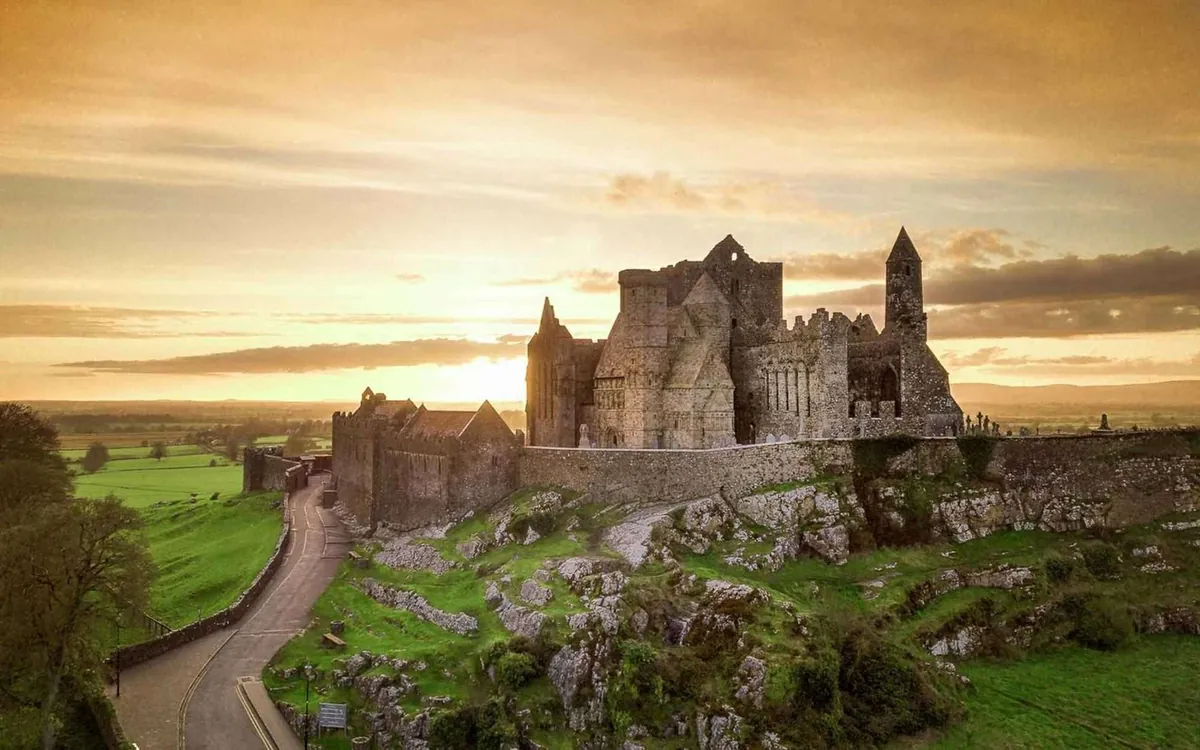
In 2024, the site received approximately 365,000 visitors, which placed it among Ireland’s most visited ticketed heritage attractions. Standard adult admission is €8, with guided tours of Cormac’s Chapel offered separately on a limited basis.
4. Donegal Castle (Donegal Town)
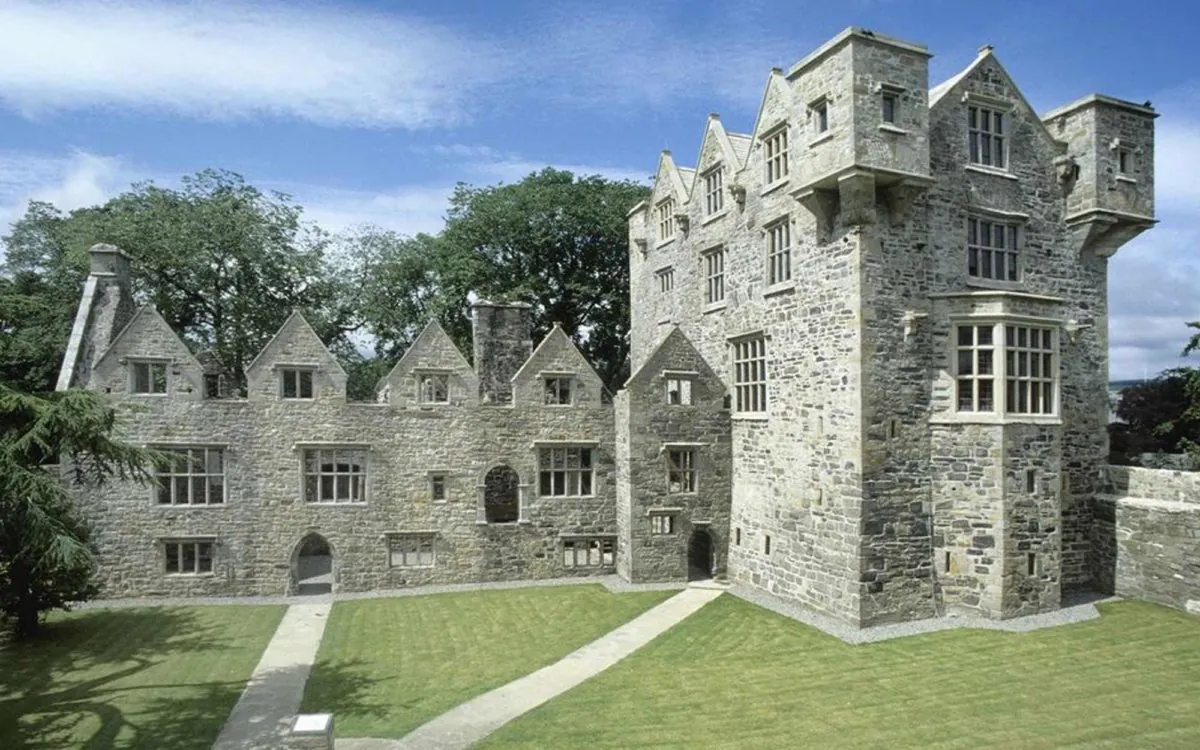
Admission is priced at €5 for adults, with lower rates for children, students, and families, which makes it one of Ireland’s most accessible national monuments.
5. Ross Castle (Killarney)
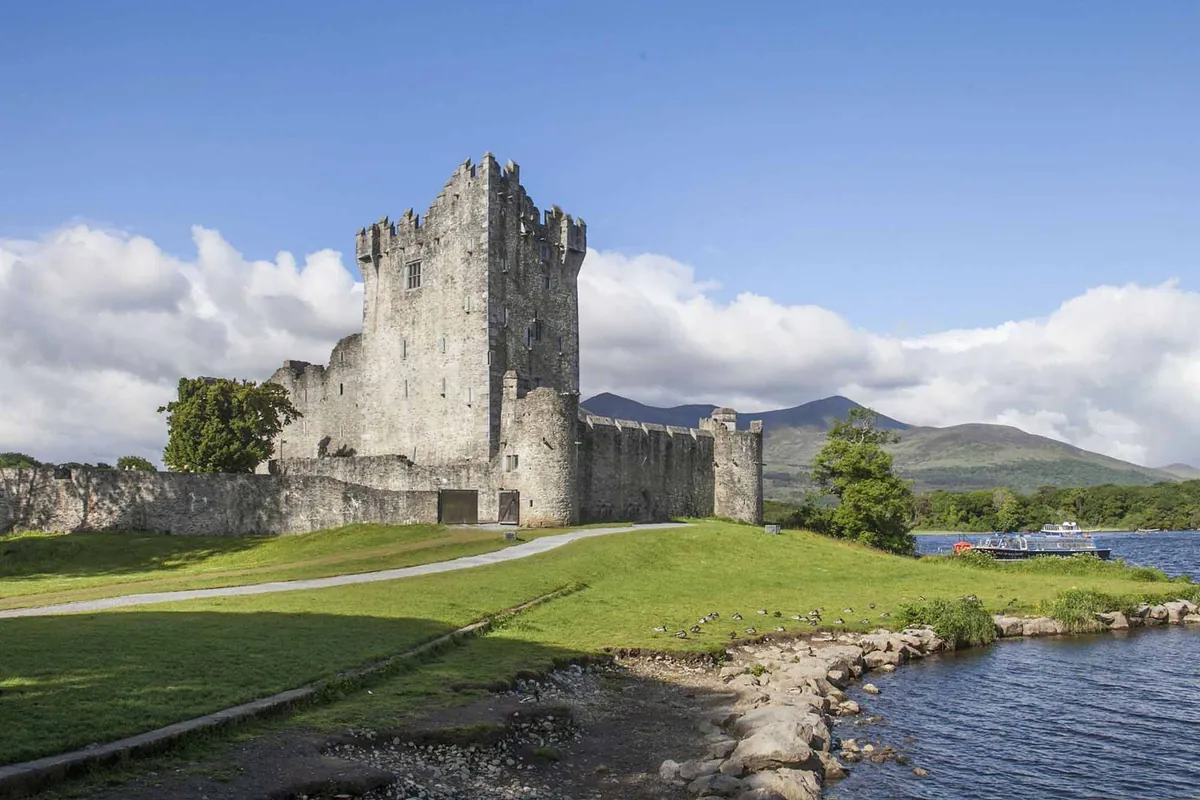
The castle attracted approximately 116,587 visitors in 2023. Entry to the interior operates by guided tour only, with adult tickets priced at €5.
Medieval Irish Castles
The medieval period saw the proliferation of stone fortifications designed for strategic dominance. Builders selected locations on hills, near river crossings, or along coastlines to monitor transportation routes and protect resources.
Regional patterns are clear. In the east, particularly within the former Pale, massive Anglo-Norman fortresses dominate river crossings and lowland routes. In the west and southwest, tall Gaelic tower houses built mainly between 1400 and 1650 stand on exposed sites selected for visibility and defence. Together, these structures trace the shift from medieval military architecture to later romantic restorations.
Construction methods focused on defensive stability. Walls were exceptionally thick and reached 30 feet in some instances to withstand sieges. Common architectural features included narrow arrow slits, gatehouses with working portcullises, and elevated towers that provided a vantage point over the bordering terrain. The classic design of high walls surrounding an internal tower house became the standard after the Norman invasion.
Tower houses emerged as a distinct style between the 15th and 17th centuries. These were vertical structures with a central tower surrounded by a defensive wall, or “bawn”. Many belonged to local lords and barons and served as both homes and administrative offices. During the Elizabethan and Jacobean periods, English influence introduced more complex layouts, including star-shaped plans, to accommodate evolving military requirements and early artillery.
Castles for Sale in Ireland
There are many castles for sale in Ireland. The market provides opportunities for private stewardship, particularly in County Cork, County Kerry, and County Clare. Available properties range from unrestored ruins to fully modernized luxury estates. Jeremy Irons, the British actor who starred in The Mission (1986) and Reversal of Fortune (1990), owns and restored Kilcoe Castle, a 15th-century fortress in County Cork. It sits on the southwestern coast of Ireland that inspired writer George R. R. Martin for his region The Fingers on A Song of Ice and Fire.
In early 2025, the national median price for a standard dwelling stood at approximately €365,000. Castles operate in a separate category. Buyers can still acquire unrestored 16th-century tower houses or renovated medieval keeps in the €950,000 to €1.5 million range. These properties often include substantial land, a feature that translates into significantly higher prices in comparable markets such as England or northern France.
Ownership is accessible to international buyers, and the process for foreigners to acquire historical buildings in Ireland is transparent.
[Insert Property Slider Here]
Castle Tourism in Ireland
Heritage tourism is a significant economic driver for the Irish countryside. Data released by the Office of Public Works (OPW) indicates that over 13.8 million people visited Irish heritage sites last year.
Most visited castle sites (2024): 1) Dublin Castle: 727,189 visitors 2) Kilkenny Castle & Parklands: 429,546 visitors 3) Rock of Cashel: 365,505 visitors. 4) Dún Aonghasa: 146,089 visitors 5) Ross Castle: 143,016 visitors.
Attendance at medieval sites is staying strong, with Donegal Castle reporting a 15% increase in visitors in 2024, partly due to local 550th-anniversary events. Trim Castle also ranks in the top ten most visited ticketed sites. The state continues to invest in these portfolios for the purpose of safeguarding built heritage.
Several projects aim to increase accessibility in the coming years, including the phased reopening of Barryscourt Castle and Ormond Castle, both of which have been undergoing extensive restoration.
Explore More Castles in Europe
You can buy castles in Wales and Scotland if you want to find similar historic settings for a lower entry price than in Ireland. You can secure a massive acreage or a larger fortified estate for the same budget in these regions. Since there are more property listings in these areas, you have a better chance of finding one that fits your specific renovation specs.
Join our mailing list if you want to buy a castle in Europe. You will receive an alert the moment a new property reaches the market.