
What are Some of The Biggest Myths About Buying a Castle in 2026?
Too expensive. Impossible to renovate. Can't sell them. All myths. Here's what castle ownership actually looks like.
Castles suffer from reputation lag. The assumptions most people hold about heritage property ownership date back decades, when these estates were genuinely the exclusive preserve of aristocrats and the independently wealthy. Today's market tells a different story entirely.
Is buying a castle worth it? For the right buyer, yes. But first, you need to separate outdated mythology from current reality. Here are five persistent myths about buying a castle that don't survive contact with actual market data.
1. "Only billionaires can afford castles"
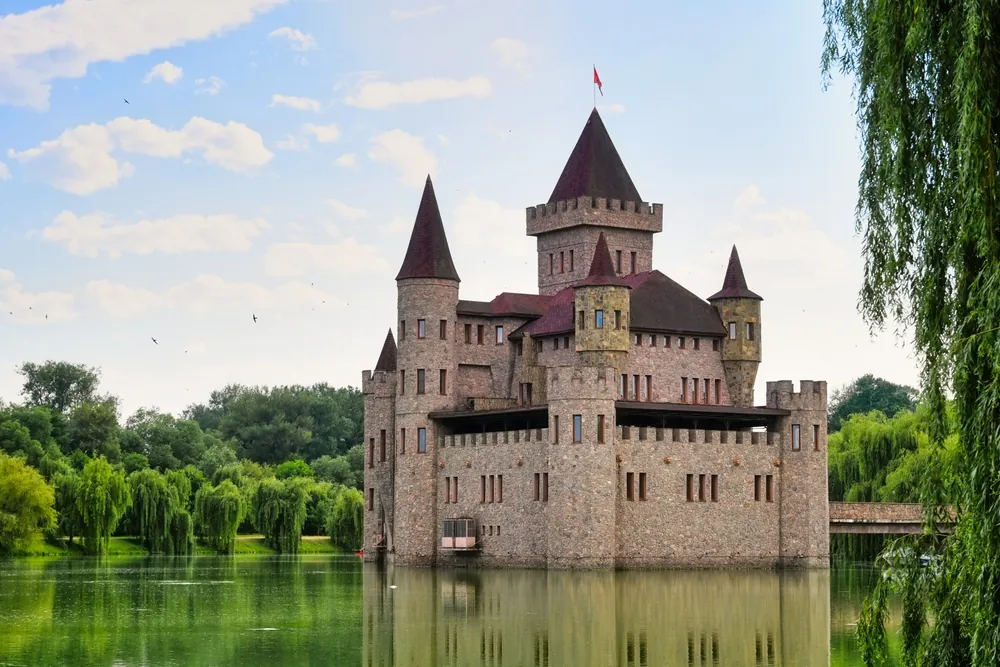
The price gap between European castles and major city real estate has inverted expectations entirely.
A 12-bedroom château dating from 1644 in France's Haute-Marne region is listed at €299,000—roughly what you'd pay for 30 square meters in the 7th arrondissement. Irish tower houses start at €95,000. Medieval defensive towers in Spain's Lleida province start at €99,000. Romanian fortified houses begin around €400,000.
Current listings across Europe demonstrate the full spectrum:
- Under €200,000: Tower houses in Ireland, ruins with planning permission, small fortified structures
- €200,000–€500,000: Habitable French châteaux, 13th-century castles requiring work
- €500,000–€2 million: Restored regional castles, properties with land and outbuildings
- €2–5 million: Premium estates, turnkey properties in prime locations
- €5 million+: Exceptional historic properties like Pedraza Castle in Segovia at €4.8 million
France alone has approximately 3,000 châteaux actively listed for sale as of 2024—double the inventory from 2019. JamesEdition reports castle market inventory surged 56% year-over-year through their 2024–2025 data. American buyers now represent 30% of all castle inquiries on the platform, up from single digits pre-pandemic.
The billionaire myth persists because people remember the headline sales—the €50 million Loire Valley trophy properties—while ignoring the hundreds of transactions completing annually in the €300,000–€800,000 range.
2. "Maintenance makes ownership impossible"
The reality: Annual maintenance for a well-kept castle runs 1–1.5% of property value—comparable to any large historic home.
A €1 million château (or medium-sized) requires around €80,000 a year in routine maintenance. That's significant, but hardly impossible. The "bottomless money pit" perception stems from three sources: large absolute numbers on expensive properties, decades of deferred maintenance inherited from previous owners, and one-time restoration projects conflated with ongoing costs.
European governments offer substantial financial support that fundamentally changes the equation:
- France provides one of the most generous frameworks. The Fondation du Patrimoine collected a record €102.7 million in 2024—a 45% increase over 2023. For properties with the Fondation du Patrimoine label, tax relief covers 50% of restoration costs (or 100% if subsidised by at least 20%), deductible over three years. Monuments Historiques classifications allow owners to deduct 100% of restoration expenses from total income with no cap, typically over one to three years.
- Germany's Denkmal-AfA programme permits landlords to deduct 100% of renovation costs over 12 years (9% annually for years 1–8, 7% for years 9–12). Owner-occupiers claim 90% over 10 years (9% annually).
- The UK's National Lottery Heritage Fund has distributed £8.6 billion to more than 47,000 projects since 1994, with over £293 million awarded in 2023/24 alone.
- Italy offers a 65% Art Bonus tax credit on donations for heritage restoration, plus Bonus Casa deductions of 50% on renovation spending up to €96,000 for primary residences.
With this in mind, real owner experiences demonstrate workable approaches. The Château de Jalesnes model shows one path: four partners purchased the property for under €1 million and spent approximately €2.5 million on renovation (significantly over their €1.5 million budget), creating a luxury 5-star self-catering venue now rated 9.0–9.3 on Booking.com.
3. "You can't renovate historic properties"
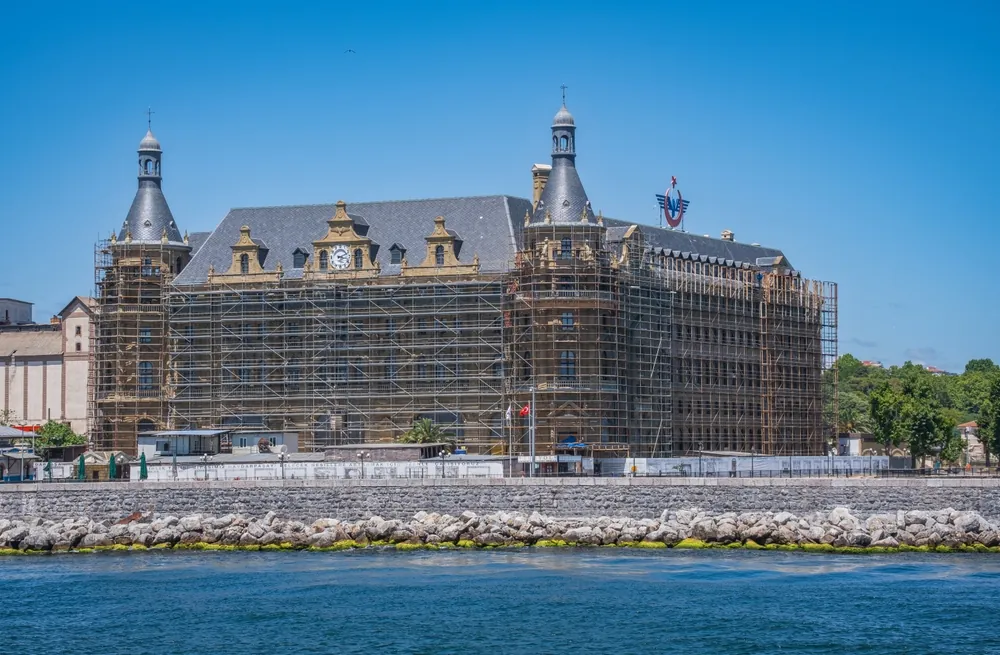
The vast majority of renovation proposals succeed when properly prepared. Modern amenities receive routine approval across European heritage systems: central heating, underfloor heating, contemporary kitchens and bathrooms, swimming pools in grounds, smart home technology, and air source heat pumps all proceed with appropriate consent.
Historic England explicitly updated guidance in July 2024 to support solar panel installations on heritage buildings. King's College Chapel, Cambridge (Grade I listed, among the highest protection levels) now generates 123,000 kWh annually from 438 rooftop panels.
A big modern improvement to an old building.
Country-specific regulations follow similar logic with varying bureaucratic processes:
- France distinguishes between Classé (strictest, requiring Culture Ministry approval) and Inscrit (more flexible regional oversight) designations. French heritage architects can be open to modern touches on ancient houses, provided the work respects the building's character.
- Germany's 16 federal states each maintain separate monument protection laws, but even listed buildings receive exemptions from Building Energy Act requirements—actually facilitating energy efficiency upgrades.
- Italy's Soprintendenza system focuses particularly on exterior preservation and landscape harmony, while interior changes on non-frescoed buildings may face less scrutiny, though approvals are still required.
The UK approval timeline for Listed Building Consent targets 8 weeks, with 77% of decisions meeting this standard in 2023/24.
A 944-year-old, 27,000-square-foot Grade I listed English castle purchased in February 2023 is currently undergoing a $34 million transformation into a 20-room luxury hotel—proceeding despite the highest protection designation.
Heritage regulations protect what matters while permitting the updates necessary for modern living.
4. "Castles are impossible to sell"
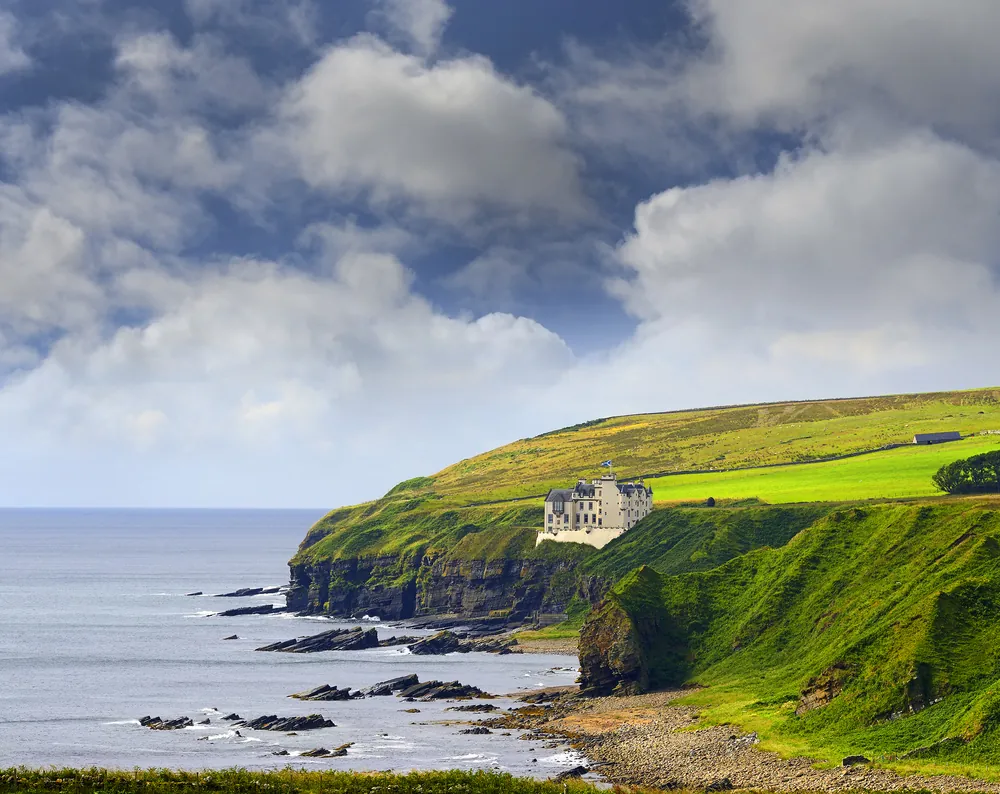
Scottish estate transactions demonstrate this despite exceptionally high price points. Dunbeath Castle Estate (28,500 acres, asking over £25 million) and the neighboring Glutt Estate (7,324 acres, over £7 million), both listed in summer 2023, went under offer within eight months and completed sales to the same anonymous buyer in autumn 2024.
The 28,202-acre Auch & Invermearan Estate—Scotland's largest estate offering in eight years—went under offer within weeks of its October 2019 launch. Cabinet Le Nail, a specialist French agency operating since the 1970s, has handled over 5,000 châteaux, manor houses, and prestige properties.
Market dynamics actually favor castle sellers in several ways. Hervé de Maleissye of Cabinet Le Nail observes that the château market tends to be more stable than property generally, as it is less exposed to interest rate rises, since first-time buyers are rare and purchasers often don't need mortgages. Cash-buyer prevalence insulates heritage properties from mortgage market volatility.
Buyer demographics have shifted substantially since 2020. French domestic purchases rose from approximately one-third to 70–80% of château transactions, as foreign buyers who made up two-thirds of pre-pandemic sales dropped to 20–30%. American buyers jumped from 2% to 14% of non-resident purchases at Agence Hamilton.
The pool of potential buyers has expanded, not contracted.
The liquidity myth persists because castle sales don't make headlines the way listings do. Properties that sell quickly and quietly don't generate the same attention as those lingering on the market for years—usually because they're overpriced or in genuinely problematic condition.
5. "They're all tourist traps or ruins"
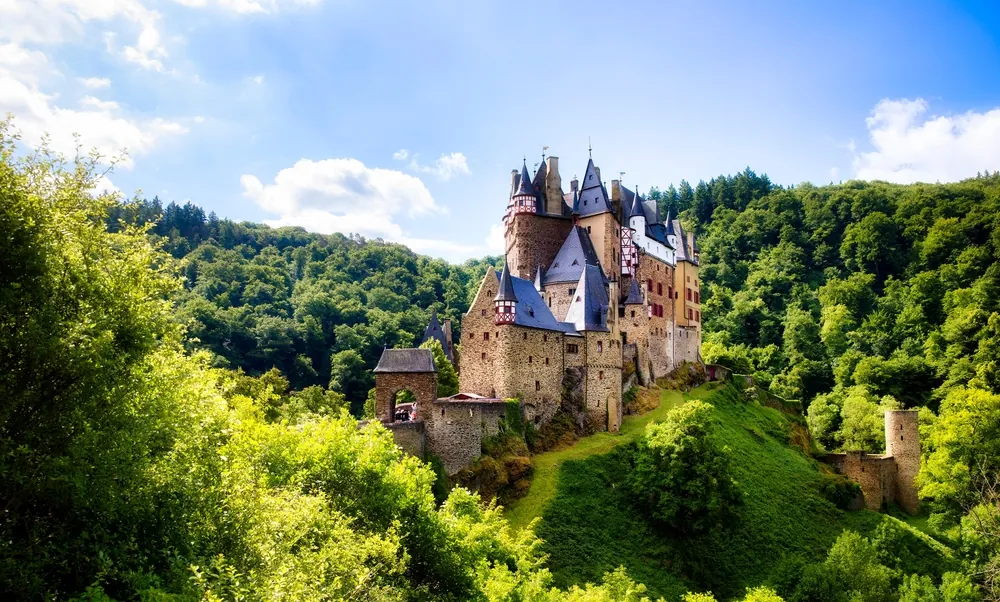
The condition spectrum spans from turnkey luxury residences to genuine restoration projects, with the vast majority falling between these extremes. Ruins are not as numerous as popular lore suggests—many châteaux have been meticulously maintained, restored, or repurposed for modern use.
Distinguished private residences continue functioning as family seats without commercial operations:
- Eltz Castle, Germany: The von Eltz family has maintained continuous ownership since the 12th century—over 800 years
- Alnwick Castle, England: Percy family (Duke of Northumberland) since 1309—the family seat for over 700 years
- Arundel Castle, England: Howard family (Duke of Norfolk)—the castle has been the seat of the Dukes of Norfolk and their ancestors for over 850 years
- Château des Annereaux, France: The Annereau family lineage since 1390, now continued by their descendants, the Hessel family
Commercially successful castles occupy a middle ground between private seclusion and mass tourism. Carlowrie Castle near Edinburgh achieved B Corp certification (the first castle worldwide to do this) while ranking among Europe's top wedding venues.
Ashford Castle in Ireland operates as Ireland's only Forbes Five-Star hotel, with fine dining featured in the Michelin Guide. Bordeaux contains approximately 5,600–7,500 wine châteaux (estimates vary), producing roughly 650–800 million bottles per vintage—commercial enterprises generating income, but hardly tourist traps.
Current market listings demonstrate the full condition range. Move-in ready options include fully restored medieval towers and 16th-century Scottish castles described as among the best-kept historic houses in the country.
Operational hospitality businesses come to market regularly. Restoration projects start from under €100,000 for genuine tower houses requiring work.
The either/or framing—Versailles or ruin—misses the reality that most castles are simply large historic homes, varying in condition exactly as any other property category does.
The Reality of Buying a Castle
Myths about buying a castle serve as convenient excuses for not investigating further. The actual barriers are more mundane: finding the right property, understanding local regulations, securing appropriate insurance, and accepting that heritage ownership involves ongoing stewardship rather than passive investment.
Entry prices sit lower than prime urban apartments across major European cities. Maintenance follows predictable patterns when properties receive regular care, with government programs subsidizing 20–80% of restoration costs (depending on country), property classification, and local authority participation.
Regulatory frameworks permit substantial modernization through defined approval processes. Transaction data confirms active market liquidity. And ownership patterns show private residences predominating over either tourist attractions or abandoned ruins.
A French château requiring renovation can cost less than a studio flat in prime central London, comes with government-backed restoration incentives, can accommodate contemporary amenities, will find a buyer when priced appropriately, and represents a legitimate private residence rather than a museum obligation.
Castle ownership requires patience and planning. But the obstacles are practical, not mythological—and practical obstacles have practical solutions.