
Best Castles in Scotland: History, Heritage & Hidden Gems
Two thousand castles. Centuries of clan warfare. Clifftop ruins to working estates. Scotland's fifteen finest—history, heritage, and how to visit.
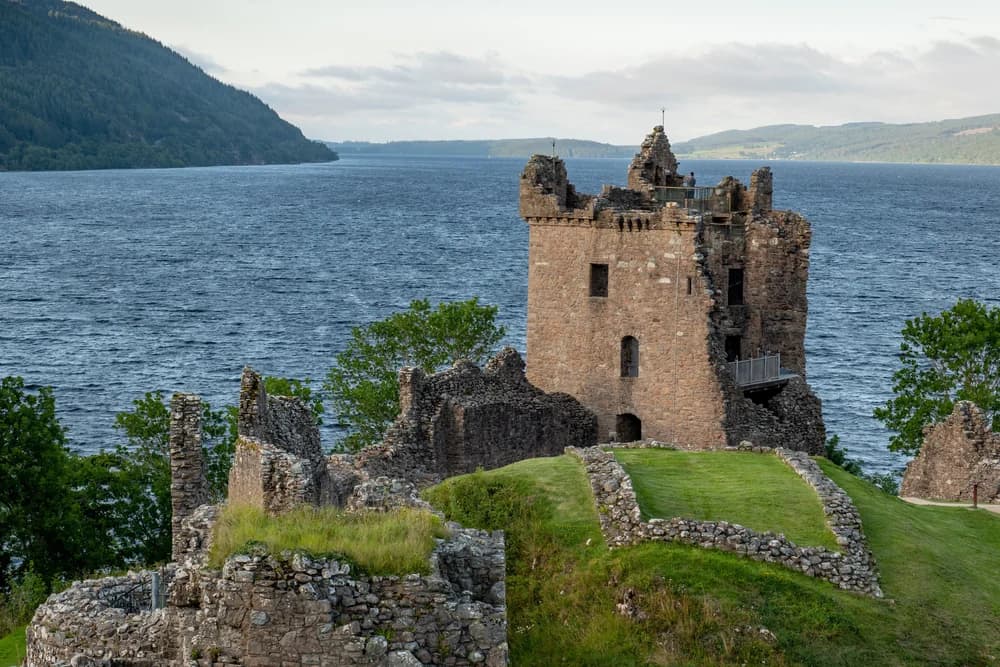
Scotland holds more than 2,000 castles within its borders, from clifftop ruins silhouetted against the North Sea to inhabited strongholds where clan chiefs still receive guests. These fortresses chart a thousand years of conflict, allegiance, and architectural ambition across some of Europe's most dramatic terrain.
For travelers seeking Highland drama and for collectors considering heritage ownership, Scotland offers an unrivaled concentration of historic estates.
15 Scottish Castles of Distinction
1. Eilean Donan Castle
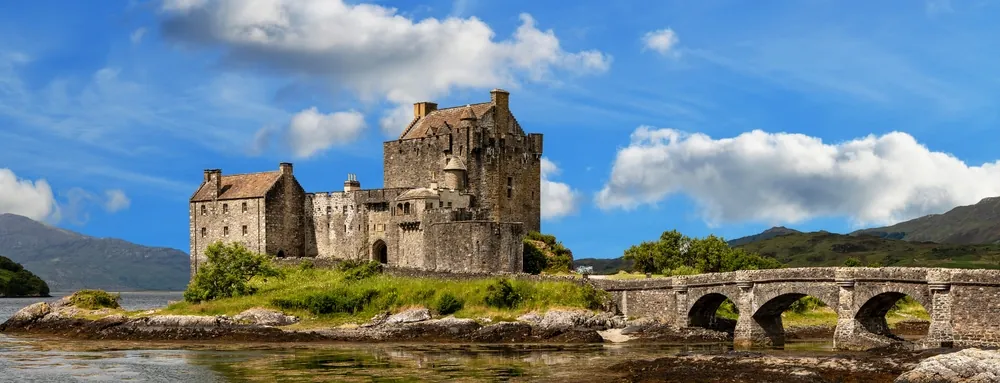
Rising from a small tidal island at the confluence of three sea lochs, Eilean Donan has earned its reputation as Scotland's most photographed castle. The fortress guards the meeting point of Loch Duich, Loch Long, and Loch Alsh, with the peaks of Kintail providing a Highland backdrop that photographers and filmmakers have found irresistible.
The original 13th-century fortification served as a stronghold for Clan Mackenzie before Jacobite forces garrisoned it during the 1719 rising. Three Royal Navy frigates subsequently bombarded the castle, and government troops completed its destruction with 27 barrels of gunpowder. The structure lay in ruins for two centuries until Lt. Colonel John MacRae-Gilstrap purchased the island in 1911 and undertook a painstaking 20-year reconstruction.
The restoration, completed in 1932 at a cost equivalent to approximately £18 million today, drew upon historical records and surviving architectural fragments to recreate the medieval fortress. The Conchra Charitable Trust now administers the castle, which welcomes more than 314,000 visitors annually. Its silhouette against the surrounding mountains has appeared in films from Highlander to the James Bond franchise.
Visitor information: Open year-round with seasonal hours. Adult admission approximately £10.
Estimated value: £220-260m
2. Stirling Castle
"Whoever held Stirling commanded Scotland."
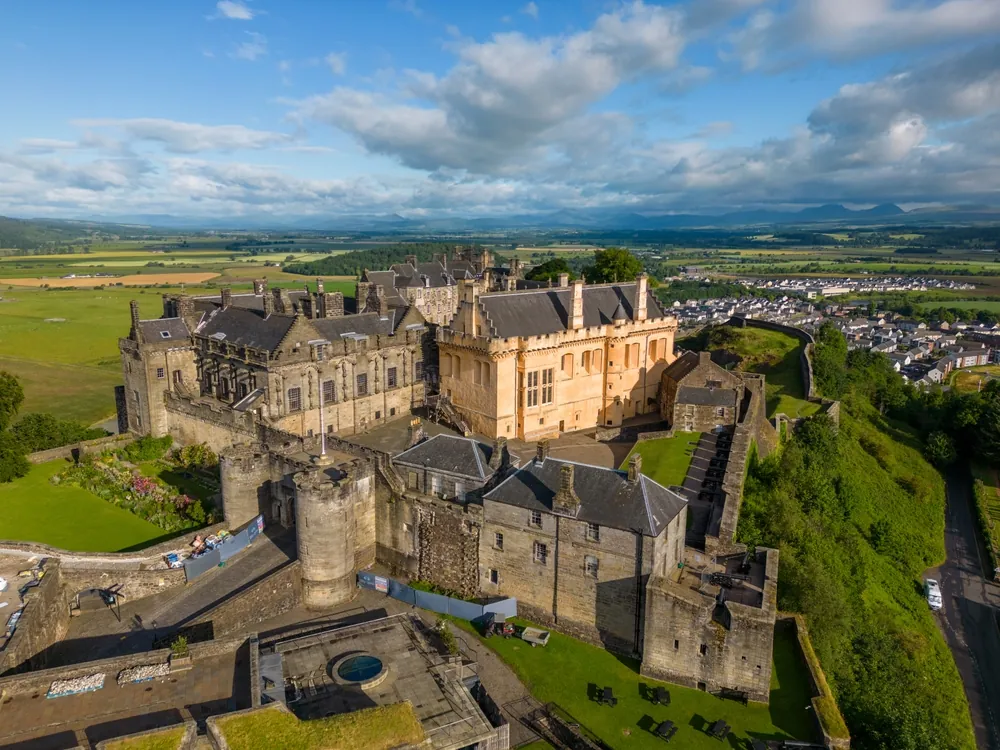
Perched on a volcanic outcrop 250 feet above the surrounding plain, Stirling Castle controlled the primary route between the Scottish Lowlands and Highlands for centuries. The strategic calculus was straightforward: whoever held Stirling commanded Scotland's narrow waist.
Mary Queen of Scots was crowned here in 1543 at nine months of age. Her son James VI was baptized in the Chapel Royal in 1566, an event that introduced fireworks to Scotland for the first time. The Great Hall, measuring 138 feet by 47 feet, ranks as the largest medieval banqueting space in Scotland, its hammerbeam roof restored to reveal the original golden lime wash.
The Royal Palace represents Scotland's finest surviving Renaissance architecture. Constructed in the 1540s for James V, the palace features elaborate carved stonework depicting mythological figures, planetary deities, and courtly life. A restoration completed in 2011 recreated the palace interiors as they appeared in the mid-16th century, including reproduction tapestries woven in the original manner.
Stirling welcomed 594,000+ visitors in 2024, representing a 14.8% increase over the previous year. Historic Environment Scotland manages the site.
Visitor information: Open daily. Adult admission approximately £17 | Estimated value: £400-480m
3. Urquhart Castle
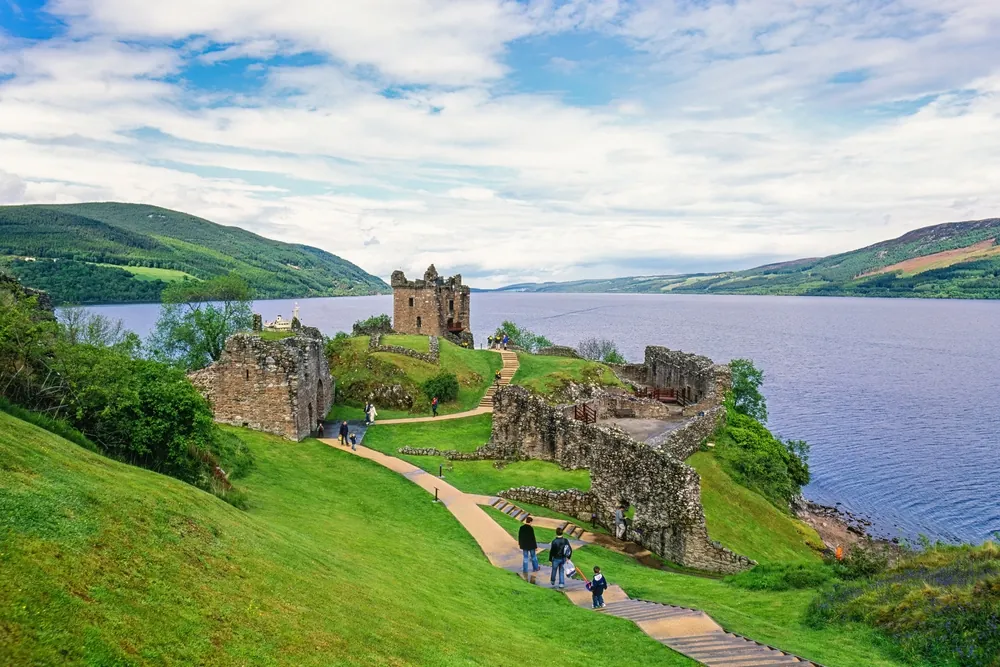
The ruins of
Urquhart Castleoccupy a rocky promontory jutting into Loch Ness, a position that has attracted fortification since the early medieval period. The castle changed hands repeatedly during the Wars of Scottish Independence before government forces deliberately destroyed it in 1692 to prevent Jacobite use.
The Grant Tower, a five-storey structure dating from the 16th century, survives as the most substantial remaining element. From its upper levels, visitors survey the full 23-mile length of Loch Ness, a view that has made Urquhart the most popular location for reported sightings of the loch's legendary inhabitant.
The castle ranks as Scotland's third most-visited, with 442,000 visitors in 2023. A visitor center opened in 2002 provides historical context through film presentations and artifact displays before guests descend to the ruins themselves.
Visitor information: Open daily. Adult admission is approximately £12 | Estimated value: £110-140m
4. Glamis Castle
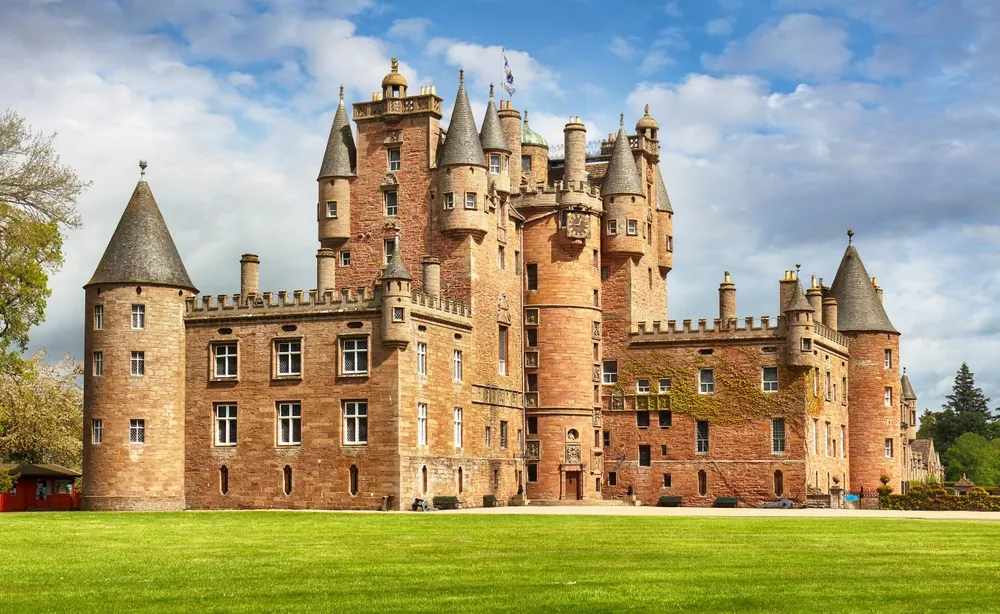
The Lyon family has held
Glamis Castlesince 1372, when King Robert II granted the estate to Sir John Lyon following his marriage to the king's daughter. The castle's distinctive silhouette, with its forest of turrets and conical roofs, represents Scottish Baronial architecture at its most theatrical.
Glamis served as the childhood home of Queen Elizabeth The Queen Mother, and Princess Margaret was born here in 1930, the first royal birth in Scotland in 300 years. Shakespeare set portions of Macbeth at Glamis, though the historical Macbeth had no documented connection to the site.
The literary association nonetheless draws visitors seeking the atmosphere that inspired the playwright.
The current owner, Simon Bowes-Lyon, 19th Earl of Strathmore and Kinghorne, maintains the castle as a Category A listed building. The estate opened to the public in 1950, attracting over 1,000 visitors on the first day. The grounds include an Italian Garden designed in 1910 and a nature trail through the surrounding parkland.
Visitor information: Open April through October. Adult admission approximately £16 | Estimated value: £120-150m
5. Blair Castle
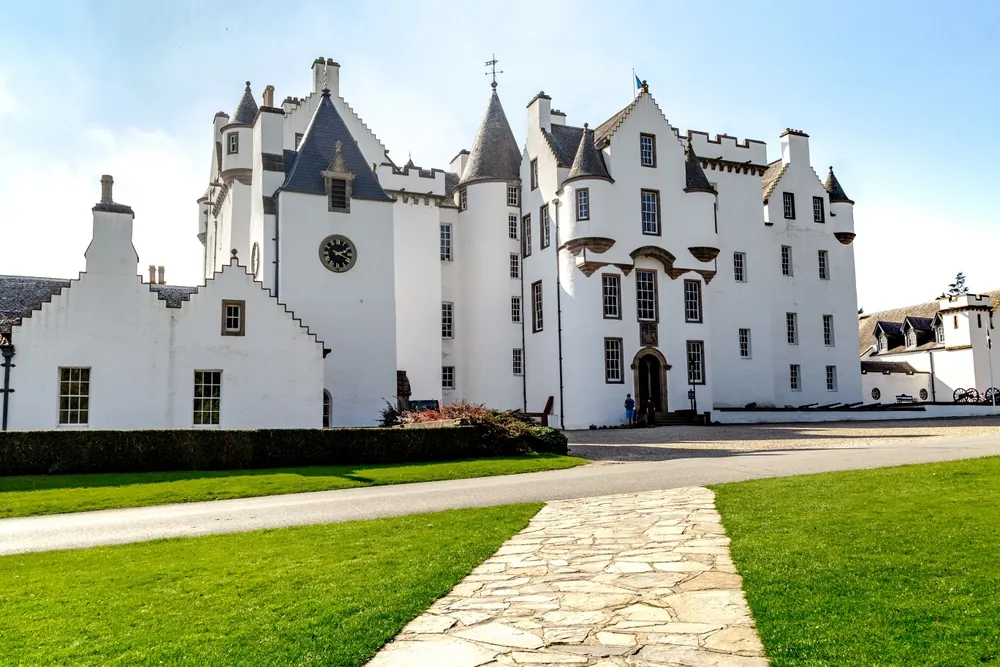
in Perthshire commands a singular distinction: it houses Europe's only remaining private army. The Atholl Highlanders, numbering approximately 110 ceremonial soldiers, owe their existence to Queen Victoria, who granted the Duke of Atholl the right to maintain an armed force following her visit in 1844.
The Murray family has occupied Blair for more than 700 years, and the castle witnessed the last siege conducted on British soil during the 1746 Jacobite rising. More than 30 rooms open to visitors, a number exceeding any comparable stately home in Scotland. The collections span arms and armor, fine art, and Jacobite relics, while the nine-acre walled Hercules Garden has been restored to its Georgian grandeur.
The castle opened to the public in 1936 and now serves as both a visitor attraction and an events venue. The surrounding estate encompasses red deer parkland and extensive walking trails through Highland landscapes.
Visitor information: Open April through October, with limited winter opening. Adult admission approximately £16 | Estimated value: £140-170m
6. Dunnottar Castle
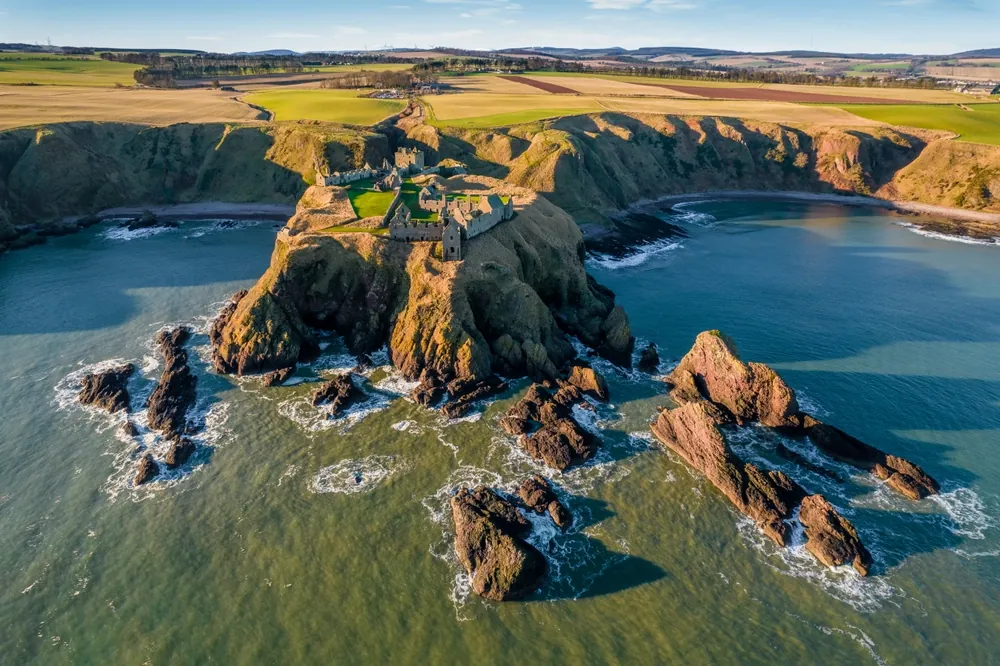
The clifftop ruins of
Dunnottar Castleoccupy a flat-topped sea stack 160 feet above the North Sea near Stonehaven in Aberdeenshire. The promontory's natural defenses made it effectively impregnable, a characteristic tested during the eight-month siege of 1651-1652 when a small garrison successfully protected the Scottish Crown Jewels from Cromwell's forces.
The jewels' survival owes to quick-thinking and considerable nerve. As the siege wore on, a local woman named Christine Granger gained entry to the castle ostensibly to visit friends. She departed with the Honours of Scotland concealed beneath her clothing and buried them beneath the pulpit of nearby Kinneff Church, where they remained hidden until the Restoration.
The Keith family, Earls Marischal, built the surviving structures between the 14th and 16th centuries. Today, Charles Pearson of Dunecht Estates owns the castle, which welcomes approximately 89,000 visitors annually. The 200-step approach to the castle contributes to its dramatic atmosphere. Franco Zeffirelli chose the location for his 1990 film adaptation of Hamlet.
Visitor information: Open year-round. Adult admission approximately £9 | Estimated value: £70-90m
7. Dunrobin Castle
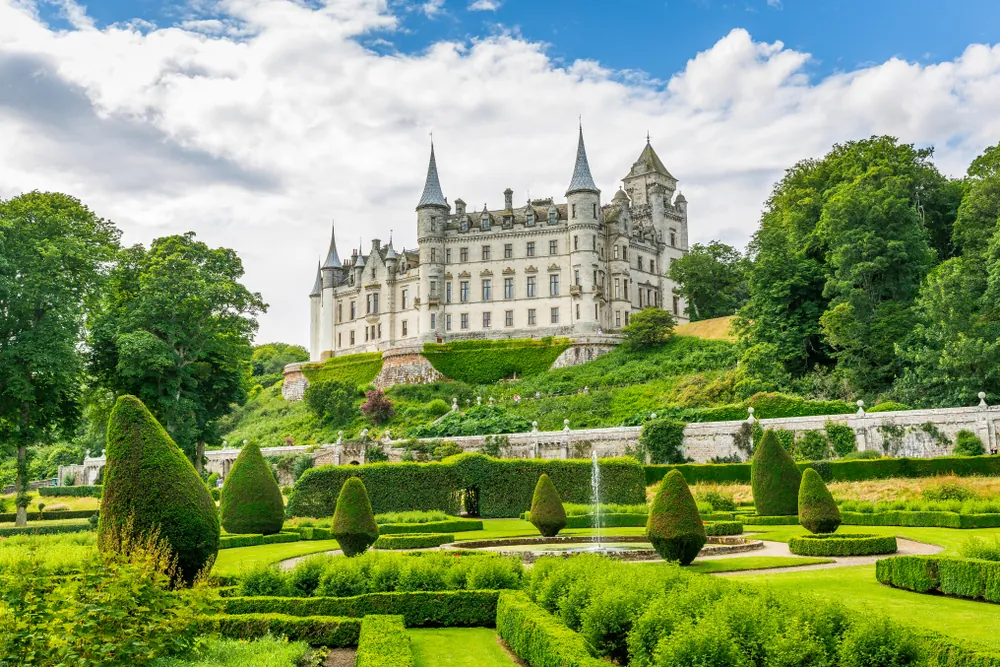
presents an unexpected sight in the Scottish Highlands: a French chateau with 189 rooms overlooking the North Sea. The seat of the Earls and Dukes of Sutherland, Dunrobin traces its origins to the early 1300s, though Sir Charles Barry's 1845 remodelling gave the castle its current Loire Valley appearance.
The transformation served the aspirations of the 2nd Duke of Sutherland, then reputedly the wealthiest man in Britain. Barry, architect of the Houses of Parliament, created an elaborate confection of conical spires, dormer windows, and formal gardens that descends in terraces to the sea. The gardens themselves were inspired by those at Versailles.
The castle's position on the North Coast 500 driving route has increased its profile among touring visitors. Approximately 120,000 guests arrive annually to tour the state rooms and watch falconry displays in the gardens. The museum in the summerhouse displays Pictish stones and hunting trophies accumulated across generations of Sutherland travels.
Visitor information: Open April through October. Adult admission approximately £14 | Estimated value: £95-120m
8. Inveraray Castle
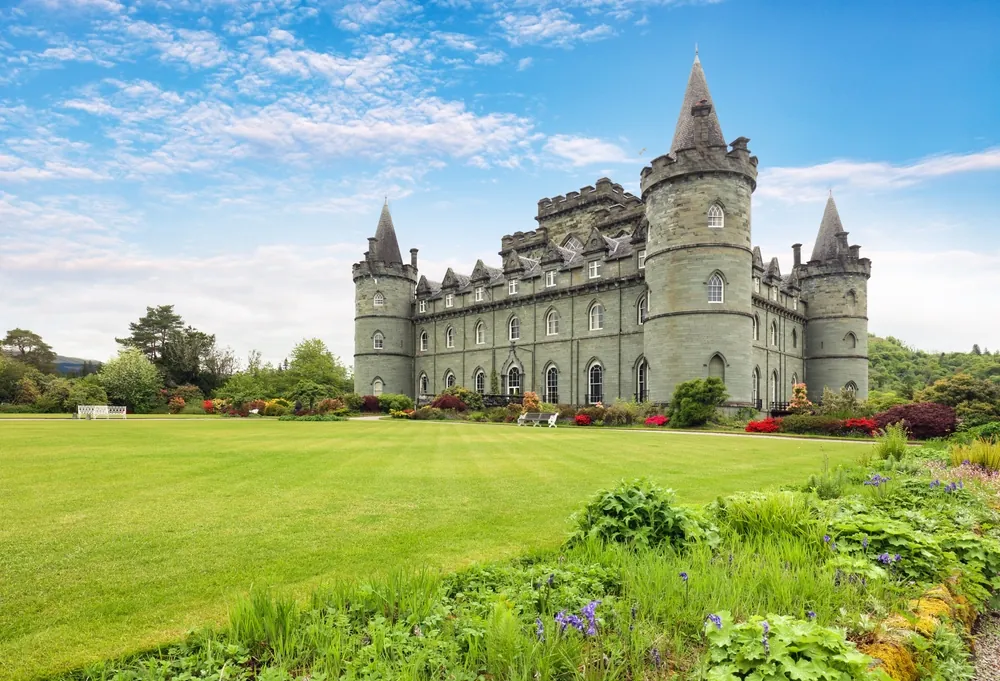
on the shores of Loch Fyne has served as the seat of the Dukes of Argyll, chiefs of Clan Campbell, since the 18th century. The present structure, completed in 1789, pioneered the Gothic Revival style in Scotland and remains one of the earliest examples of neo-Gothic architecture in Britain.
The 13th Duke of Argyll maintains the castle as a family residence while opening the principal rooms to visitors. The Armoury Hall displays weapons collected over generations, arranged in decorative patterns that ascend toward the 70-foot ceiling. State rooms contain French tapestries, Scottish portraiture, and a genealogical history documenting the Campbell line since the 13th century.
The castle grounds include formal gardens, woodland walks, and a herd of Highland cattle that has become a popular photographic subject. The nearby town of Inveraray, a planned Georgian settlement, complements the castle as a single architectural composition.
Visitor information: Open April through October. Adult admission approximately £16 | Estimated value: £110-140m
9. Craigievar Castle
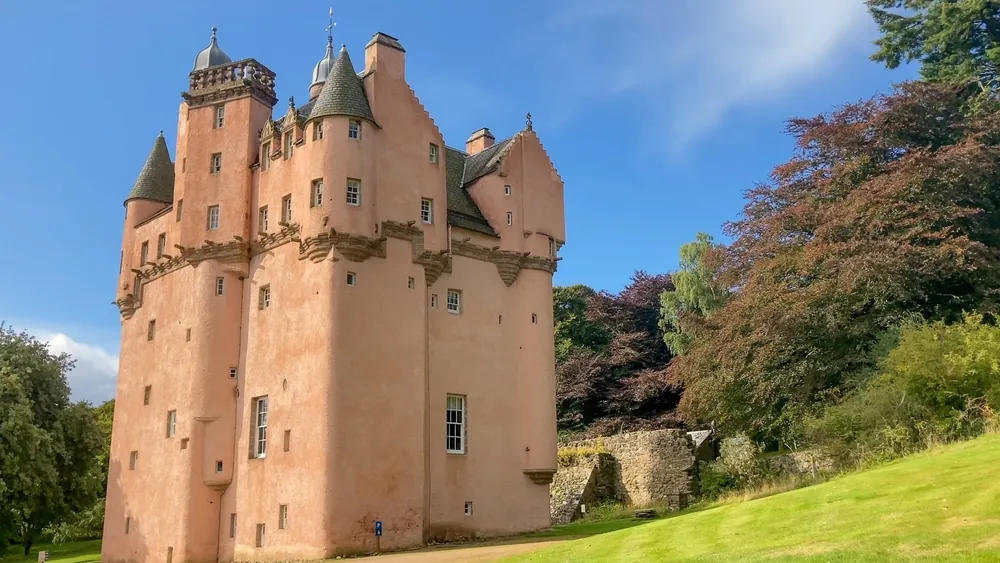
Rising seven storeys without a single external angle,
Craigievar Castlein Aberdeenshire represents the culmination of Scottish tower house architecture. The castle's pink harled walls and profusion of turrets have led to comparisons with Disney's Cinderella Castle, a resemblance that may not be coincidental given the structure's influence on European fairy tale imagery.
The Forbes family completed Craigievar in 1626, and remarkably little has changed since. The great hall retains its elaborate Renaissance plasterwork ceiling depicting classical figures and heraldic devices. The castle passed to the National Trust for Scotland in 1963 and now operates as a carefully preserved example of 17th-century Scottish domestic architecture.
The intimate scale necessitates limited visitor numbers, preserving the atmosphere of a private residence rather than a public monument. Advance booking is recommended during peak season.
Visitor information: Open May through September, limited days. Adult admission approximately £14.50 | Estimated value: £35-45m
10. Kilchurn Castle
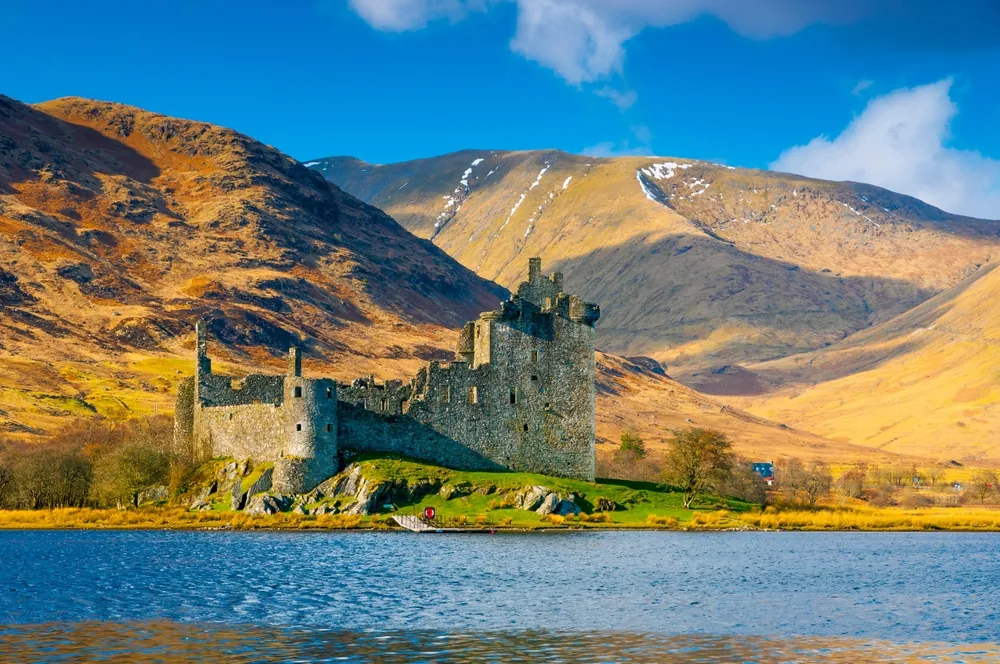
The ruins of Kilchurn Castle occupy a narrow promontory at the head of Loch Awe in Argyll, accessible by foot when water levels permit. Sir Colin Campbell of Glenorchy built the original tower house around 1450, and successive generations expanded the structure until its abandonment in the 1760s following damage from lightning.
Unlike many Scottish castles, Kilchurn requires no admission fee. Historic Environment Scotland maintains the ruins, which visitors reach via a 30-minute walk from the A85. The reward is one of Scotland's most atmospheric castle settings: grey stone walls reflected in still water, with Ben Cruachan rising behind.
Photographers prize the location for dawn and dusk light, when the loch surface mirrors the castle's silhouette. The absence of commercial infrastructure preserves the sense of discovery that characterized earlier centuries of travel.
Visitor information: Free access during daylight hours. No facilities on site | Estimated value: £8-12m
11. Cawdor Castle
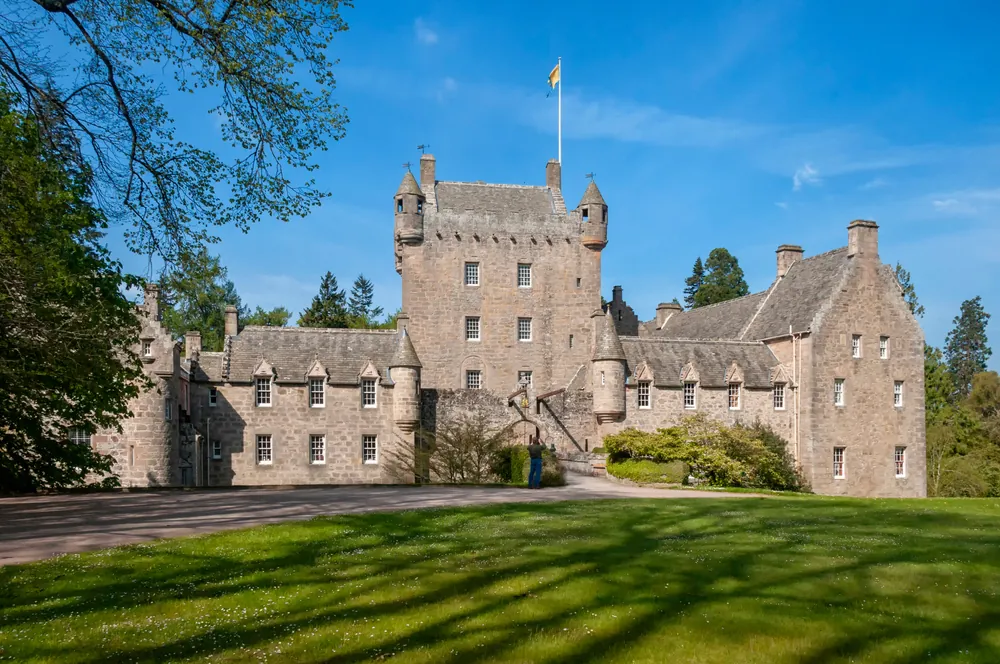
The Cawdor family has held the estate since the 14th century. The central tower dates from 1454, built around a holly tree that legend claims guided the castle's founders to the site. (The tree's remains survive in the vaulted basement.) Later additions created a more comfortable residence, with 17th-century additions and formal gardens developed across subsequent centuries.
The current Dowager Countess Cawdor maintains the castle and its three gardens: the Walled Garden, the Flower Garden, and the Wild Garden. The interiors display family portraits, tapestries, and an accumulation of objects reflecting centuries of continuous occupation.
Visitor information: Open May through October. Adult admission approximately £14 | Estimated value: £75-95m
12. Balmoral Castle
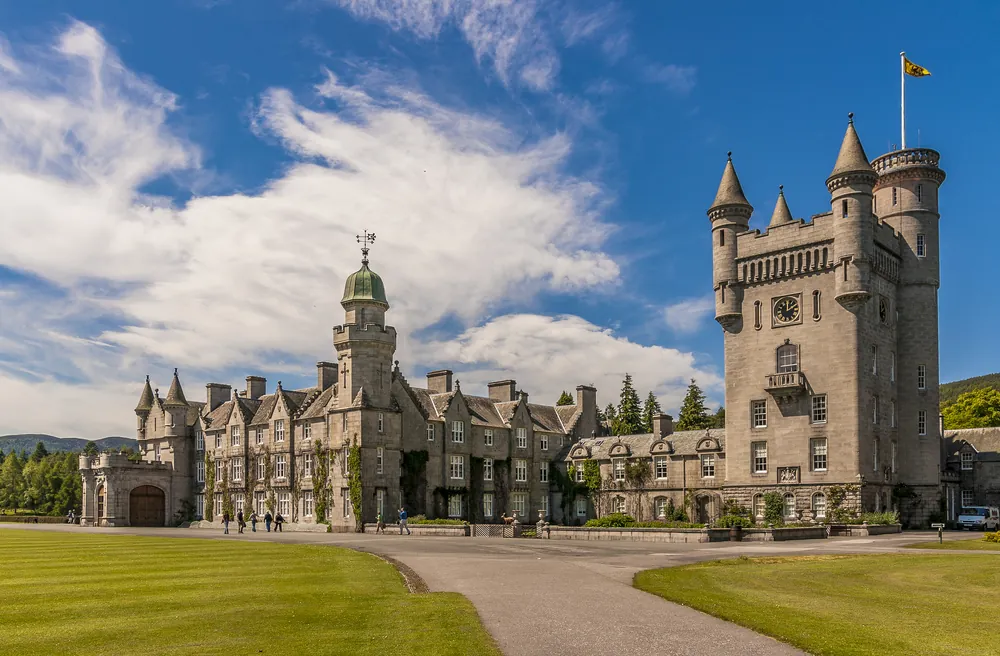
The castle remains a working royal residence, limiting public access to the grounds, gardens, and a single exhibition space within the castle itself. The ballroom, the largest room open to visitors, displays exhibitions on Balmoral's history and the Royal Family's association with Deeside.
The 50,000-acre estate encompasses grouse moors, deer forest, and the village of Crathie, whose church the Royal Family attends during their annual autumn residence. The surrounding Cairngorms provide some of Scotland's most respected walking and stalking terrain.
Visitor information: Grounds open April through July. Adult admission approximately £15 | Estimated value: £150-200m
13. Culzean Castle
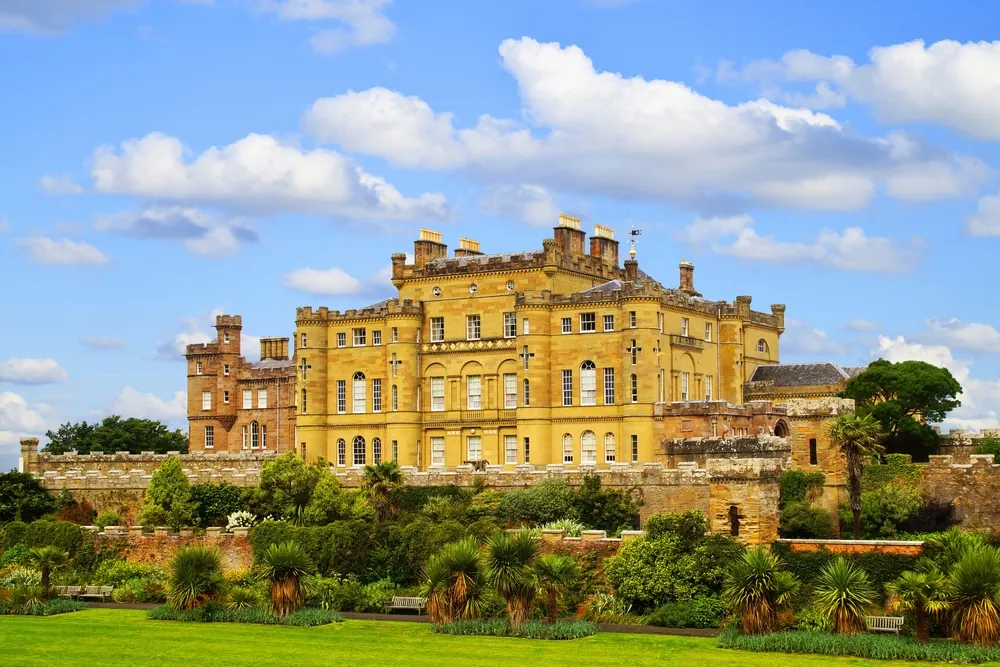
The oval staircase ranks among Adam's masterworks, a dramatic spiral illuminated by a domed glass ceiling and decorated with classical plasterwork. The circular saloon offers panoramic views across the Ayrshire coast, while the extensive grounds include a walled garden, deer park, and miles of woodland trails.
General Eisenhower maintained a flat within the castle as a gift from the Kennedy family in recognition of his wartime leadership, a connection commemorated in the Eisenhower Apartment, which visitors may tour or rent for overnight stays. The National Trust for Scotland has managed the 600-acre estate since 1945.
Visitor information: Castle open April through October; grounds open year-round. Adult admission approximately £17 | Estimated value: £130-160m
14. Floors Castle
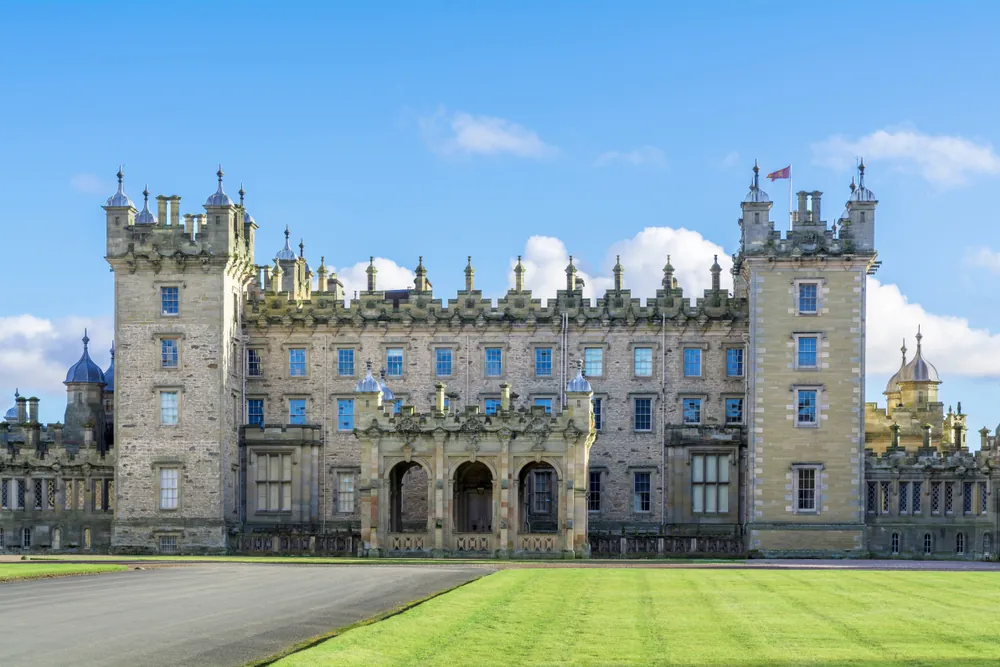
William Adam designed the original structure in the 1720s, but William Playfair's 1840s alterations gave Floors its present Tudor-Gothic character. The castle's 200 rooms include state apartments displaying fine art, tapestries, and collections assembled across three centuries of Roxburghe stewardship.
The grounds encompass formal gardens, woodland walks, and views across the River Tweed to the Cheviot Hills. A garden center, cafe, and events program supplement the castle tours.
Visitor information: Open Easter through October. Adult admission approximately £12 | Estimated value: £85-110m
15. Dunstaffnage Castle
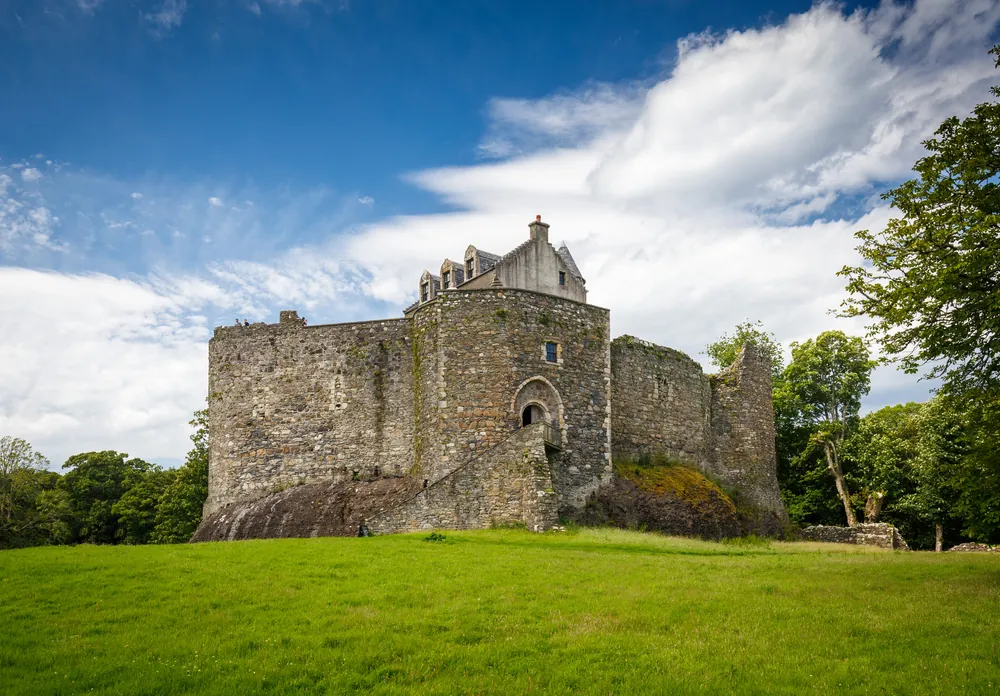
The surviving 13th-century walls rise directly from the bedrock, their irregular plan conforming to the underlying geology. The MacDougall lords of Lorn built this structure, though the castle passed to the Campbells following Robert the Bruce's victory over the MacDougalls in 1308.
Flora MacDonald, who aided Bonnie Prince Charlie's escape following Culloden, was briefly imprisoned here in 1746. The adjoining chapel, though ruinous, preserves fine medieval architectural details, including carved window tracery.
Visitor information: Open April through September. Adult admissions approximately £6 | Estimated value: £12-18m
Which Scottish castle attracts the most visitors?
Edinburgh Castle commands this distinction, welcoming 1.98 million visitors in 2024 to claim its position as Scotland's most-visited paid attraction. The fortress rises from Castle Rock, an extinct volcanic plug that has served as a defensive position for over 3,000 years.
Within its walls, the Honours of Scotland (the Scottish Crown Jewels) remain on permanent display, predating the English Crown Jewels by more than a century.
The castle's strategic value shaped Scottish history. Held alternately by Scottish and English forces throughout the Wars of Independence, it witnessed the birth of James VI in 1566 and endured a prolonged siege during the Jacobite rising of 1745.
Today, Historic Environment Scotland manages the site, which hosts the Royal Edinburgh Military Tattoo each August on its esplanade. Adult admission starts at £18.
What is the oldest continuously inhabited castle in Scotland?
Dunvegan Castle on the Isle of Skye holds this distinction, having served as the seat of the Chiefs of Clan MacLeod for more than 800 years. The castle has passed through 30 generations of the same family without interruption, a lineage unmatched elsewhere in Scotland.
The MacLeod chiefs still reside here, overseeing a 42,000-acre estate that encompasses the dramatic Cuillin mountain range. Visitors encounter treasured heirlooms, including the Fairy Flag, a silk banner of disputed origin that clan legend credits with protective powers. The Dunvegan Cup, a medieval mazer of Celtic craftsmanship, and a waistcoat worn by Bonnie Prince Charlie during the 1745 uprising complete the collection.
The castle's five-acre walled gardens descend to the loch shore, where boat trips offer opportunities to observe the resident seal colony.
The combination of continuous habitation, preserved artifacts, and working estate offers insight into how Scottish castle life persists into the present day.
What makes Scottish castles architecturally distinct?
Scottish castle architecture evolved in response to the nation's particular geography, climate, and social organization. The tower house, a vertically oriented defensive residence, emerged as the dominant form between the 14th and 17th centuries.
These structures maximized limited footprints by stacking living spaces across multiple floors, with the laird's quarters occupying the upper levels for security and status.
The clan system shaped castle construction throughout the Highlands and Islands. Chiefs required fortifications that could shelter extended kinship networks during periods of conflict while projecting authority across their territories. The result was a landscape of strongholds spaced at intervals determined by local power structures rather than centralized planning.
Scottish Baronial style, which flourished from the 16th century onward, combined defensive practicality with increasing aesthetic ambition. Corner turrets, crow-stepped gables, and elaborate corbelling distinguished Scottish castle architecture from English counterparts.
The style experienced revival in the 19th century, when architects including William Burn and David Bryce designed new country houses incorporating medieval motifs.
The harling tradition, applying roughcast lime render to exterior walls, protected stonework from Scotland's driving rain while creating the distinctive white or pink surfaces visible at castles like Craigievar. This practical technique became an aesthetic marker, its warm surfaces contrasting with the grey granite and weathered sandstone of unrendered structures.
Can you buy a castle in Scotland?
The Scottish castle market offers approximately 10 properties annually, ranging from ruins requiring comprehensive restoration to turnkey estates with established commercial operations. Prices span from under £500,000 for structures needing substantial intervention to £8 million or more for prime estates near Edinburgh or St Andrews.
Current and recent offerings illustrate the market's range:
Kelly Castle, Angus came to market at £2.3 million, offering 33 acres, including a nine-hole golf course and the option to acquire the Baron of Kelly title. The 16th-century tower house has undergone restoration while retaining significant original features.
Carbisdale Castle, Sutherland sought £5 million for 29 acres and 41,000 square feet across 19 bedrooms. The castle previously operated as a youth hostel but requires repositioning for private or commercial use.
Earlshall Castle, Fife near St Andrews listed with a guide price in excess of £8 million, reflecting its proximity to the Old Course and its status as one of Scotland's finest restored tower houses.
Most transactions occur discreetly through specialist agents who connect qualified buyers with properties before public listing.
However, prospective owners should anticipate maintenance costs rivalling superyacht ownership—structural preservation, grounds management, staffing, and listed building compliance demand serious commitment.
If you’re ready to explore Scottish castles and estates currently available, Castle Collector is a dedicated marketplace for serious buyers seeking heritage properties across Scotland and beyond.
Why Did Scottish Castles Survive When Others Crumbled?
Continuous adaptation. Defensive strongholds became administrative centers, then private homes, then heritage businesses. Scottish families proved remarkably pragmatic about reinvention—and remarkably stubborn about holding on.
Punitive taxation, agricultural collapse, two world wars. Many estates simply couldn't cope. Some families sold to the National Trust for Scotland or Historic Environment Scotland. Others did something radical: they opened the gates and charged admission.
Blair Castle went public in 1936—one of Britain's first stately homes to do so. The Murrays kept their private army and their ancestral seat. Other families followed. Preservation through pragmatism.
The modern castle economy
Today's successful castles run like diversified businesses:
- Weddings — Eilean Donan's Banqueting Hall books years ahead
- Film locations — Dunnottar earned more from Hamlet than decades of admissions
- Luxury stays — Culzean's Eisenhower apartment rents for serious money
- Corporate retreats — Glamis hosts everything from board meetings to Highland Games
The revenue funds what actually matters: stonework repairs, roof restorations, keeping 500-year-old buildings standing for another 500 years.
Why it matters to visitors
These aren't museums frozen in amber. Stand on Stirling's ramparts and Scottish geography suddenly makes sense. Approach Dunnottar on foot and "defensive architecture" stops being an abstract concept. Walk through a great hall where Mary Queen of Scots actually held court.
History embedded in landscape. Every generation shapes these places—including yours, when you visit.