
How to Restore a Castle (Planning, Costs & Grants Explained)
A practical guide to restoring a castle: assessments, planning permissions, phased works, typical costs, common pitfalls, and how grants or tax relief can reduce budgets.
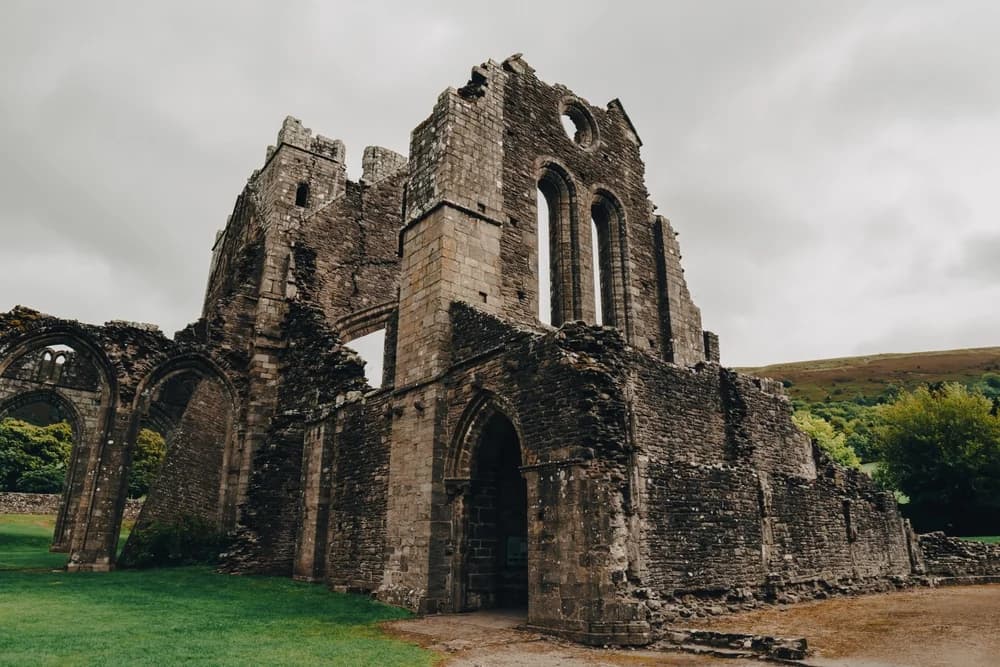
For most castles and heritage estates, restoration and renovation are not optional. Age, structural movement, outdated services, weathering, and past alterations almost always mean that careful repair and adaptation will be required to make the property safe, habitable, and legally compliant.
Unlike standard real estate renovations, castle restoration follows an entirely different set of rules. These buildings are protected cultural assets, often subject to strict heritage laws, specialist oversight, traditional materials, and long-term conservation obligations. Decisions that might be simple in a modern home, such as replacing windows, reconfiguring interiors, or upgrading insulation, can involve detailed surveys, approvals, and input from conservation professionals.
This article is designed to give prospective buyers and owners a clear, realistic renovation roadmap.
Initial Assessment & Feasibility
1. Structure
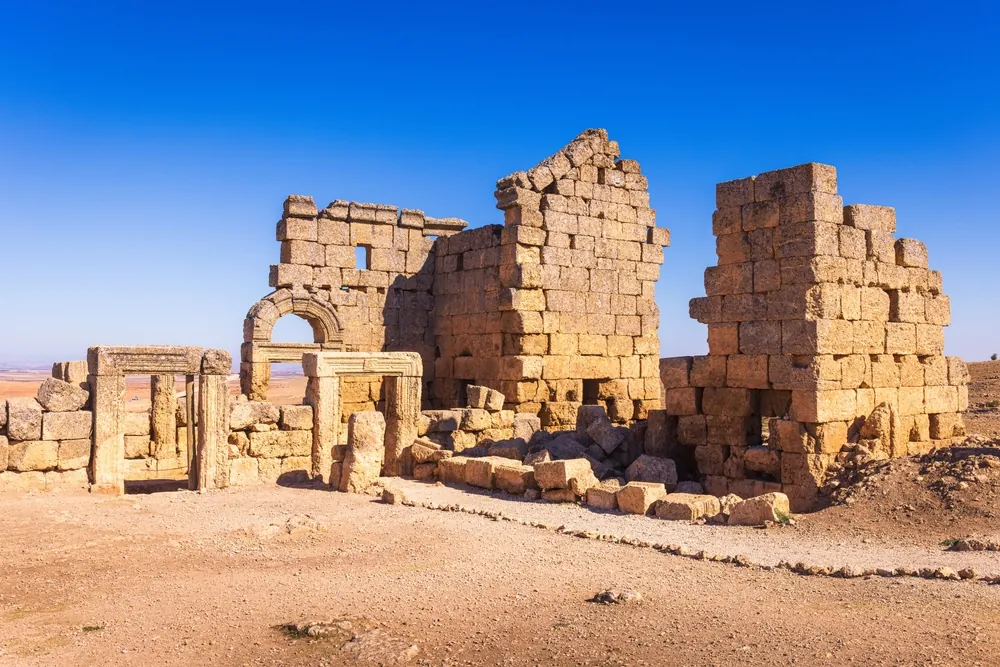
The first step is understanding the physical condition of the structure as a whole. Buyers should look beyond cosmetic decay and focus on indicators of serious structural or fabric-related issues. These include widespread cracking or movement in load-bearing walls, deformation of towers or curtain walls, roof failure leading to prolonged water ingress, eroded masonry, failing foundations, and timber decay caused by moisture or infestation. Services are another critical factor: most castles require complete replacement of electrical, plumbing, heating, and drainage systems, which can be particularly invasive and expensive in protected buildings.
Working with a structural engineer with proven experience in historic or monumental buildings is essential. Their role is to assess the overall stability and load-bearing capacity of the structure while respecting the original construction logic. Unlike engineers who primarily work on modern concrete or steel buildings, heritage specialists understand how masonry, lime mortar, timber floors, vaults, and towers behave over long periods.
2. Heritage Status
Equally important is understanding the heritage and legal status of the property. Establish whether the castle is listed, classified, or protected under national or regional heritage laws, and at what level. This determines what can and cannot be altered, which materials must be used, and how approvals are granted. Some castles carry perpetual protection obligations that apply regardless of ownership, meaning all future works will require heritage consent. Early contact with the local planning authority or heritage body is crucial to confirm what types of use, alteration, or adaptation are realistically possible.
A conservation-accredited architect is one of the most important professionals to engage when assessing heritage status. Their role is to interpret how the castle’s historical significance translates into legal and practical constraints. They can identify whether the property is listed or protected, at what grade or level, and what that designation typically allows or restricts.
Beyond confirming the designation itself, the conservation architect evaluates what elements are protected. In many castles, protection extends beyond façades to include interiors, structural elements, outbuildings, boundary walls, landscapes, and even archaeological remains below ground. They can explain how significance is distributed across the site and what this means for future works, including repairs, alterations, extensions, or changes of use.
3. Intended use
A feasibility assessment must also consider the intended use of the castle. Restoring a ruin for occasional private use is very different from converting a castle into a hotel, event venue, or multi-unit residence. Buyers should assess whether the building’s size, layout, access, fire safety requirements, and infrastructure can support their intended use without compromising heritage value. Issues such as emergency access, accessibility requirements, parking, utilities capacity, and environmental constraints can quickly render a concept unviable.
One of the most common challenges arises when a proposed use conflicts with heritage protection rules. Uses that require extensive internal reconfiguration, such as subdividing grand halls into multiple units, inserting new floors, or removing thick masonry walls, may be fundamentally incompatible with the building’s significance. If the intended use depends on changes that authorities are unlikely to approve, the project becomes unfeasible regardless of budget.
4. Financial feasibility
Castle restorations rarely follow standard cost models, and early estimates must account for the high likelihood of unknown conditions being uncovered once work begins. Buyers should expect costs to escalate due to specialist craftsmanship, traditional materials, archaeological supervision, and extended timelines caused by approvals and phased works. A realistic feasibility study includes not only construction costs but also professional fees, surveys, insurance, temporary stabilization works, and long-term maintenance obligations after restoration is complete.
converting a castle is indispensable in this process. A quantity surveyor with heritage experience can prepare realistic cost plans and contingency allowances. A project manager or conservation consultant can help model cash flow, phasing, and risk exposure over time. Financial advisors familiar with complex property projects can assess funding structures and stress-test affordability under worst-case scenarios.
There are also clear indicators that a restoration may not be financially feasible. These include cost estimates that approach or exceed the property’s long-term value or income potential, reliance on optimistic assumptions about grants or tourism demand, insufficient contingency for unknown conditions, or an inability to absorb delays and cost overruns. Projects become particularly vulnerable when buyers exhaust available funds before the building reaches a stable, weather-tight condition.
5. Why might it not be feasible?
There are clear warning signs that a castle restoration project may not be feasible for a particular buyer. These include structural instability requiring extensive reconstruction rather than repair, legal restrictions that prevent the intended use, costs that far exceed realistic budgets even after grants or tax relief, lack of access to utilities or roads with no viable solution, or a level of heritage protection that limits meaningful adaptation. Projects can also become unfeasible when owners underestimate the time commitment, regulatory complexity, or long-term maintenance responsibilities inherent in owning a historic monument.
Planning Permission Requirements
Planning permissions exist to ensure that historic significance is preserved, that interventions are appropriate, and that irreversible damage is avoided. Failing to secure the correct permissions for a renovation project can result in enforcement action, fines, or mandatory reversal of completed works.
While the principles of heritage protection are broadly similar across Europe, the process, terminology, authorities, and professionals involved vary significantly by country.
What Permissions Are Typically Required for Castle Restoration
In most European countries, castle owners will need one or more of the following approvals before undertaking works:
- Planning permission for changes to use, layout, or external appearance
- Heritage or listed building consent for any alteration affecting historic fabric
- Archaeological consent for ground disturbance or structural intervention
- Environmental or landscape approvals if the site is protected
- Building regulations approval for safety, fire, and structural compliance
Even works that might appear minor, such as roof repairs, window replacement, internal alterations, or installing modern services, can require consent if they affect protected elements.
It is important to keep in mind that successful applications for permissions usually depend on a small, well-coordinated team with specific heritage and regulatory expertise in each of these countries.
United Kingdom 🇬🇧
In the UK, most castles are Listed Buildings, often at Grade I or Grade II*, meaning they are of exceptional or particular historic interest.
Listed Building Consent is needed for any works affecting the character of the building, internally or externally. If the project involves extensions, changes of use, or significant external alterations, Planning Permission is also required. For castles designated as Scheduled Monuments, Scheduled Monument Consent is required instead of, or in addition to, listed building consent, and this is granted at national level.
Applications are submitted to the local planning authority and reviewed in consultation with conservation officers and, in some cases, Historic England. Supporting documents usually include a heritage impact assessment, method statements, drawings, and structural reports. Pre-application discussions are strongly advised and often decisive in shaping acceptable proposals.
France 🇫🇷
In France, castles are commonly protected as Monuments Historiques, either classified (classé) or registered (inscrit), with classified monuments subject to the highest level of control.
Any works affecting a protected château require authorization from the Direction Régionale des Affaires Culturelles (DRAC). External works almost always require a permit, and internal works may also require approval depending on the level of protection. Planning permission (permis de construire) may be required for changes of use or major works.
Projects are reviewed by the Architecte des Bâtiments de France (ABF), who has significant authority over design decisions. For classified monuments, restoration works often must be designed and supervised by a state-approved heritage architect. The process is highly structured and documentation-heavy, but it also provides access to grants and tax relief.
Italy 🇮🇹
Italy has one of the strictest heritage protection systems in Europe. Most castles are protected under the Codice dei Beni Culturali e del Paesaggio.
Any restoration, alteration, or repair requires authorization from the Soprintendenza Archeologia, Belle Arti e Paesaggio. This applies to both exterior and interior works, and often to surrounding land. Separate planning permission may be required at municipal level for changes of use or volume.
Applications are submitted through the local municipality but reviewed by the Soprintendenza, which evaluates heritage impact, materials, and methods. Approvals can take time and often involve revisions. Unauthorized works can lead to severe penalties.
Spain 🇪🇸
In Spain, castles are typically designated as Bien de Interés Cultural (BIC), which provides strong protection at national or regional level.
Any intervention requires approval from the relevant regional heritage authority, often alongside municipal planning permission. Archaeological oversight is frequently mandatory, even for repair works. Changes of use are particularly scrutinised.
Applications must include detailed heritage reports, archaeological assessments, and technical documentation. Each autonomous community has its own procedures, which can vary significantly in timelines and interpretation.
Germany 🇩🇪
In Germany, heritage protection is regulated at the state (Länder) level, and castles are commonly protected as Denkmäler (monuments).
Any works affecting a protected castle require approval from the Monument Protection Authority (Denkmalschutzbehörde). Planning permission may also be required for use changes or major interventions.
The process is highly technical and documentation-focused, with a strong emphasis on material authenticity and reversibility. Authorities often collaborate closely with architects during the design phase, making early consultation essential.
Eastern Europe
Eastern Europe includes a wide range of legal frameworks, but many countries follow principles aligned with EU heritage conventions. Castles are often protected as national monuments.
Permissions are typically required from national or regional heritage authorities, as well as local planning departments. Archaeological consent is common, particularly for ruins or sites with underground remains.
Processes can be less standardized and may involve multiple overlapping authorities. In some cases, heritage bodies exert strong control, while in others enforcement may be inconsistent, making professional guidance especially important.
Restoration Stages for a Castle or Historic Property

Stage 1 - Initial Stabilization and Emergency Works
Before any meaningful restoration can begin, the property must be stabilized. Many castles have been neglected for decades, exposed to weather, vegetation invasion, animal burrows, or shifting foundations. Immediate stabilization is often required to prevent collapse or further deterioration. At this stage, a conservation-specialist structural engineer conducts a preliminary safety assessment to identify urgent risks. Based on this assessment, emergency work might include erecting temporary supports for walls or vaults, installing extensive scaffolding, applying protective coverings to exposed roofs and openings, and removing hazardous debris.
This phase requires close collaboration between the structural engineer, a conservation architect who understands historic materials and methods, and specialist contractors who can safely execute temporary shoring and weatherproofing without causing additional harm. In some cases, health and safety consultants are also engaged to manage risk to workers and the public.
In Europe, the cost for emergency stabilization varies widely. For smaller or moderately compromised castles, expenditures might range from €15,000 to €80,000, while larger or severely unstable structures can quickly reach €80,000 to €350,000 or more, especially when specialist access equipment and round-the-clock protection are needed.
Stage 2 - Detailed Assessment and Documentation
Once the building is sufficiently safe, a comprehensive assessment and documentation phase begins. This is arguably the most important early investment, because it informs every design, cost, and permissions decision that follows. Experienced professionals conduct measured surveys using traditional methods and emerging technologies such as 3D laser scanning (LiDAR), producing accurate architectural drawings of every wall, opening, and structural connection. Material scientists or conservation scientists analyze stone, mortar, timber, and metals to determine causes of decay and the most appropriate repair methods. Structural engineers specializing in historic buildings perform in-depth analysis of load paths, settlement, and moisture behavior. Archaeologists or building archaeologists assess below-ground conditions and historical phasing to ensure that buried heritage is documented and protected.
All findings are compiled into detailed reports, including a heritage significance assessment and a preliminary cost model. A chartered surveyor with heritage experience often translates these findings into early cost ranges. The documentation phase may also include environmental and ecological assessments if protected species or habitats are present.
Cost for detailed assessment and documentation in Europe typically ranges from €30,000 to €120,000 for smaller, straightforward properties, but for large castles with archaeological complexity, it can escalate to €120,000 to €450,000 or more. Owners should view these figures as a strategic investment: poor documentation leads to planning refusals, redesign, and unexpected cost increases later.
Stage 3 - Approvals, Permissions, and Consents
Historic properties are protected by cultural heritage laws across Europe, and almost no restoration can start without formal permissions. The terminology and authorities vary by country, but the principle is universal: authorities must approve proposed interventions that could affect character-defining materials, historic layouts, or surrounding landscapes. In the UK this means Listed Building Consent and Planning Permission; in France authorization through the DRAC and input from the ABF; in Italy permits from the Soprintendenza; in Spain approval from regional heritage bodies and municipal planning; in Germany permissions from state Denkmalschutzbehörden; and in Eastern Europe a combination of national and local heritage approvals.
Securing these consents is documentation-heavy and typically iterative. A conservation architect prepares drawings and heritage impact statements. A heritage planning consultant coordinates submissions and liaises with authorities. Legal advisors familiar with local heritage and planning law review obligations and conditions, particularly in countries where covenants or public access requirements attach to protected sites. Archaeologists may also be involved if ground disturbance is proposed.
Because this stage involves professional fees, time, and revisions, owners should budget accordingly. In Europe, straightforward approvals might cost €20,000 to €70,000 in professional fees. More complex or multi-jurisdictional processes, especially conversions to new uses like hotels or public attractions, can see costs of €70,000 to €250,000+ before work can legally begin. Timeframes can stretch from several months to multiple years depending on the country and complexity.
Stage 4 - Detailed Design and Tendering
With permissions secured, the project enters the design and tendering phase. This stage turns assessments into precise construction documents. Conservation architects develop detailed drawings showing not just what will be repaired, but how. Specifications describe materials, methods, and sequences that meet heritage standards. Quantity surveyors or cost consultants refine cost estimates with greater precision, often dividing work into tender packages that reflect specialist trades: masonry restoration, timber roof repair, lime plaster, metalwork, etc.
Preparing documents for tender also involves specifying contractor qualifications, because not all builders have the expertise to work sensitively on heritage fabric. Pre-qualification questionnaires, site briefings, and contractor interviews are common. The goal is to secure bids from specialist contractors who understand traditional materials like lime mortar, stone masonry, and timber framing, and who can work within the constraints of a protected monument.
This phase is primarily professional fees and preparatory work. In Europe, detailed design and tendering typically costs €50,000 to €180,000+, depending on project size and complexity.
Stage 5 - Core Restoration and Repair Works
This is the heart of the project, the actual physical restoration. It begins with structural repair and moves through restoration of historic fabric. Depending on the castle’s condition, this may involve extensive foundation stabilization, rebuilding collapsed walls, re-roofing with traditional materials, timber repair or replacement, masonry consolidation with compatible stone and lime mortar, window and door restoration using traditional carpentry and glazing, and damp-management systems that respect heritage fabric.
Work at this stage is carried out by specialist heritage contractors overseen by the conservation architect and structural engineer. Daily supervision ensures that methods and materials adhere to permissions and respect historic integrity. Quality control and conservation protocols are rigorous, with frequent inspections.
Because this work is physically demanding and highly specialized, it accounts for the largest portion of the budget in any restoration. In Europe, castle repairs might be priced by area: €1,000 to €2,500 per square meter for basic structural and weatherproofing work, €2,500 to €4,500 per square meter for mid-complexity repair and finish, and €4,500 to €8,000+ per square meter for highly intricate conservation requiring artisan skills. For large castles, total costs can quickly reach €3 million to €10+ million just for this stage.
Stage 6 - Installation of Modern Services and Interior Fit-Out
After the structure and envelope are secure, modern services and interior work begin. Historic buildings need electrical, plumbing, heating/cooling, fire detection and suppression systems, and often climate control. Integrating these without damaging heritage fabric requires careful design and routing, with MEP (mechanical, electrical, plumbing) engineers experienced in heritage projects working closely with the conservation architect.
If the castle is being converted to an inhabited residence, hotel, museum, or event space, interior fit-out becomes significant. This can include kitchen installations, bathrooms, accessibility upgrades such as lifts or ramps (where permitted), insulation and moisture control systems, and interior finishes that meet both modern expectations and heritage constraints.
Because this work varies based on the intended use, costs can range widely across Europe. A basic upgrade of services might cost €300,000 to €800,000, while full system modernization with high-end finishes, climate control, fire systems, and accessibility features can reach €800,000 to €2,500,000+. Projects intended for commercial use often push toward the higher end due to regulatory requirements.
Stage 7 - Final Inspections, Certification, and Handover
Once construction and fit-out are complete, a period of final inspection and certification ensures regulatory compliance. Local inspectors verify that building codes (or equivalent heritage safety regulations) are met. Heritage authorities review work for compliance with consent conditions. Fire, safety, and accessibility inspectors may be involved depending on use. This stage often includes preparation of “as-built” documentation, operation and maintenance manuals for installed systems, and heritage compliance reports for the project archive.
Professionals engaged at this point include the conservation architect guiding final approvals, specialists responding to authority queries, and regulatory inspectors. In Europe, costs associated with final inspection and certification are generally modest compared to construction, typically €10,000 to €60,000+, depending on how many authorities are involved and whether conditions attached to permissions remain open.
Maintenance and Long-Term Care
Restoration is not the end of responsibility. Historic properties require ongoing care, and maintaining the restored condition is both a legal obligation in many jurisdictions and a practical necessity. A maintenance plan is developed outlining scheduled inspections of roofs, masonry, drainage, monuments, and interior finishes. Routine work such as repointing, gutter clearing, timber treatment, and cyclical conservation interventions must be budgeted.
Owners should plan annual maintenance budgets across Europe ranging from €10,000 to €100,000+ depending on size and use intensity. Engaging a conservation architect or specialist consultant periodically to review condition helps catch issues early and avoid costly future repairs.
Grants, Subsidies & Tax Relief
As outlined in the previous sections of this article, the restoration of a castle or historic property involves multiple stages, each with its own technical complexity and cost implications. When structural issues are severe or decay has progressed over decades or even centuries, these costs can quickly become substantial and, in some cases, daunting for private owners. However, castles and heritage assets are not ordinary buildings. Because of their cultural, historical, and architectural significance, owners may be eligible for a range of grants, subsidies, and tax relief schemes designed to support their preservation. When properly understood and strategically used, these financial tools can significantly reduce the overall burden of restoration and, in some cases, make projects that initially seem unfeasible financially viable.
Private owners across Europe have access to a mix of public, charitable, and tax-based incentives that can significantly reduce net costs. However, these incentives vary widely by country and are almost always tied to the building’s heritage status, approved restoration plans, and sometimes public access or community benefit.
United Kingdom 🇬🇧
In the UK, historic property owners can access several funding mechanisms, though most are competitive and require well-developed proposals rather than simply owning a protected building. Historic England offers discretionary grants for capital works and project development, which can help pay for restoration and preservation activities on eligible heritage assets. These grants typically range from small-to-mid-size contributions and depend on the specific goals and heritage value of the project.
The National Lottery Heritage Fund is one of the largest sources of heritage funding in the UK, providing grant awards from around £10,000 up to £10 million for projects that conserve historic places and make heritage accessible and sustainable. For castle owners, this fund is particularly relevant when the project also engages community use, education, tourism, or creative repurposing.
The Architectural Heritage Fund (AHF) offers both grants and loan finance to not-for-profit organizations and social enterprises working on heritage buildings, including early stage viability work and development costs for restoration. Some charitable trusts and historic building organizations also make targeted grants when they align with conservation missions; for example, local historic buildings trusts may occasionally support specific projects.
While direct tax relief for maintenance and repair of private castles is more limited than funding, there are tax incentives linked to public benefit and charitable arrangements. For example, setting up a dedicated fund for the building’s maintenance can offer capital gains and inheritance tax relief in some cases. It’s worth noting that recent changes to VAT exemptions on repair works for listed places of worship in the UK have affected similar reliefs, suggesting owners should seek specialist advice before assuming VAT advantages will apply.
France 🇫🇷
France has one of the more structured systems for supporting historic property restoration, largely centered around the Monument Historique framework. Owners of classified or registered monuments can apply to the regional branches of the Ministry of Culture (DRAC) for direct state subsidies, often covering roughly 20–40% of approved restoration costs for protected parts of the building.
Beyond direct subsidies, private owners can benefit from tax incentives, including deductions against income tax for certain heritage-related expenses. Tax deductibility rates can be up to 50% of eligible project costs, and in some instances tied to public access commitments.
France also has the Fondation du Patrimoine, a private non-profit that awards a heritage label to qualifying restoration projects, including those on unprotected but culturally significant buildings. This label can lead to attractive tax deductions and may supplement other subsidies. There are also regional and departmental grants that vary significantly across the country.
Energy-related schemes such as France’s Certificats d’Économie d’Énergie (CEE) may provide additional contributions toward energy upgrades that align with historic conservation goals if combined with heritage-compliant works.
Italy 🇮🇹
Italy’s heritage funding environment includes capital grants for direct restoration work, which are administered annually by the Ministry of Culture. These grants often prioritize urgent conservation needs, seismic safety, and opening sites to the public, with funding scaled to project scope and cultural urgency.
In addition to grants, owners can apply for interest subsidies on loans taken out to finance restoration work, where the government helps cover a portion of loan interest costs to reduce financial burden.
Tax incentives in Italy also extend to broader renovation legislation, such as substantial deductions for removing architectural barriers and improving accessibility, often relevant to historic buildings being adapted for modern use. Regional initiatives also exist, such as those in Trentino-Alto Adige, offering non-refundable grants that can cover significant portions of renovation costs when tied to residency or local economic goals.
Spain 🇪🇸
In Spain, there isn’t one unified national scheme specific to castles, but a combination of national, regional, and EU-linked funding supports heritage restoration. Many restoration programs are funded through frameworks aligned with the EU’s Recovery, Transformation and Resilience Plan and regional development funds, offering rehabilitation subsidies for building envelopes and improvements that enhance structural and energy performance.
At the national level, programs like the Plan Patrimonio Histórico can provide support covering a significant portion of approved costs for listed monuments, often between 40% and 60%, with extra points given for projects that integrate modern performance improvements while respecting heritage norms. In addition, for restoration linked to rural development or community revitalization, EU funds such as ERDF and Cohesion Fund can be tapped indirectly, especially where local authorities or municipalities act as partners.
Tax incentives in Spain generally provide reductions on income or property taxes tied to conservation, repair, promotion, or exhibition of cultural heritage assets, although the rules vary by region and require careful documentation.
Germany 🇩🇪
Germany’s heritage support structure is largely state (Länder) driven, meaning that programs and incentives vary depending on regional heritage laws and budget priorities. Across many German states, public subsidies and grants are available for the conservation of listed buildings, often focused on structural preservation and adaptive reuse that sustains cultural tourism or public access.
At the federal and state level, owners may also access low-interest, subsidized loans to help finance restoration or partial renovation. These can be particularly attractive for larger projects such as castle conversions into hospitality assets or event spaces.
Tax incentives play an important role in Germany through regimes like Denkmal-AfA, which allows owners (including investors and owner-occupiers) to deduct a significant share of certified renovation costs from taxable income over a specified period (e.g. up to 90% over 10–12 years under income tax rules). To qualify, renovation works must be pre-approved by the local monument authority, and receipts and certificates are essential.
Eastern Europe
In Eastern European countries, heritage incentives are often less centralized and can be tied more directly to national cultural heritage programmes, EU funds, and local municipality schemes. Across the region, national Ministries of Culture or equivalent bodies administer subsidies for protection and renovation of registered monuments, including private historic properties. These subsidies are typically awarded based on announced programs with eligibility tied to official registration in national heritage lists.
Many countries in Eastern and Central Europe also participate in EU structural funds (ERDF, Cohesion Fund, EAFRD) which can allocate significant resources toward rehabilitation and adaptive reuse of historic buildings. These funds often require cooperation with local authorities or public entities and may be contingent on broader regional development objectives.
Corporate or private sponsorship incentives also exist in some nations, offering corporate tax reductions for investments in heritage preservation, though uptake and scale vary widely.
European Union Programs 🇪🇺
Across all European regions, broader EU funding frameworks such as the European Regional Development Fund (ERDF), Creative Europe, LIFE Programme, and other cohesion instruments provide opportunities for heritage conservation when projects align with environmental sustainability, cultural activation, or community revitalization goals. These programs often require structured partnerships with public or community bodies and successful applications well in advance of work starting.
Common Restoration Pitfalls
1. Hidden Structural Problems and Material Decay
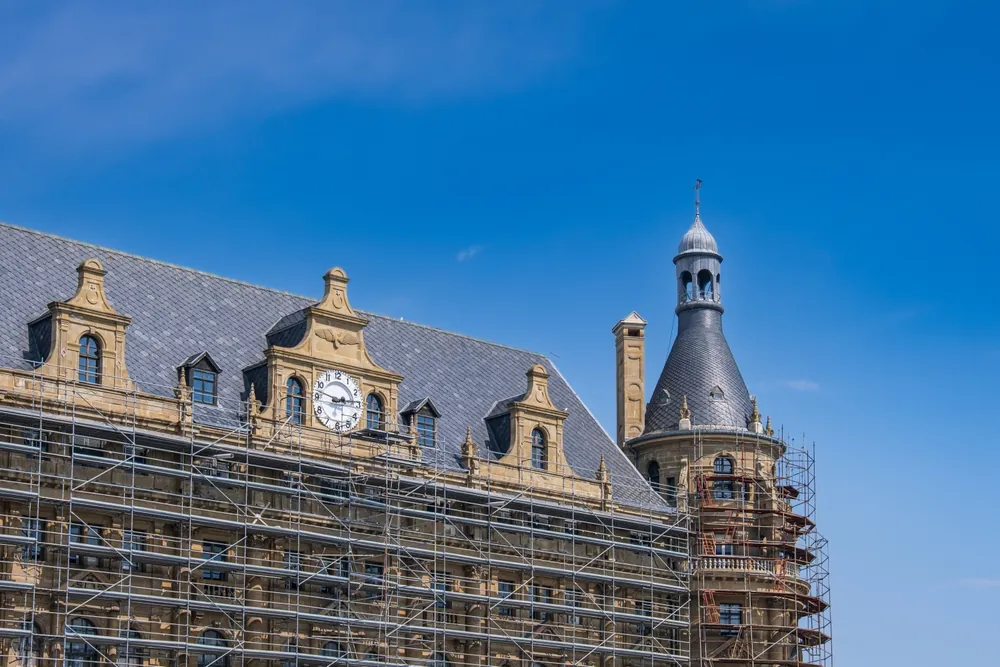
One of the most frequent and costly surprises in castle restoration is the discovery of hidden structural problems. Castles endure centuries of environmental stress and many structural weaknesses are concealed behind plaster, earth, or rubble. Foundations may have settled unevenly, internal timber frames may be rotted, or roofs may be near collapse without obvious outward signs until scaffolding goes up.
Historic buildings also often contain outdated or degraded infrastructure such as obsolete wiring, plumbing, and outdated heating systems that were never replaced properly and now pose safety hazards or fail to meet modern codes. These underlying issues often cannot be identified without thorough surveys before work begins, but even then, deep problems only become visible once walls are opened or rubble is removed. Unexpected structural defects can push restoration budgets far beyond initial estimates and extend timelines by months or even years because corrective structural work is specialized, time-consuming, and expensive to execute properly using compatible, traditional methods.
2. Unforeseen Archaeological Discoveries
Castles and heritage buildings are, by their nature, archaeological sites as well as built structures. As work proceeds on foundations or interior floors, workers often uncover historical features, burial grounds, hidden tunnels, crypts, or significant artifacts that were previously undocumented. In some cases, what was thought to be straightforward flooring turns out to contain an ancient underground chamber or preserved wall beneath rubble. While these findings are fascinating from a heritage perspective, they typically trigger mandatory archaeological study and preservation protocols, which can dramatically delay construction, require redesign of plans, and increase costs by involving specialists, documentation, and careful excavation. Owners who begin restoration without comprehensive archaeological surveying risk discovering that areas they planned to open up or adapt cannot be disturbed without lengthy investigation.
3. Approvals Delays and Regulatory Constraints
Even with expert planning, restoration projects can run afoul of heritage regulations or planning authorities. Historic estates often require multiple consents and the approval process can be lengthy, complex, and iterative. A lack of early engagement with heritage authorities or failure to anticipate all required permissions means owners may begin work that authorities subsequently require to be halted, redesigned, or reversed, leading to cost overruns and delays. Rigorous heritage regulations, while important to protect cultural value, slow progress and add administrative costs if not navigated properly from the start.
4. Inappropriate Materials or Incompatible Methods
Using the wrong materials or techniques, even with good intentions, can undermine a restoration project.
Historic masonry, timber, plaster, and other materials were often sourced and crafted using pre-industrial methods; modern substitutes such as high-strength cement or non-breathable materials can trap moisture and accelerate deterioration of original fabric. When incompatible repair methods are employed, not only does this compromise the building’s structural integrity and heritage value, it can also require expensive corrective work later. Projects that forgo specialist heritage craftspeople in favor of cheaper general contractors are particularly susceptible to this error.
5. Public Controversy and Design Backlash
Even technically successful restorations can falter when they attract public or expert backlash for design choices. A highly visible example of this is the restoration of Castillo de Matrera in Spain, where a controversial approach involving bold modern interventions and reconstruction of missing volumes drew criticism from local heritage groups for being too stylistically aggressive, even as it received architectural praise. Some critics derided the work as a “Frankenstein restoration,” a term used in architectural discourse to describe reconstructions that many feel compromise historic integrity rather than conserving it.
When public sentiment or heritage organizations push back, permits may be revisited or conditions tightened, introducing delays and additional cost for redesigns or amended planning applications.
6. Fire, Water Ingress, and Environmental Damage
Historic buildings are highly susceptible to damage from environmental elements and disasters. The restoration of Windsor Castle after the 1992 fire, which destroyed large interiors, required an extensive, high-profile recovery project that originally had been feared to cost £60 million but still came in at about £36.5 million over five years of work. This major setback illustrates how unexpected calamities, whether fire, flood, or storm damage, can compel owners to reassess entire project scopes, integrate new safety standards, and absorb costs well beyond initial restoration budgets.
How Owners Can Avoid These Pitfalls
Avoiding restoration pitfalls requires rigorous upfront planning, expert involvement, and realistic budgeting. First and foremost, comprehensive surveys, including structural, archaeological, and material analyses, should be commissioned before contracts are signed. Engaging heritage-experienced architects, engineers, and archaeologists early ensures that many hidden issues are highlighted prior to construction.
Second, specialists familiar with local heritage planning systems should coordinate pre-application discussions with authorities, clarifying required permits and likely conditions. This reduces the risk of costly mid-project revisions and delays.
Third, owners should invest in qualified, experienced craftspeople and specialists rather than the lowest-cost contractors, ensuring materials and methods are compatible with historic fabric. A strong maintenance and monitoring plan from day one helps prevent environmental damage from going unnoticed.
Finally, conservative budgeting with a robust contingency reserve, often 20–30% or more above estimated costs, provides financial flexibility when unanticipated challenges arise. When owners implement a cautious, well-informed approach from the beginning, many of the common pitfalls that derail or endanger castle restorations can be managed or avoided altogether.