
How to Finance a Castle Purchase (Even Without a Traditional Mortgage)
Learn how to finance a castle without a traditional mortgage: specialist lenders, private banking, asset-backed loans, seller financing, and restoration grants.
Financing a castle purchase may seem out of reach at first glance, especially when traditional mortgages are often unavailable or impractical for historic properties. Castles and heritage estates across the UK and Europe are considered non-standard assets by most banks, due to their age, protected status, size, and restoration requirements. However, the absence of a conventional mortgage does not mean that ownership is impossible. In practice, many successful buyers rely on alternative financing structures tailored to high-value, historic real estate.
This article explains how castles can be financed through a range of realistic and proven options. It explores why traditional mortgages are rare, but still possible in some cases, before examining private lending and wealth-based financing used by high-net-worth buyers. It also looks at asset-backed loans, seller financing arrangements, and the role of government grants and subsidies, particularly for protected or culturally significant properties.
Are Mortgages Available to Finance a Castle?
That said, traditional mortgages are not impossible for castles and historic properties in the UK and Europe. They are simply rarer, more selective, and typically require specialist lenders, higher deposits, and extensive due diligence. Foreign buyers can access mortgages in many countries, but the criteria are usually stricter than for local residents.
United Kingdom
In the United Kingdom, obtaining a traditional mortgage for a castle or listed historic property is possible, but it sits firmly within the specialist lending space. High-street banks often decline these properties because of their age, unconventional construction methods, size, and Listed Building status. However, the UK has a well-developed network of private banks and specialist lenders that regularly finance historic estates, particularly when buyers have strong financial profiles.
Loan-to-value ratios are typically lower than for standard residential homes, most often falling between 40% and 60%. Lenders require extensive due diligence, including full structural surveys and specialist heritage reports, to assess long-term risk. While being a Listed Building does not automatically prevent mortgage approval, it increases scrutiny, particularly around maintenance obligations and restrictions on alterations. If the castle is intended for commercial use, such as a hotel, wedding venue, or holiday rental, a mixed-use or commercial mortgage may be required instead of a residential product.
Foreign buyers can obtain UK mortgages, but approval depends heavily on demonstrable income, asset backing, and professional UK legal representation. Many international buyers work with UK private banks or international lenders with established UK operations, as these institutions are more familiar with complex, high-value historic assets.
France
France is often considered one of the more accessible European countries for mortgage financing, even for historic properties, though castles and châteaux still occupy the higher-risk end of the market. French banks may lend on a château provided it is structurally sound and legally compliant, with particular attention paid to ongoing restoration obligations.
Properties classified as Monument Historique do not automatically disqualify buyers from obtaining a mortgage, but lenders carefully assess the scope and cost of required conservation works. For strong borrowers, loan-to-value ratios typically range between 50% and 70%, and France’s long fixed-rate mortgage terms can be especially attractive for buyers planning long-term ownership.
Foreign buyers are generally eligible for French mortgages, although the process requires thorough documentation, including translated financial records and the opening of a French bank account. Mortgage approvals for historic properties often take longer due to complex valuations and fewer comparable sales. One advantage unique to France is that traditional mortgage financing may sometimes be paired with tax incentives linked to protected historic buildings, improving overall affordability for compliant owners.
Italy
In Italy, traditional mortgages for castles and historic properties are possible but considerably more limited. Italian banks tend to be cautious with protected buildings, particularly those requiring extensive restoration or subject to strict heritage controls. As a result, loan-to-value ratios are usually lower, often between 40% and 60%.
Italian lenders place significant emphasis on legal clarity, title history, and confirmation of heritage restrictions. Properties that require major structural work may be considered ineligible for mortgage financing until restoration is completed. In addition, heritage properties may be subject to state pre-emption rights, which can complicate financing timelines and increase lender caution.
Foreign buyers can obtain Italian mortgages, but approvals are selective. Buyers must obtain an Italian tax code (codice fiscale) and open a local bank account. In practice, many international buyers use cash or international financing for the acquisition and later refinance once the property has been restored and stabilized. Mortgages in Italy are generally more feasible for already-restored historic properties than for ruins or large-scale renovation projects.
Spain
Spanish banks are relatively open to lending to foreign buyers, but castles and historic estates are considered niche assets. Mortgages are usually possible only if the property is habitable, legally compliant, and does not require immediate structural work. For non-resident buyers, loan-to-value ratios typically range from 50% to 60%.
Rural castles and protected historic properties often face stricter valuation standards, particularly in regions with limited market comparables. If the buyer intends to operate the property as a hotel, guesthouse, or tourist accommodation, banks may require a commercial mortgage rather than a residential one.
Foreign buyers can access Spanish mortgages, but they must first obtain a NIE (Número de Identidad de Extranjero) and open a Spanish bank account. Lenders closely assess income stability, credit history, and currency exposure. Historic properties that require significant restoration are frequently excluded from traditional mortgage lending until work has been completed.
Germany
Germany has one of the most conservative but also most structured mortgage markets in Europe. Mortgages are available for historic and listed buildings (Denkmalschutz), provided buyers meet strict financial and planning criteria. German banks focus heavily on income stability, long-term affordability, and detailed forward planning.
Loan-to-value ratios for strong applicants typically range between 50% and 70%. For listed buildings, lenders may require detailed renovation plans upfront, particularly if the buyer intends to benefit from tax depreciation schemes linked to heritage properties.
Foreign buyers can obtain German mortgages, but the process is more challenging without EU ties or local income. German banks generally prefer borrowers with strong asset positions, long-term residency plans, or existing German banking relationships. Documentation requirements are extensive and formal, reflecting the highly regulated nature of the German property market. Germany is especially attractive for buyers planning long-term ownership due to the tax advantages available for qualifying historic renovations.
Czechia (Czech Republic)
Czechia is an emerging market for castle buyers, but traditional mortgage financing remains limited for historic properties. While mortgages are widely available for standard residential homes, cultural monuments and castles often require higher deposits or full cash purchases.
Loan-to-value ratios for heritage assets are typically lower, frequently falling below 50%. Banks are particularly cautious when properties are intended for hospitality or tourism use, as these projects depend on future income rather than existing stability.
EU citizens generally face fewer barriers than non-EU buyers, while non-residents may need significant local representation, guarantees, or additional collateral. As a result, many foreign buyers rely on private or international financing. Czechia is often more accessible for buyers who can self-finance the purchase and refinance later once the property is operational and income-generating.
Private Lending & Wealth Financing for Buying a Castle

Private lending focuses less on rigid lending criteria and more on the buyer’s overall wealth position, asset base, and long-term strategy. For buyers with significant capital, this approach offers greater flexibility, faster decision-making, and the ability to fund complex or phased projects.
Private lenders understand that castles are long-term assets, where value lies not just in immediate income, but in preservation, adaptive reuse, and cultural significance.
For many buyers, private lending and wealth financing are not alternatives of last resort, but deliberate choices that provide the flexibility and capital stability required to successfully acquire and manage historic properties.
United Kingdom
Prominent private lenders in the UK include HSBC Private Banking, Coutts & Co, Lombard Odier, and Barclays Private Bank, all of which offer bespoke financing solutions for high-value and non-standard assets. There are also specialist bridge lenders and family office lenders who will structure bespoke loans.
Private lenders may consider the potential cash flow of a property used commercially, applying a business lending structure to part of the loan. Because castles are unique in every case, lenders often require detailed heritage and structural surveys before finalising terms.
France
Private banking arms of major institutions such as BNP Paribas Banque Privée, Société Générale Private Banking, Crédit Agricole Suisse, and UBP (Union Bancaire Privée) are among those known to structure bespoke loans for high-net-worth castle buyers in France. These lenders focus on the buyer’s international wealth portfolio, projected income, and the long-term value of the château.
Château financing arrangements may be tied to staged releases, where capital for restoration is released as work is certified, helping manage long and complex renovation timelines.
Spain
International private banks such as Banco Santander Private Banking, BBVA Compass Wealth, and global institutions with Spanish presence like Credit Suisse and Julius Baer are often active in heritage lending. Additionally, boutique lenders and family offices in Madrid and Barcelona may offer structured loans that align with restoration cash flows.
Italy
Lenders such as Intesa Sanpaolo Private Banking, UniCredit Private Banking, Mediobanca Private Banking, and international players like Deutsche Bank Wealth Management provide bespoke loans that can include renovation financing when tied to a clear conservation plan. Italian lenders typically demand clarity on heritage constraints, as properties protected under the Codice dei Beni Culturali entail additional complexity.
Germany
Major private lenders active in this segment in Germany include Deutsche Bank Wealth Management, Commerzbank Private Banking, Bethmann Bank, and Berenberg Bank, along with sizable regional private banks in Bavaria and Baden-Württemberg, where many historic properties are located. These institutions emphasise income stability, comprehensive financial planning, and structured repayment conditions.
Czechia
International private banks and wealth managers serving Central and Eastern European clients, such as Raiffeisen Bank International Private Banking, J&T Banka Private Banking, and Komerční Banka Private Banking, may structure financing that considers the buyer’s entire financial picture. Additionally, cross-border lenders and boutique finance houses often tailor products to high-value heritage acquisitions.
Asset-Backed Loans
Because these assets provide strong collateral, lenders are often willing to offer credit on more flexible terms than with standard mortgage underwriting. For buyers of castles, asset-backed lending can bridge the financing gap, as they can focus on the strength of the borrower’s broader portfolio rather than the immediate resale value or condition of the castle itself.
Although specifics vary by country and lender, buyers should expect common requirements when opting for this type of financing:
- Comprehensive asset valuations completed by independent firms
- Proof of ownership and clear title to pledged collateral
- Detailed financial documentation (income, tax returns, investment statements)
- Legal opinions confirming absence of liens or encumbrances
- Formal legal and tax advice to structure the loan efficiently
Because asset-backed financing is bespoke by nature, professional guidance from tax advisers, lawyers, and heritage specialists is critical.
Seller Financing
Seller financing is one of the most flexible and underused tools available to buyers of castles. In essence, seller financing means that the property owner agrees to receive part of the purchase price over time, rather than being paid entirely upfront. The seller effectively becomes the lender, allowing the buyer to complete the acquisition with a lower initial capital outlay while repaying the balance under agreed terms.
In practical terms, seller financing usually involves a negotiated down payment followed by staged repayments over several years, often with interest. The seller retains legal security over the property, such as a registered charge or equivalent right, until the deferred amount is fully repaid. Ownership transfers to the buyer at completion, but the seller’s interest remains protected. These arrangements are typically tailored to the specific property, its condition, and the buyer’s plans, whether residential, commercial, or mixed-use.
In the UK, seller financing is legally straightforward when handled by experienced solicitors. The deferred element of the purchase price is formalised through a private loan agreement and secured via a legal charge registered with HM Land Registry. This structure is frequently used for listed castles requiring restoration or estates intended for future hospitality use, where buyers want to preserve capital for works, planning approvals, and early operating costs. For sellers, it can reduce time on the market and provide a steady income stream rather than a single lump sum.
France is one of the most established markets for seller financing, where it is commonly known as crédit vendeur. The process is overseen by a notaire, and the deferred payment is recorded directly in the title deed, giving the seller strong legal protection. Crédit vendeur is widely accepted in château transactions, particularly for family-owned properties and monuments historiques, where sellers may prefer gradual payments and buyers need flexibility to manage restoration obligations. The cultural familiarity with this structure makes France one of the most accessible countries in Europe for seller-financed historic property purchases.
In Spain, seller financing is legally possible but varies by region and requires careful drafting. It is often used for rural castles and historic estates that face delays in tourism licensing or planning approvals. The agreement is typically notarised, and the seller’s rights are protected through specific clauses that allow recovery of the property if the buyer defaults. Given Spain’s strong regional differences in property law, local legal advice is essential to ensure enforceability.
Italy also allows seller financing, though it is used more selectively due to complex property law and heritage regulations. Deferred payments are usually incorporated into the notarial deed, with the seller retaining a form of mortgage-style security. This structure is most common for large estates or historic properties requiring extensive restoration, especially where state pre-emption rights or lengthy approval processes could delay refinancing. Italian seller financing agreements tend to include strict default provisions, reflecting the importance of legal certainty in a slower enforcement environment.
In Germany, seller financing is less common but still possible. It must be fully notarised and precisely structured, with clear registration of the seller’s security interest. In practice, it is often used as a short-term solution, allowing buyers to acquire a historic property and later refinance once renovation plans are approved or income generation becomes more predictable. Germany’s conservative banking culture means seller financing is typically a bridge rather than a long-term strategy.
In Central and Eastern Europe, particularly in Czechia, seller financing has become increasingly relevant for historic and culturally protected properties. Banks in these markets are cautious with castles, especially those intended for hospitality use or requiring phased renovation. Seller financing can make transactions viable for foreign buyers who lack local credit history, often combined with private lending or later refinancing once the property is operational.
While seller financing offers significant flexibility, it must be approached with care. Buyers need robust legal documentation, realistic repayment schedules, and clear alignment between financing terms and heritage approval timelines. Interest rates are often higher than bank loans, and balloon payments at the end of the term require advance planning. Currency exposure is another consideration for cross-border buyers, particularly when income and repayments are in different currencies.
When structured correctly, seller financing is not a compromise but a strategic solution. For castles and historic properties, it can unlock opportunities that traditional finance cannot. By aligning the interests of buyer and seller, seller financing often makes the difference between a castle remaining a burden on its owner and becoming a viable long-term home, investment, or heritage-led business.
Government Grants and Subsidies
While government grants and subsidies rarely help with the initial acquisition price, they are often essential for funding restoration, conservation, and adaptive reuse works that follow the purchase. Across the UK and Europe, public authorities view historic buildings as cultural assets, and many countries offer financial incentives to ensure they are preserved rather than abandoned or lost.
Across all these countries, government grants and subsidies share common characteristics. They are almost always tied to approved conservation works rather than purchase price, they require specialist documentation and heritage oversight, and they involve long application and approval processes. Buyers must be prepared to front costs and receive funding retrospectively, and they should never rely on grants as guaranteed financing. However, when incorporated into a broader financial strategy, alongside private capital, seller financing, or asset-backed loans, government support can significantly reduce the long-term cost of owning and preserving a castle.
For prospective castle buyers, the key is early research and professional guidance. Identifying the relevant heritage designation, understanding which authority administers funding, and aligning renovation plans with public heritage goals can turn grants and subsidies into a meaningful part of the overall financing picture. In many cases, these programs are not just financial tools but partnerships between owners and the state, ensuring that historic properties remain protected, maintained, and valued for generations to come.
United Kingdom
In the United Kingdom, grants are primarily focused on conservation rather than ownership. Buyers of listed castles and historic estates should look for schemes administered by Historic England, the National Lottery Heritage Fund, and, in some cases, Historic Environment Scotland, Cadw (Wales), or Department for Communities (Northern Ireland) depending on location. These grants typically support urgent repairs, structural stabilisation, roof works, masonry conservation, and projects that secure the long-term future of the building.
Funding is often tied to public benefit, meaning projects that allow limited public access, educational use, or community engagement have a higher chance of approval. While grants can range from tens of thousands to several million pounds for major heritage assets, they are competitive and require detailed conservation plans, specialist surveys, and long approval timelines. Importantly, listed status does not guarantee funding, but it is usually a prerequisite.
France
France offers one of the most generous and structured systems of financial support for historic properties in Europe. Buyers should look for programs linked to Monument Historique classification, which can unlock both direct grants and powerful tax incentives.
Grants may be available through the Ministère de la Culture, regional authorities, or local communes, often covering a percentage of approved restoration works. In parallel, owners of classified or registered historic monuments can benefit from substantial income tax deductions on restoration costs, sometimes up to 100% of eligible expenses if the property is open to the public.
France also supports heritage restoration through foundations such as the Fondation du Patrimoine, which provides grants and facilitates public fundraising. For château buyers, these mechanisms can dramatically reduce long-term costs, but compliance with conservation rules and oversight by the Architectes des Bâtiments de France (ABF) is strict.
Italy
In Italy, grants and subsidies are closely tied to cultural heritage protection and energy efficiency. Buyers of castles and historic buildings should look for funding administered by the Ministero della Cultura (MiC), as well as regional and municipal programs.
While direct grants are more limited than in France, Italy offers significant tax-based incentives, most notably the Bonus Ristrutturazioni and heritage-related tax credits for protected buildings. These incentives can allow owners to recover a portion of approved restoration expenses through income tax deductions spread over multiple years. Properties subject to vincolo storico (heritage restriction) may also qualify for reduced VAT rates on restoration works. However, accessing these benefits requires rigorous approvals from the Soprintendenza (heritage authority), and delays are common. Grants and incentives are best viewed as long-term financial relief rather than immediate funding.
Spain
In Spain, government support for historic properties varies significantly by region, reflecting the country’s decentralized system. Buyers should look for programs offered by Autonomous Communities, local councils, and national initiatives linked to cultural heritage and tourism development. Some regions provide grants for the rehabilitation of Bienes de Interés Cultural (BIC), particularly when projects contribute to rural regeneration or cultural tourism.
Spain has also used EU-backed funding, including recovery and sustainability programs, to support restoration and adaptive reuse of historic buildings. However, grant amounts are often modest, application windows can be short, and competition is high. Buyers planning to convert castles into hotels or cultural venues may find more opportunities than those seeking purely private residences.
Germany
In Germany, historic property support is closely linked to tax relief rather than direct grants. Owners of listed buildings under Denkmalschutz can benefit from generous depreciation allowances on restoration costs, often allowing a large percentage of approved expenses to be deducted from taxable income over several years. This makes Germany particularly attractive for high-income buyers who can fully utilise these deductions. In some cases, regional or municipal grants are available for specific conservation works, especially in urban regeneration zones or historically significant areas.
Buyers should consult local heritage authorities early, as eligibility depends on strict adherence to approved restoration methods and timelines.
Czechia and Eastern Europe
In Eastern Europe, including countries such as Czechia, Poland, and parts of the Baltics, grants and subsidies are often linked to EU cultural and regional development funding.
In Czechia, buyers of castles classified as cultural monuments can apply for support through the Ministry of Culture and regional heritage programs, particularly for structural repairs and façade restoration.
While grant amounts are usually smaller than in Western Europe, labour costs are lower, which can make overall restoration budgets more manageable. Eastern European countries also tend to prioritise projects that prevent further decay of endangered monuments, making early intervention a key factor in funding success.
Case Studies for Buying a Castle
1. Private Lending to Renovate
A real example of private or alternative lending being used to support castle renovation comes from Scotland, where Lowry Capital provided bespoke funding for the restoration of a historic castle. In this case, a successful hotelier was restoring a 16th-century castle located on rural Scottish land as part of a larger luxury property project. Because traditional lenders are often reluctant to fund unusual assets like castles, especially when significant refurbishment is required, this borrower turned to a specialist lender.
Lowry Capital provided £512,000 in staged funding specifically to complete the renovation works needed for the castle to function as a high-end accommodation and event venue, complementing the hotel operations. The funds were released quickly, in about 14 days, after detailed assessment of the project and the borrower’s capability to complete the works. This direct and flexible funding model allowed the buyer to avoid long delays or high rejection risk from conventional banks.
Specialist lenders are often willing to finance (private lending) renovation and refurbishment when traditional lenders refuse due to risk or complexity. Buyers of historic properties should consider lenders experienced with unusual or commercial real estate, especially when part of a larger business plan.
2. Creative Media-Driven Funding in France
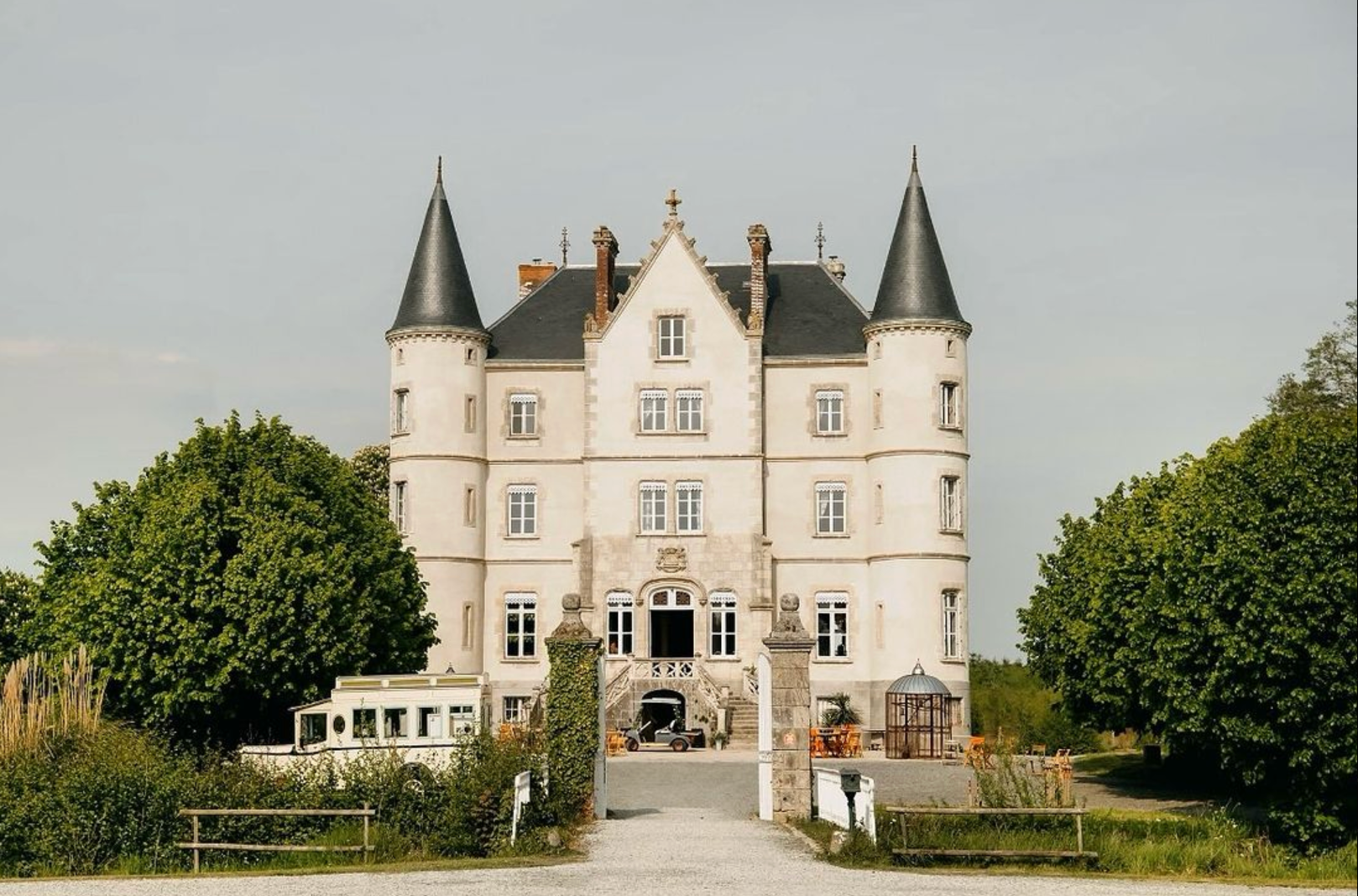
The story of Château de la Motte-Husson in rural France illustrates how a historic property can be financed and revitalised through a media and community-supported approach, rather than traditional mortgage lending. The château was sold in 2015 for £280,000 to Dick Strawbridge and Angela Newman; at the time it lacked basic services such as electricity, heating, or sewerage, and its condition was far from habitable.
Rather than relying solely on conventional bank financing, the new owners documented their renovation journey through the Channel 4 television series Escape to the Chateau. The show’s popularity contributed significantly to financing the restoration over time, generating revenue and interest that helped support ongoing conservation work. This approach effectively turned the project into a media-driven business model, using broadcast income, audience engagement, and public interest to subsidise restoration costs.
Not all historic property financing comes from loans or grants. Transforming a castle into a compelling story or business venture can create alternative revenue streams that support renovation and long-term ownership. This demonstrates how creative models (media, tourism, events) can be integrated into financing strategies.
3. Crowdfunding & Collective Ownership
Perhaps the most extraordinary European example of alternative financing for a castle is Château de la Mothe-Chandeniers. While not a traditional single-buyer property acquisition, it represents a landmark model in heritage financing. In 2017, the crumbling 13th-century château was purchased through a global crowdfunding campaign organised by the platforms Dartagnans and Adopte un Château. Over 27,000 people from more than 100 countries contributed funds to buy the property, with many contributors taking symbolic ownership roles or shares in a company created to manage and restore the site.
Although this wasn’t a single buyer financing scenario like a mortgage or private loan, it shows how crowdfunding and collective ownership models can function as innovative financing mechanisms for at-risk historic properties. Contributors effectively financed the purchase and initial preservation costs by pooling their resources, far exceeding what a typical individual investor might muster.