
How Much Does It Really Cost to Own a Castle?
The real cost of owning a castle goes beyond the price tag. Learn typical upkeep, utilities, taxes, insurance, staffing, and restoration budgets.
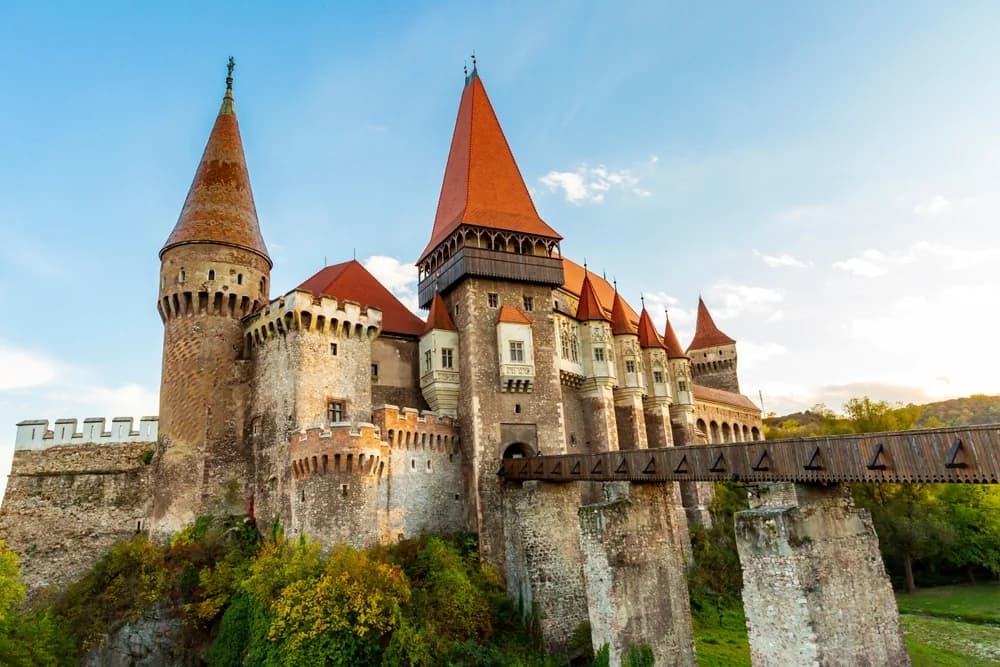
Owning a castle is a dream for many. But before prospective buyers fall for the romance, it’s essential to understand the true cost of castle ownership. These properties are centuries-old structures with massive footprints, complex heritage obligations, and unique upkeep requirements that can turn a seemingly affordable purchase into a long-term financial commitment. In Europe and the UK, castle prices vary widely, from smaller rural fortresses priced under €500,000 to fully restored landmark estates worth €20 million or more, but the purchase price is only the beginning of the financial story.
Historic castles typically require specialist due diligence that can add thousands of pounds or euros to upfront costs before contracts are even exchanged. Once ownership is secured, ongoing costs, including maintenance, utilities, insurance, taxes, staff, and groundskeeping, quickly dwarf the original purchase price if not carefully budgeted for. In the UK, annual upkeep for large listed estates can range from £150,000 to over £1 million, depending on size and usage. In France, owners can expect total annual costs of roughly €50,000 to €200,000, with heating, staffing, and garden care all contributing to the running total.
Part of the challenge lies in the age and scale of these buildings. Castles were constructed long before modern standards for plumbing, insulation, or HVAC systems, so utilities and repairs are inherently more expensive and complex. Restoration work that complies with heritage protections often requires specialist artisans and traditional materials, which can cost €500 to €1,500 per square metre for basic restoration and even more for comprehensive structural work.
This article breaks down the key financial components of castle ownership so you can make an informed decision, covering purchase price ranges, annual maintenance and utilities, renovation vs. restoration costs, insurance, taxes and staffing, and real case examples that illustrate the diverse costs associated with owning one of Europe’s most iconic property types.
Purchase price range
With different markets, the price range for castles in the UK and Europe is extremely wide, reflecting differences in location, condition, size, heritage status, and market demand. Our listing database shows that available castles (including medieval fortifications and châteaux) span all the way from €500 K up to €25 million.
There are multiple interacting factors that contribute to this wide difference and understanding them is essential for buyers assessing value, risk, and long-term return.
Historical Significance & Architectural Value
Castles with documented historical importance, unique architectural styles, or connections to notable events or figures often command a premium price. These heritage attributes aren’t just aesthetic, they signal rarity and cultural value that many buyers prize.
Properties classified as historic monuments, such as Monuments Historiques in France, often have higher valuations, because their cultural significance attracts both heritage-minded buyers and investors looking for prestige assets.
Rare architectural elements, such as original battlements, Gothic façades, chapels, or unique craftsmanship, add to desirability and can push prices upward.
A related academic study of heritage buildings in Hungary found that properties located in historic environments can enjoy appreciable price premiums compared with non-heritage properties.
Geographic Location
Where a castle is situated strongly impacts its price. Castles near major cities, transport links, or tourist hubs are more expensive because they offer stronger commercial potential (e.g., tourism, boutique hotel use) and better lifestyle appeal. For example, French châteaux in areas like the Loire Valley, Provence, or near Paris attract higher prices due to scenic surroundings and ease of access.
Castles set on large estates with forests, rivers, lakes, vineyards, or panoramic views are valued above those in isolated or less dramatic environments because of landscape prestige and broader uses.
Structural Condition
The physical state of the castle is often the single most influential price driver, dramatically affecting both purchase price and future investment needed. Well-maintained or recently restored castles fetch significantly more than those requiring extensive work.
A property in serious disrepair might list at a lower entry price, but buyers must factor in major renovation costs that can easily run into the millions of euros. For example, inexpensive French rural castles can appear under €300,000, but will require heavy investment once acquired.
Amenities
Castles that have been sensitively upgraded with modern systems (plumbing, heating, insulation, electrical wiring) and practical amenities (guesthouses, pools, outbuildings) tend to command higher prices than those lacking these comforts.
Conversely, castles lacking basic functional systems, which is common in older European buildings, may be cheaper upfront but quickly accumulate costs once modernization begins.
Supply, Scarcity & Market Demand
Price differences also reflect local supply and demand dynamics. France’s castle market has been expanding its inventory and visibility, with its share of online European castle listings growing from 43 % to 67 % between 2023 and 2025, it is attracting global buyer interest.
In countries with a high number of castles but limited active buyers (such as parts of rural France or Eastern Europe), prices can be more negotiable because supply outstrips localized demand.
Price differences by country
United Kingdom
In the UK, castle prices vary dramatically based on factors like history, size of grounds, accessibility, and restoration needs:
Lower-end listings can sometimes appear for under £1 million, especially if the building is in partial ruin and requires extensive work. For example, rural or historic fortifications in need of restoration have been advertised at prices below this threshold.
Mid-range properties with significant heritage and some modern upgrades are frequently listed between £1 million and £5 million. For instance, Ormiston Castle in Scotland has been marketed around £4.2 million, and Ayton Castle (also Scottish) around £3.25 million.
High-end estate castles, especially those with extensive land or historic prestige, can command many millions, such as Ripley Castle, which was recently listed around £7.5 million after a price reduction from higher historic asking levels.
The UK market is affected by heritage protections, planning restrictions, and the rarity of prime historic estates, which can push desirable listings into higher brackets. Demand from domestic and international buyers also supports the upper end of pricing.
France
France is one of Europe’s largest castle markets, with dozens of châteaux listed at any time and a broader range of prices.
Listings commonly appear between about €600 000 and €10 million, depending on region and condition. For example, French castles offered on luxury real estate portals include properties marketed around €620 000 in the southwest, around €1.3 to €2.2 million in regions like Gers and Eure, and larger estates approaching €9.9 million in the Vaucluse.
Even smaller châteaux in need of renovation can be found, while landmark châteaux with restored interiors, large landholdings or wine property attachments fetch premium prices.
Spain
Spain’s castle market is notable for both quantity and wide price ranges. According to recent reporting, around 500 castles are on the Spanish market, ranging from ruined fortifications to fully restored properties, with prices spanning from symbolic amounts (for neglected ruins) up to €15 million for high-end fully restored castles such as Castilnovo in Segovia.
At the upper end, exceptionally rare or prestigious Spanish castles (such as larger historic estates in prime locations) can reach multi-million valuations, often justified by land size, tourism potential, or historic prominence.
Spain’s cultural heritage laws and associated purchase and restoration requirements can also influence price, both by restricting development and by attracting buyers interested in heritage tourism or commercial adaptive reuse.
Italy
Italy’s castle market tends toward the higher end of European pricing, especially for well-preserved historic residences near major cities or cultural hubs.
Italian castle prices are often listed broadly in ranges like $3 million to $20 million+ depending on size, period detail, and location, reflecting deeper historic value and stronger market demand in tourism-oriented regions like Tuscany or Umbria. Italy’s deep cultural heritage and strong tourism draw often support higher baseline valuations, especially where access, restoration quality, and commercial potential are favourable.
Czech Republic and Eastern Europe
Eastern Europe often offers some of the most affordable European castle options, though these typically require substantial restoration.
Prices for castles in the Czech Republic can begin around €1 million on the lower end for less restored properties, with higher values as condition and location improve.
Other Eastern European markets (Poland, Romania, Slovakia) also list castles at comparatively lower base prices, though heritage and restoration costs can be significant.
Annual Maintenance & Utilities
Annual maintenance and utility costs can vary due to differences in climate, heritage regulation, staffing needs, and property scale. UK estates often face high labour and energy bills alongside heritage compliance costs, while French châteaux may face modest utility expenses offset by tax incentives and grants. Buyers should plan on tens of thousands to hundreds of thousands of pounds or euros annually, depending on size and usage, and should integrate these ongoing costs into any valuation model before purchase.
Scale and Complexity of Space
A general rule of thumb for large historic properties in Europe is to allocate approximately 1 % to 1.5 % of the property’s value per year for maintenance and repairs, meaning a €5 million castle could feasibly cost €50,000–€75,000 annually before utilities and staffing are even factored in.
Specialist Maintenance and Repairs
Historic fabric, from medieval stonework to aged timber, requires traditional craftsmanship, legal heritage consent, and specialist materials. These factors push costs well above standard property upkeep.
In the UK, routine building maintenance alone (plumbing, roofing, general repairs) is commonly £50,000–£150,000 per year for large estates, with major restoration (every decade or two) in the £250,000–£1 million range.
Examples like Kinloch Castle show annual maintenance can fluctuate between £50,000 and £160,000 even before major restoration projects are factored in.
Utility Costs
Castles are notorious for being energy guzzlers because of their size and poor insulation.
Heating a large historic home or castle in the UK via conventional systems (oil, LPG, or biomass) typically costs £20,000–£50,000 annually, reflecting the vast volume of space and typically inefficient thermal performance.
Electricity bills alone for lighting and general power can reach £10,000–£25,000 per year, and water & sewage, particularly if connected to private systems, adds £5,000–£15,000.
In France, according to French château owners’ guides, heating costs typically range from about €5,000 to €15,000 annually, depending on the season and whether the property uses traditional oil heating or has invested in energy-efficient upgrades such as geothermal systems.
Electricity for lighting, appliances, and security is often €3,000 to €8,000, and water usage can more modestly add to the total, particularly with extensive gardens and grounds.
Land & Grounds Upkeep
Large outdoor spaces contribute significantly to ongoing costs.
UK estates often require groundskeeping, forestry management, and landscaping, which can collectively add £20,000–£100,000+ per year, with additional costs if farms, equestrian facilities, or lakes are included.
French châteaux with extensive gardens and parks typically see grounds maintenance between €6,000 and €30,000 annually or more if specialized landscaping is desired.
Staffing, Security & Administrative Costs
Castles are almost never “set-and-forget” properties. Owners that live in them full-time or use them commercially will need staff.
UK staffing overheads for an estate can easily run £100,000–£300,000+ annually, including groundskeepers, housekeepers, estate managers, and security personnel. In France, employing a small permanent staff (gardeners, caretakers) will add €40,000 to €100,000+ to the yearly budget.
Renovation vs. Restoration Costs
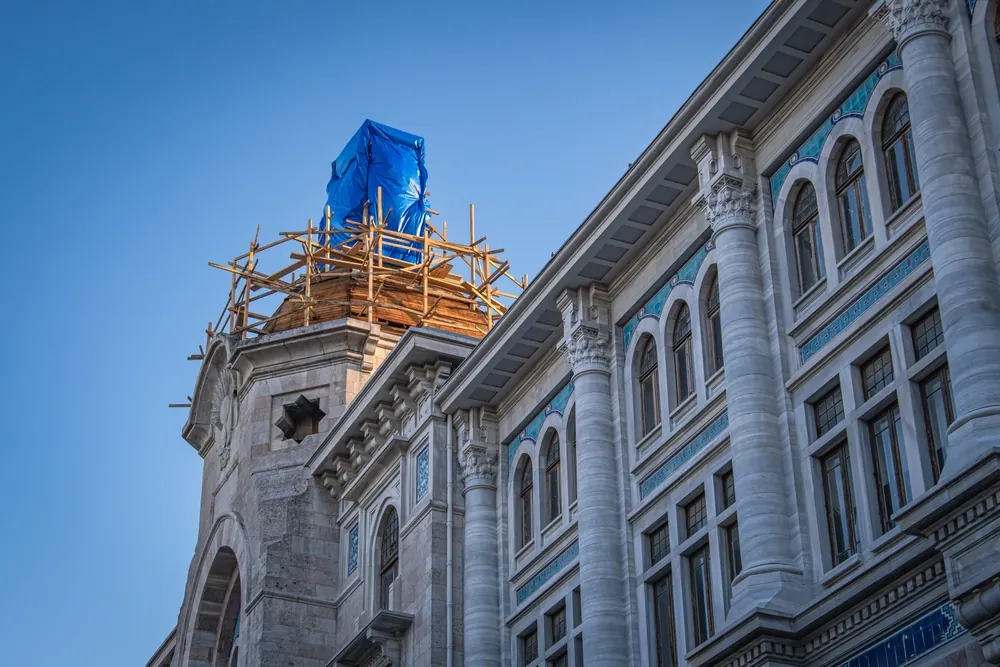
Renovation generally refers to updating or modernising a building, such as installing modern plumbing, heating, kitchens or bathrooms. It may involve replacing old materials with new ones, improving energy efficiency, or adapting spaces for contemporary use.
Restoration focuses on preserving and repairing historic fabric to maintain the building’s original character. This may include repairing medieval stonework, restoring original windows, or conserving decorative features, all often under heritage authority oversight.
Because castles are heritage assets, many projects will include both renovation and restoration elements, meaning costs can multiply compared to typical modern property projects.
Across Europe, light renovation projects can cost around €500–€1,500 per m², while a full restoration will cost around €1,500–€3,000 per m².
These figures show that the cost of renovation/restoration can easily exceed the purchase price of the property itself. For example, a castle of 1,000 m² might have base renovation costs starting around €500,000–€1.5 million, but a complete structural restoration with heritage compliance can push the total well above €3 million–€5 million before furnishings or landscaping.
Historic buildings are often protected by national heritage bodies, requiring approvals, specialist supervision, and traditional methods — all of which add time and cost beyond standard refurbishment budgets.
Insurance and Taxes
Insurance for castles and historic properties is significantly more expensive and complex than for typical homes. As discussed, old stone walls, timber roofs and historic features often cost far more to repair or rebuild than the typical wall and joist of a modern home, which means higher insurance costs.
Castles also usually contain valuable furniture, art, antiques, and unique architectural elements that need specialized valuation and coverage.
In France, annual castle insurance might range €2,000–€6,000+ depending on value, location and use (residential vs commercial).
In the UK, historic estates often carry £10,000–£30,000+ per year in insurance premiums, reflecting larger footprints and higher rebuild costs.
Taxes
Taxes on historic properties differ across Europe and can be a major ongoing cost or, in some cases, partially mitigated through incentives.
United Kingdom
In the UK, historic residential properties are subject to council tax, and if parts of the property are commercial, they may be rated under business rates. This can be £5,000–£15,000+ annually depending on value and use.
The UK also has a Conditional Exemption scheme that can exempt listed heritage assets from inheritance tax (IHT) and capital gains tax (CGT) if the owner commits to preservation and public access obligations. That said, ongoing property tax incentives are limited compared with some continental regimes.
France
France offers some of the most generous tax schemes for historic properties, but also some of the highest ongoing tax burdens due to property size.
Taxe Foncière (property tax) is an annual local property tax for large estates can reach €2,000 to €50,000+, depending on size, assessed value, and land.
Taxe d’Habitation is mainly applied to second homes and used sparingly now for main residences, but still relevant for large, unused spaces.
Owners of properties classified as Monuments Historiques can deduct maintenance and restoration costs from taxable income, often 100% of qualifying expenses if public access obligations are met. Works on listed properties can also attract a reduced VAT rate of 10%, lowering ongoing repair costs compared with standard 20% rates.
These incentives can dramatically reduce net tax burden — but only if the owner complies with heritage and public-access conditions.
Italy
Italy has a relatively high property tax (IMU) on real estate, including historic homes, with rates often between 0.4% and 0.8% of cadastral value, though historic properties may qualify for some tax deductions or allowances depending on use and restoration status.
Additionally, heritage-related tax credits and donations can give a 65% income tax credit for charitable contributions to restoration efforts on public cultural assets — though this is more relevant if owners collaborate with public entities rather than purely private residential use.
Spain
Spain offers tax deductions on acquisition, repair and restoration costs (up to 25%) when historic properties are opened to the public at specified intervals, making it possible to offset some rehabilitation costs directly against income tax.
Property taxes and other regional levies apply, and rates vary by municipality depending on cadastral value.
Netherlands
Property taxes in the Netherlands (Onroerendezaakbelasting) are assessed municipally based on local valuation, and historic status does not automatically exempt owners but can affect taxable value and levy amounts.
Historic building owners may be able to deduct a large portion of maintenance and restoration costs from taxable income (up to 80% in some regimes), but this depends on specific heritage designation and national tax provisions.
Czech Republic (Eastern Europe)
The Czech Republic historically offers very low castle purchase prices and some tax advantages once restored, although specifics vary by region. Czechia has no inheritance tax and tax breaks for owners who restore historic buildings, making ongoing tax burden comparatively low.
Final thoughts on castle ownership
Owning a castle in the UK or Europe is ultimately about far more than the headline purchase price. While acquisition costs can vary widely by country, region, condition, and heritage status, the true cost of ownership is shaped by a broader set of ongoing and long-term considerations. Maintenance, utilities, insurance, staffing, taxes, and renovation or restoration obligations all play a decisive role in determining whether a castle is a sustainable investment or an expensive burden.
Historic properties demand a long-term mindset. Stone roofs, aging services, protected interiors, and large estates require regular care and specialist expertise, often at costs well above those of conventional homes. Local tax regimes, heritage regulations, and planning restrictions can further influence annual expenses and timelines. Understanding these factors early, and budgeting realistically for them, is essential to protecting both capital and peace of mind.
That said, for well-prepared buyers, castle ownership can be far more than a romantic dream, it can be a viable and rewarding asset. Across Europe, many owners successfully offset costs by transforming historic properties into revenue-generating ventures, from boutique hotels and wedding venues to cultural attractions, retreats, and long-term rentals. When approached with careful planning, professional advice, and a clear financial strategy, a castle can combine heritage preservation with commercial potential.
In the end, the real cost of owning a castle is not simply measured in euros or pounds, but in commitment, vision, and stewardship. For those willing to understand the full financial picture and embrace the responsibility that comes with it, owning a castle can be both a meaningful investment and a truly extraordinary way of life.