
Castles in Europe
There are between 35,000 or 110,000 castles in Europe, depending on what sources assert a castle is. Europe is the region with the most castles on Earth.
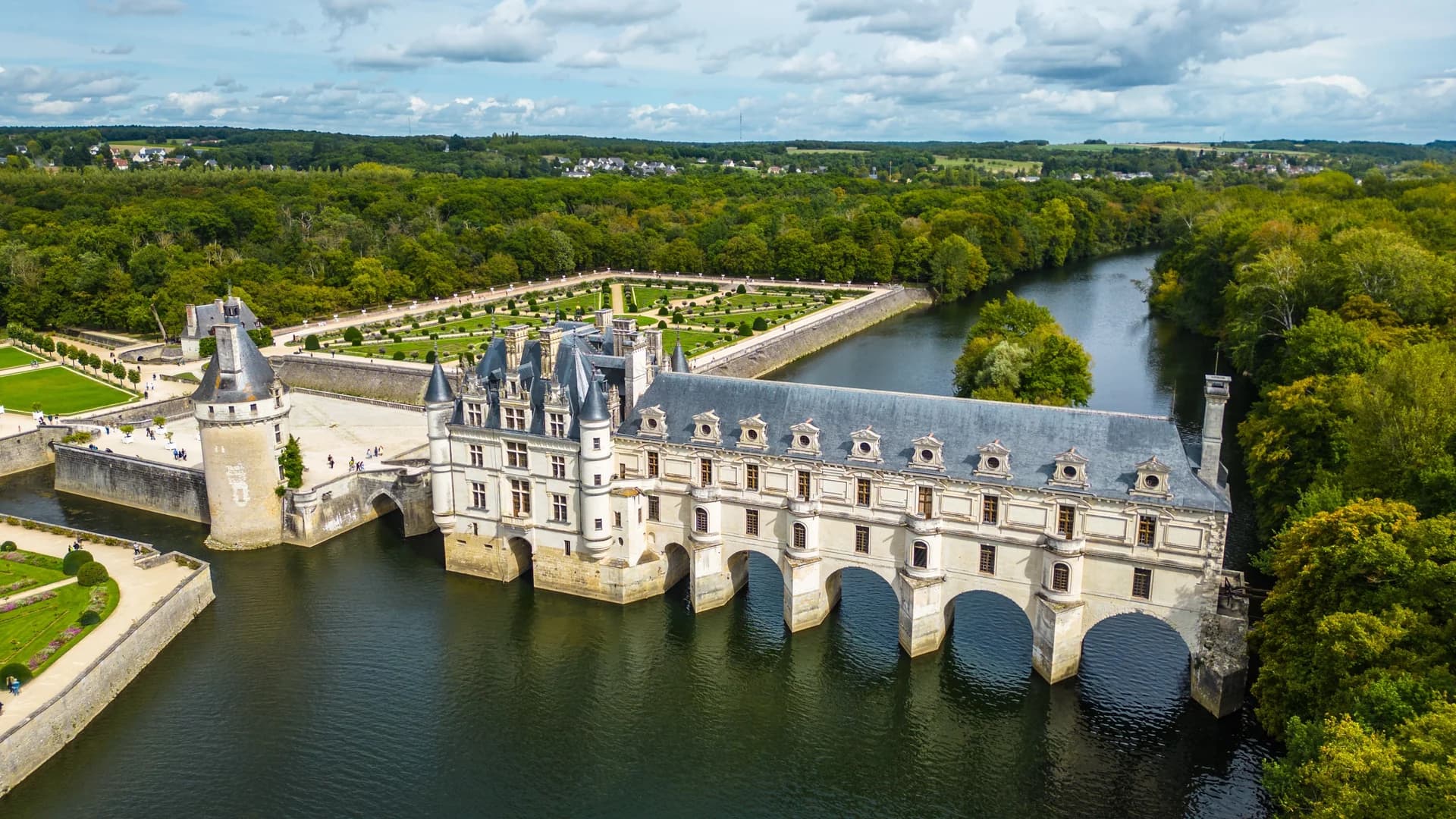
Europe shares a density of fortified heritage that exists nowhere else on the planet: thousands and thousands of castles from Norman, Moorish, and Teutonic dominions alike. Many castles were intended as palaces rather than defensive strongholds, and in some cases, like in the Islamic constructions of Spain, castles were both a defensive building and an imposing luxury residence.
This guide breaks down the numbers, the regions, and the market for those looking to buy their own piece of history.
How Many Castles Are There in Europe?
There are approximately 110,000 castles across Europe, even though some counts place the total at 35,000. No other continent or region comes close. Japan, one of Asia’s countries with the most castles, has an estimated 100 castles standing today, and only twelve retain their original castle keeps.
There is no single official count for castles in Europe because every locale defines a castle differently, and because sources share different numbers each. Still, by aggregating data from national inventories and heritage surveys, we estimate there are approximately 110,000 fortified sites across the continent in a broad estimate, or 35,000 in a more conservative estimate. The figure varies so much because the larger estimate is based out of what tourism organizations claim, while the latter figure is based on an estimate from properties that can be visited, are for sale, or are still standing in 2026. To give an example, many sites claim that there are 25,000 castles in Germany, but the most exhaustive counting project puts the number at 8,500.
Out of these 110,000 or 35,000 fortifications or castellated properties, just a fraction are for sale or habitable. Also, a big percentage of those habitable “castles” are actually French châteaux. And some French châteaux are simply wine-producing old farmhouses near Bordeaux and not castles. This is why it’s advisable to speak with specialists when planning to purchase a castle.
So, France leads this inventory with approximately 45,000 château-type structures, a figure that includes everything from medieval bastions to Renaissance country houses or even small wineries. Germany follows with around 8,500 confirmed medieval fortifications, according to the EBIDAT institute, though tourism boards often cite figures as high as 25,000 when they include later palaces and manor houses. Spain’s estimates range from 2,500 standing castles to 10,000 total defensive sites when counting watchtowers and auxiliary ruins.
The United Kingdom holds a significant portion of this heritage. England alone has over 4,000 recorded sites, while Wales holds the highest density of castles per square mile in the world. Other nations like Belgium, Italy, Scotland, and Ireland each record approximately 3,000 fortified sites. These numbers represent a massive archive of stone and brick that requires constant stewardship, restoration, and investment.
Types of Castles Across Europe
Europe’s castle heritage includes structures of immense age and scale, though definitions of "castle" vary greatly, as detailed in our country guides for Castles in Germany and Castles in France. The continent is home to the world's largest brick castle by land area, Malbork Castle in Poland, and the largest château in France, the famed Château de Chambord. When considering age, the continent’s earliest fortified sites date back to the pre-medieval era, such as the oldest "castle-like" site in Germany, the Heuneburg, from roughly the 7th and 5th centuries BCE. Other notable oldest surviving fortifications include the oldest post-Roman stone fortification in Britain, Chepstow Castle in Wales (1067), and the oldest castle in Belgium, the Château de Bouillon (988 AD).
Castles by Country in Europe
Every region in Europe developed specific fortifications to meet its political and geographic needs. The architecture changes as you move across borders, reflecting local materials, military tactics, and social structures.
Germany
Germany preserves one of the largest concentrations of medieval fortifications in Europe. This density is the direct result of centuries of political fragmentation under the Holy Roman Empire, where local rulers built strongholds to assert their autonomy. German architectural terminology distinguishes between the Burg, a purely defensive hilltop castle, and the Schloss, which serves as a residential palace.
The country now counts over 50 UNESCO World Heritage Sites (ranking third globally). For buyers, the market is tight. Most habitable castles remain in long-term family ownership or under state protection. A budget of €2 million typically secures a small, well-maintained castle, though strict monument laws protect most habitable sites.
Spain
Spain’s castle backdrop was defined by nearly 800 years of conflict between Islamic and Christian powers. The region of Castile takes its name literally from the land of castles. Even the Spanish language is known as Castilian, which would come to mean “the language from the land of castles.” This prolonged frontier war produced distinct defensive forms that differ from the feudal traditions of the north. When Moorish engineers built the Alcazaba, it was a strategic citadel for controlling the area.
The market in Spain has some of the lowest entry points in Western Europe. Prices for ruins or sites requiring total restoration can start as low as €80,000. But buyers should be aware that properties will need a lot of work before they can move in.
Poland
Poland bridges the architectural gap between the military austerity of Northern Europe and the Renaissance influences of the south. The red-brick Gothic fortresses of the Teutonic Knights stand out in the north, while the south has large royal palaces that were inspired by Italy's architecture.
Poland has great properties at an excellent value. A restored palace or a large estate often lists for €1.5 million, a price that might only buy a small apartment in major Western European capitals. The country is also home to Malbork Castle, the largest brick castle in the world by land area, which stands as a testament to the engineering prowess of the Teutonic Order.
Wales
Despite its small size, Wales has the highest density of castles per square mile in the world. Over 600 sites were built to control the mountainous terrain, ranging from the "Iron Ring" of fortresses constructed by Edward I to native Welsh strongholds.
The market here attracts mid-range buyers who can find castellated mansions for roughly £600,000. This offers significantly more space than a comparable budget would allow in England.
Belgium
Belgium claims the highest number of castles per square kilometer on Earth. The geography dictates the architecture here. In the flat lands of the north, brick strongholds rise from wide moats, while in the south, stone sentinels oversee the sheer cliffs of the Ardennes.
The Belgian market puts up well-defined value for mid-range buyers. For approximately €1.5 million, buyers can acquire entire historic castle estates. This contrasts with Northern France, where a similar budget often secures a 19th-century château of a smaller scale.
Italy
Italy holds more UNESCO World Heritage Sites than any other country, and its castle heritage is equally impressive. There are more than 3,000 castles in the area, ranging from the fortified city-states of Tuscany to the Norman strongholds of Sicily. The market here is affected by history because ownership is often split up among several heirs.
A budget of around €2 million in Italy typically opens access to a restored or partly restored castle in regions such as Piedmont or Umbria. One thing that makes the Italian tradition unique is that many of the castles were built in cities to protect wealthy families, not as outposts in the countryside.
Scotland
Scotland holds one of the highest concentrations of historic fortifications in Europe, alongside Ireland and Belgium. The architecture reflects long periods of political instability, where builders prioritized defense and structural endurance over comfort. Thick walls and vertical tower houses dominate the national stock.
The market in Scotland is established and transparent. You can start buying fortified manor houses for as little as £130,000, but they usually need a lot of work to make them functional again.
England
England currently has one of the most extensively recorded castle inventories in Europe. Construction exploded after the Norman Conquest of 1066, as a small ruling class built fortifications to assert authority over the population. Over time, these evolved from timber motte-and-bailey structures into massive stone administrative centers.
The market in England comes with a premium. A budget of £500,000 is typically the starting point for a small castle flat or a gatehouse, while full estates run into the millions. English castles were frequently adapted into comfortable country homes in later centuries.
Ireland
Ireland’s countryside is dotted with thousands of stone fortifications built between the 12th and 19th centuries. The island has one of the highest densities of medieval fortifications in Europe, particularly in County Limerick. Because Ireland had no native royalty for the last millennium, these buildings doubled as fortified residences for clan chieftains or Anglo-Norman settlers.
The market requires a budget of around €950,000 for a significant property. The distinction between the "Pale" (the area around Dublin under direct English control) and the Gaelic west is visible in the architecture. Massive Anglo-Norman fortresses dominate the east, while tall Gaelic tower houses stand on exposed sites in the west.
Famous Castles in Europe
There are thousands of sites in Europe, but a select few have become synonymous with “the European castle.” These sites, curiously enough, different incredibly in their style, architecture, and even purpose.
Neuschwanstein Castle in Germany is recognized as the standard fairytale castle. Ludwig II had it built in the 1800s as a romantic nod to the Middle Ages and not as a military stronghold, even though it’s foothold high in a mountainous region makes it somewhat ideal to defend from a siege.
The Alhambra in Spain has an entirely different layout compared to Neuschwanstein. It is a stunning example of Islamic architecture in Granada, and was both a (very elegant) fortress and a palace for the Nasrid dynasty. Its water gardens and intricate tile work show the best of Moorish art in Europe.
Malbork Castle in Poland is the height of brick Gothic engineering. As the main castle of the Teutonic Order, it stands out on the flat northlands and is still the world's biggest castle in terms of land area (more than 140,000 square metres).
Caernarfon Castle in Wales is a UNESCO World Heritage Site and one of the most impressive castles that King Edward I built. Its colour-banded masonry and polygonal towers were meant to look like the walls of Constantinople and show that the emperor was a strongman.
Château de Chambord in France is the largest château in the Loire Valley. It is the pinnacle of French Renaissance luxury and was built to show off Francis I's wealth and style, not to fight off an army or stave off a siege.
Oldest and Biggest Castles in Europe
The distinction of Europe’s biggest castles often comes down to their function and sheer scale. In terms of land area, the files highlight Malbork Castle in Poland, which holds the title of the largest brick castle in the world, having served as the headquarters for the Teutonic Order: It covers 143,000 square metres.
Meanwhile, in Ireland, Trim Castle is celebrated as the largest and oldest standing Anglo-Norman fortress, dominating seven acres of land. Architecturally, Scotland's Castle Fraser is notable for its size as one of the country's largest Z-plan castles, a specific defensive layout. On a grander, palatial scale, France's château de Versailles is mentioned as one of the most famous and massive château-type structures in the country, with the greatest total number of such buildings globally.
Regarding the oldest castles in Europe, the available documents point to sites in Great Britain and Ireland, established immediately following the Norman Conquest. In England, both Berkhamsted Castle (likely founded in 1067) and Norwich Castle (established in 1067) date to this period. In Ireland, Castlegarde Castle dates to approximately 1190 and is noted as the oldest continually inhabited castle on the island. Some of the oldest castles in Wales, for example, were built in sites where experts claim other fortresses were standing before.
Castles for Sale in Europe
The market for buying a castle varies wildly depending on the country, the condition of the building, and local heritage laws. Castles regularly go for sale across all regions. For example, Château de la Verdière, a 100-room castle, has recently been listed for sale in France, specifically a short distance from Saint-Tropez. But since castellated properties or châteaux can be listed as castles, and some countries have either regulatory complexities or numerous tax benefits, it’s most advisable to consider which properties go up for sale with a specialized partner.
All in all, the European market for historic fortified estates is defined by immense diversity in architecture, preservation, and value, with prices varying significantly by country, condition, and heritage regulations.
For mid-range buyers, a budget of approximately €2 million in markets such as Germany or Italy often secures a restored or well-maintained residence, while the same figure in France is likely to acquire a large, later-period château. England, for its part, has some of the steepest prices, although expensive properties seem to very well-maintained.
In contrast, countries like Belgium and Poland offer exceptional value, with opportunities to acquire entire estates for around €1.5 million. For those seeking entry-level acquisitions or sites requiring full restoration, starting prices for castles or fortified manor houses can begin as low as £130,000 in Scotland or €80,000 in Spain.
The market is highly regulated across the continent, with only a small fraction of the total historic inventory available for sale, particularly in countries with strict heritage laws. Potential buyers should note that in almost every European jurisdiction, ownership comes with the responsibility of maintaining a protected monument.
Learn About More Castles in Europe
The market in Europe has opportunities (and tax breaks) for different kinds of financial investments. For instance, the historic Castello di Sammezzano in Tuscany was recently bought in order to develop it as a museum. This shows that buying a castle can lead to business projects in addition to residential properties. Our private office curates a collection of heritage residences across the continent.
If you’re interested in castles in Europe, join our mailing list, and you’ll receive updates whenever a castle enters the market.