
Castles in Germany
Castles in Germany can be purchased for around €2 million. The most famous German castles are Neuschwanstein Castle, Hohenzollern Castle, and Burg Eltz.
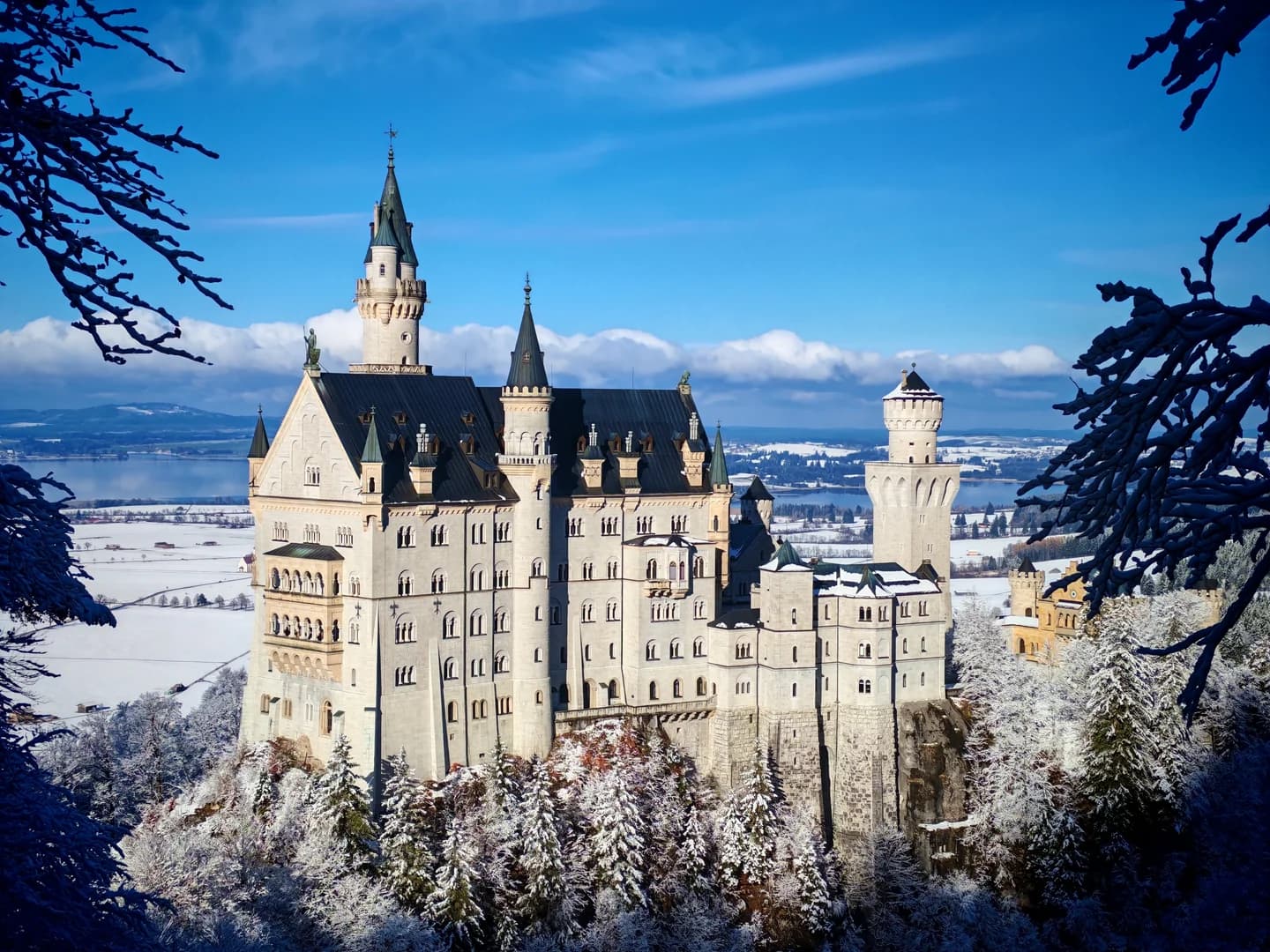
Germany holds a distinctive position in Europe’s castle heritage. The country preserves one of the largest concentrations of medieval fortified structures on the continent, wrought by centuries of political fragmentation and conflict that can be dated back to the Roman frontier fortifications, and that kept taking place during the Holy Roman Empire and the modern era. This legacy is reflected in heritage protection today: Germany counts over 50 UNESCO World Heritage Sites (the average is roughly 7.3 sites per country) and it ranks third globally, just behind Italy and China.
This longstanding tradition also defines the market. Germany has far fewer habitable castles than its general numbers suggest, and most are protected under strict monument laws. A budget of around €2 million usually allows access to a small, well-maintained castle outside major cities. In comparison, the same budget in France more often secures a larger 19th-century château, while Belgium still welcomes purchases of fully enclosed fortified estates at a similar price point.
This guide answers questions about castles in Germany: how many exist, why they are so numerous, which sites hold real historical and economic value today, and how ownership works in one of Europe’s most closely regulated heritage markets.
How Many Castles Are in Germany?
Germany has around 8,500 castles. This figure comes from EBIDAT, a long-running research initiative that catalogues medieval fortifications site by site. It remains the most detailed attempt to count German castles based on physical remains and historical documentation, and the number continues to grow as research progresses.
Still, there is no official national record of castles in Germany, which makes an exact total difficult to define. Tourism boards and popular media sometimes cite totals of 20,000 to 25,000 castles, but these estimates rely on a very broad definition. They group together fortified castles (Burgen), palaces and manor houses (Schlösser), ruined sites (Burgställe), and even locations where only earthworks or written references survive. Many of these places would not meet the strict definition of a medieval fortified residence.
Germany also records close to one million protected monuments, which includes both architectural heritage (buildings, gardens) and archaeological sites. Within that list, almost every castle falls under some level of heritage protection. Only a limited share remains habitable, privately held, or suited to residential use today. Fewer still appear on the open market, which places livable German castles firmly within the realm of rare acquisitions.
Castles in Germany: Burg vs Schloss
In German, a Burg is a medieval, fortified castle built primarily for military defense (stronghold). On the other hand, a Schloss is a post-medieval palace or stately home that represents power rather than defence.
Why Does Germany Have So Many Castles?
Germany has so many castles because it remained politically fragmented for much of the Middle Ages. For centuries, the area that later became Germany was made up of hundreds of duchies, bishoprics, free cities, and small lordships within the Holy Roman Empire. Power was spread across many local rulers, each of whom relied on a fortified residence to defend territory, control trade routes, and assert authority.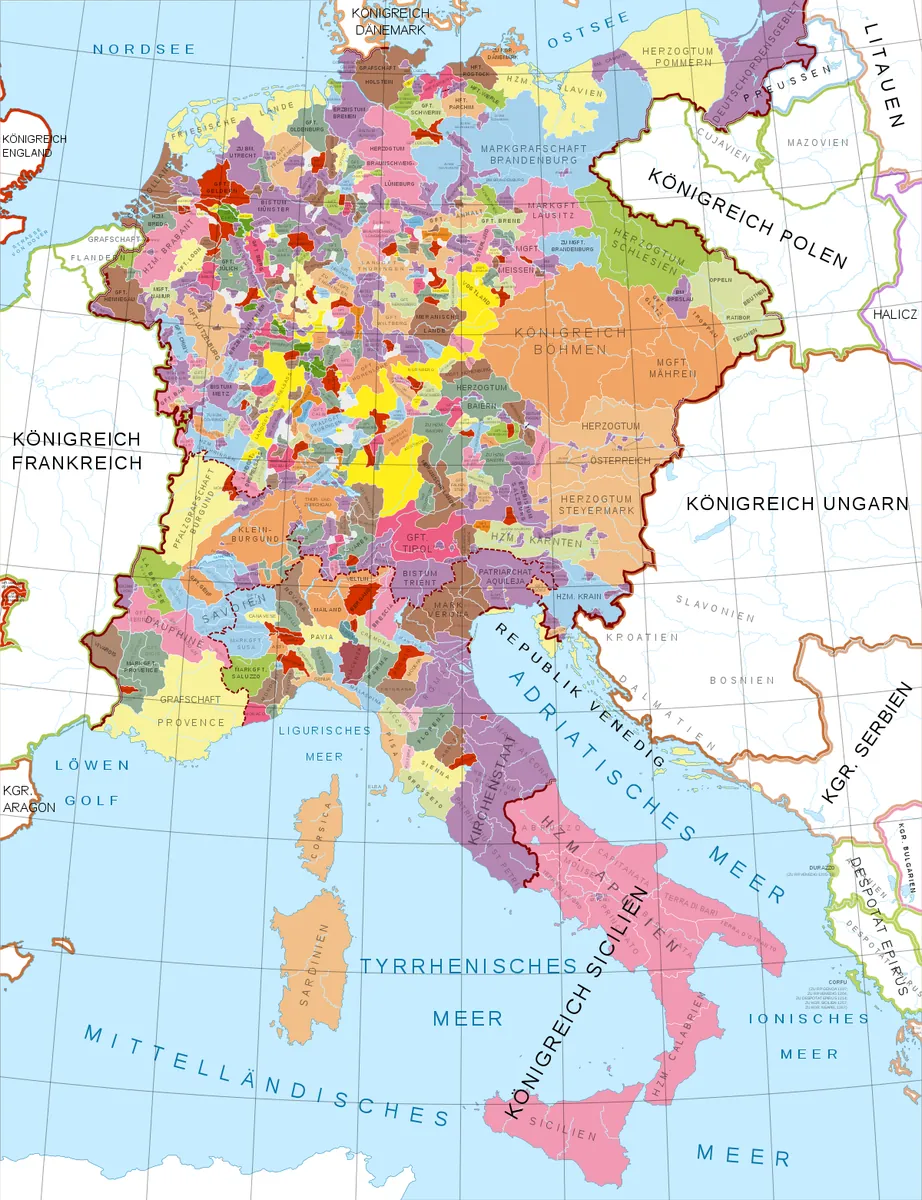
Oldest Castles in Germany
The oldest castle in Germany is generally considered to be the Heuneburg, near Herbertingen in Baden-Württemberg. Still, this depends on how the term castle is defined. Some sites date back to prehistoric or early medieval fortified residences, while others refer only to medieval stone castles that still survive in recognisable form today.
When historians speak in the broadest sense, Heuneburg stands out as the earliest “castle-like” site on German territory. It was a fortified hilltop settlement occupied between roughly the 7th and 5th centuries BCE and is associated with early Celtic aristocratic rule. Its defensive walls (including unique Mediterranean-style mud-brick bastions), gates, and planned layout place it far earlier than any medieval castle, even though it does not fit the later architectural definition of a castle.
If the definition is limited to medieval stone-built castles, the picture changes. Many early fortifications were rebuilt repeatedly, which makes precise dating difficult. The most frequently cited early examples include:
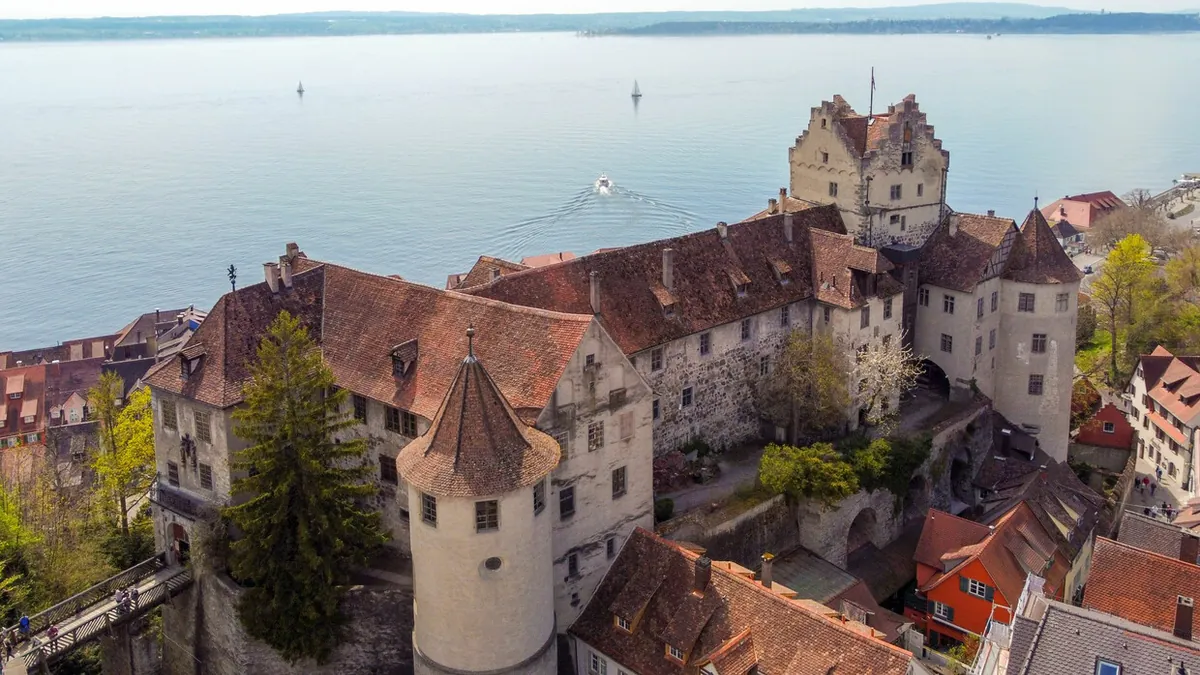
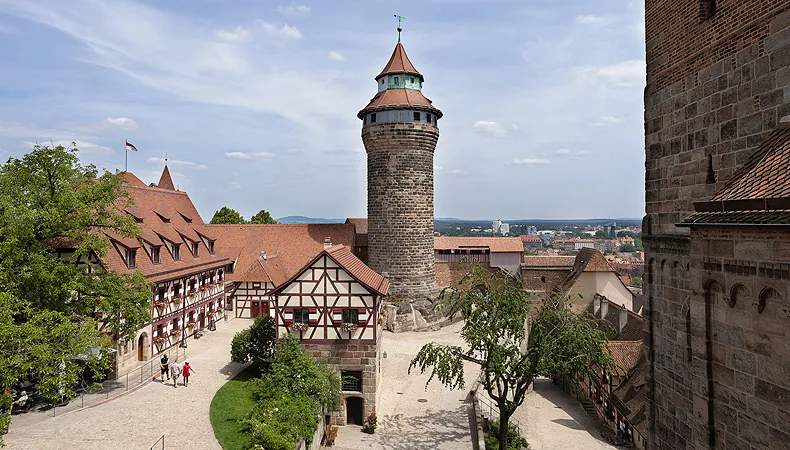
Meersburg Castle (Baden-Württemberg) – Traditionally dated to the 7th or 8th century (though archaeological evidence suggests its surviving structure dates more reliably to the 11th or 12th century). It is often described as Germany’s oldest inhabited castle.
Famous Castles in Germany
1. Neuschwanstein Castle (Bavaria)
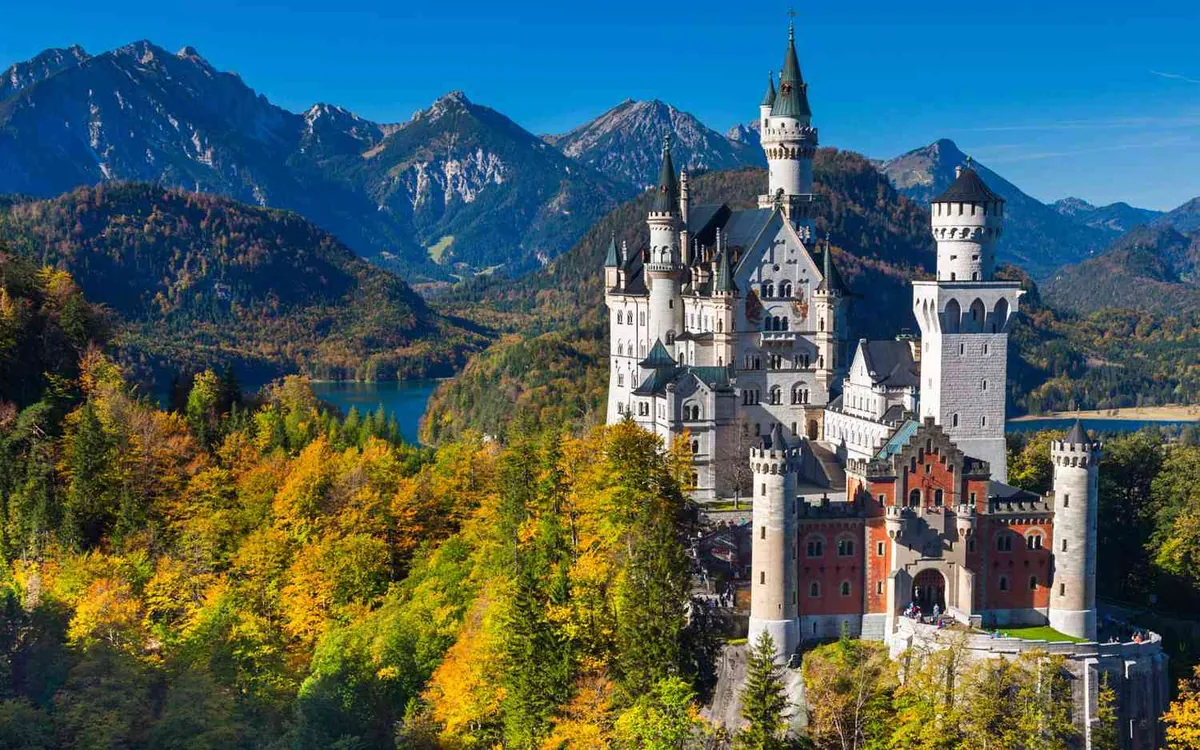
Today Neuschwanstein is one of Germany’s most visited heritage sites. It attracts around 1.4 million visitors each year, with as many as 6,000 visitors per day in the summer season. We can estimate revenue at roughly €20 million annually, and the site anchors a much larger regional tourism economy in southwest Bavaria. Its public value is reinforced by continued state investment: in 2019, Bavaria announced €20 million in restoration works to address structural wear caused by high visitor numbers.
The castle is open daily with guided-entry tickets priced at about €21 for adults. Visits follow a timed interior tour lasting around 30–40 minutes, and covers the Throne Hall, Singer’s Hall, and Ludwig II’s private apartments. Outside, visitors can walk marked paths around the site and reach viewpoints such as Marienbrücke, which looks directly down into the Pöllat Gorge and across to the castle’s main façade.
2. Hohenzollern Castle (Baden-Württemberg)
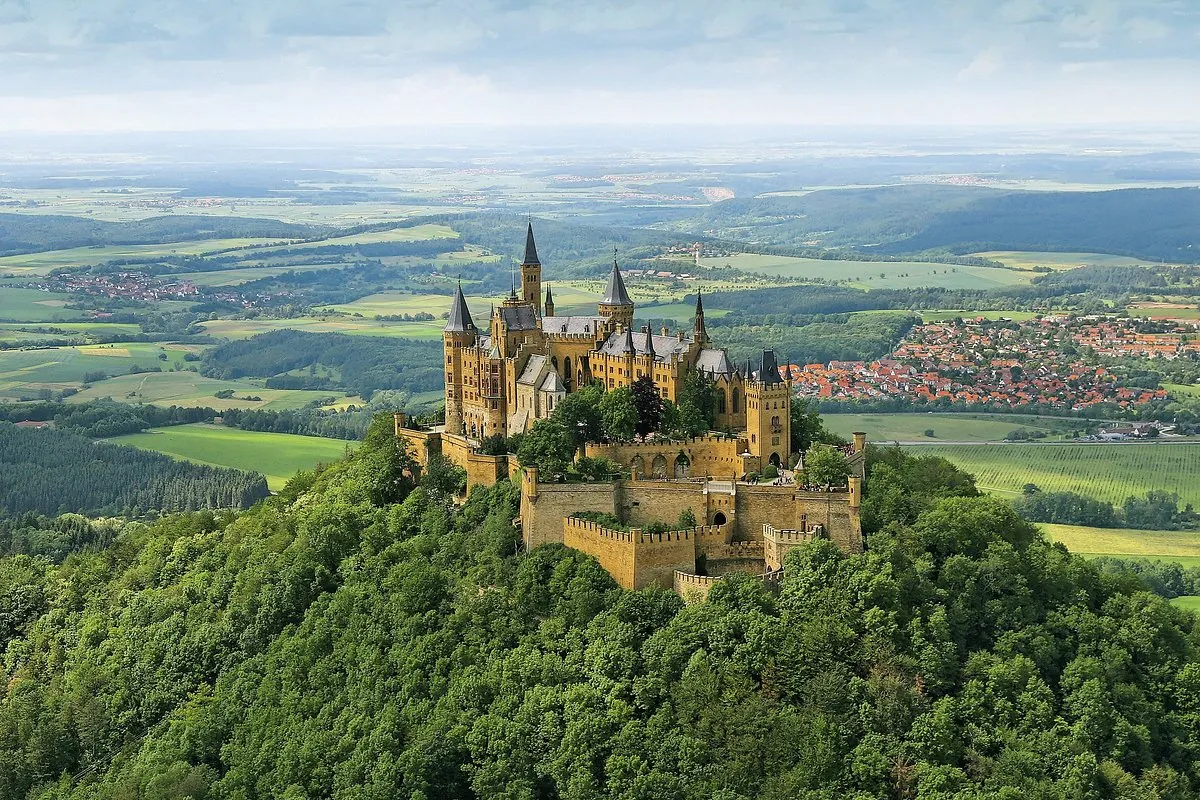
The castle attracts around 350,000 visitors per year, which makes it one of Germany’s most visited privately owned castles. In recent years, Hohenzollern’s conservation needs have been substantial: officials estimate around €19 million in restoration work was required to address damage to the bastion walls, and while the federal government contributed roughly €11 million, the project has been paused until additional funding is secured.
Hohenzollern Castle is open year-round. Standard adult tickets cost €26 and include shuttle transport to the hilltop. Visitors can tour furnished state rooms, the palace chapel, and collections linked to Prussian and imperial German history. The battlements provide wide views over the Swabian Jura, and an on-site beer garden and café serve traditional regional food.
3. Burg Eltz (Rhineland-Palatinate)
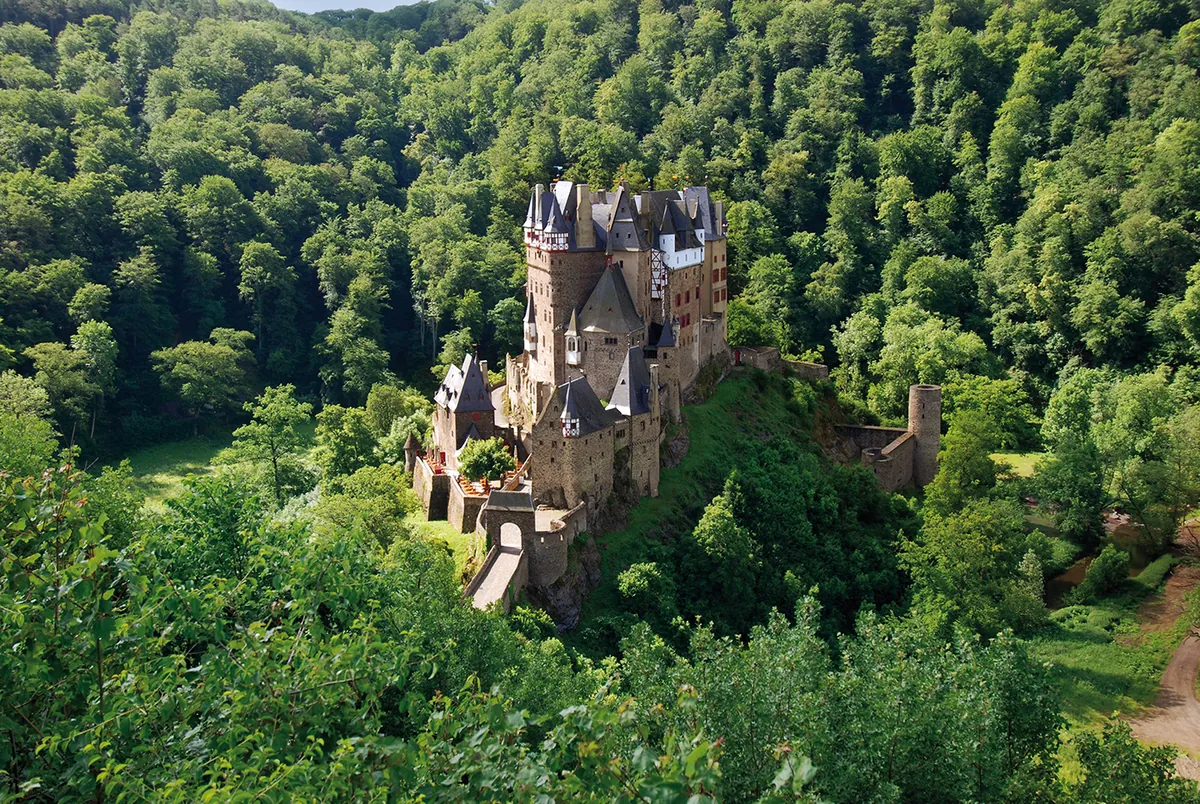
The castle draws several hundred thousand visitors per year. Between 2009 and 2012, major restoration works cost approximately €4.4 million, supported by a €2 million federal grant and additional public and private funding. Annual ticket revenue alone likely reaches several million euros, which places the estate’s commercial valuation firmly in the multi-million-euro range.
Burg Eltz is open seasonally, typically from late March to early November. Adult tickets cost €14 and include a 40-minute guided tour and access to the Treasury. Visitors can explore the Knights’ Hall, Armoury, Flag Hall, and furnished family apartments, then walk forest paths overlooking the Elzbach stream. The award-winning Eltzer Burgpanorama trail circles the castle and offers elevated views of its clustered towers from across the valley.
Medieval German Castles
Germany has thousands of medieval castle sites, but only a limited number still preserve a clearly medieval defensive character today. Many fortifications were either ruined during early modern conflicts or later reshaped into palatial residences.
Key features of medieval German castles
Hilltop positions: Most medieval castles stand on hills, ridges, or rocky spurs overlooking rivers and valleys. Natural slopes reduced the need for large outer walls. Burg Eltz and Marksburg both rely heavily on steep terrain for defence.
Freestanding keeps: Early German castles often centred on a Bergfried, a tall freestanding defensive tower used as a last refuge. Unlike French donjons, these towers were uninhabitable and separated from living quarters. Clear examples survive at Marksburg and Saaleck Castle.
Curtain walls adapted to terrain: Instead of concentric rings, German castles commonly followed irregular ground lines. This terrain-driven approach is visible at castles along the Middle Rhine, where cliff faces replace artificial defences on one or more sides.
Timber and half-timber construction: While core defences were stone, many residential buildings used Fachwerk (timber framing with plaster infill). This technique relied on locally available materials and appeared widely in late medieval phases.
Steep pitched roofs: High-angle roofs are common due to heavier snowfall in central Europe. This distinguishes them from many French and English fortresses, where flatter profiles were more common. Wartburg Castle and Hohenzollern Castle both illustrate this regional building preference.
Most famous regions for medieval castles
Medieval castles in Germany follow river corridors, trade routes, and internal borders shaped by the Holy Roman Empire’s fragmented rule. The regions below stand out for their density of surviving medieval castles and their well-documented strategic role:
Middle Rhine Valley: This UNESCO-listed corridor holds one of Europe’s densest clusters of medieval castles. Sites such as Marksburg, Rheinfels, and Katz were positioned close together to control toll stations and river traffic along the Rhine, which reflects the highly fragmented authority of the region.
Moselle Valley: Narrow valleys and sharp river bends encouraged compact hilltop fortresses. Burg Eltz and Thurant Castle illustrate the “Ganerbenburg” (joint-inheritance) model, where multiple family branches shared a single fortified complex due to the limited access routes on steep slopes.
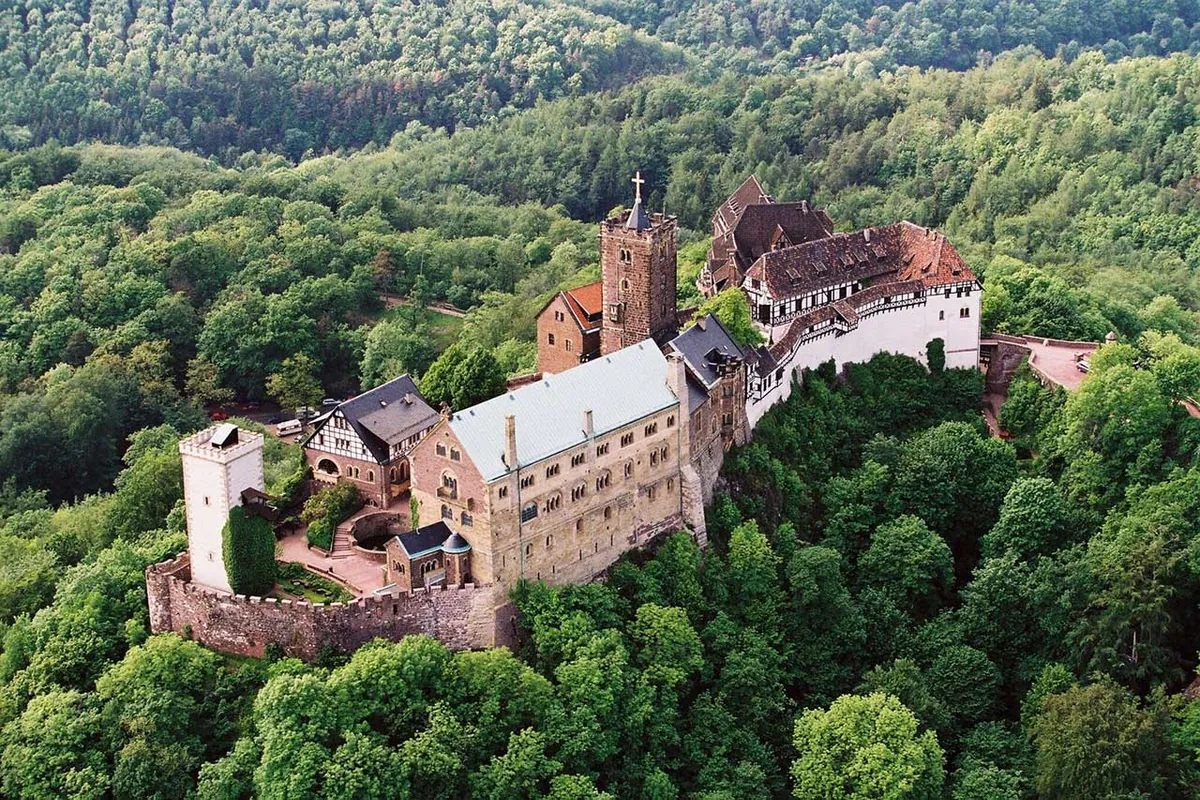
Thuringia and Saxony-Anhalt: Inland trade routes and the “Via Regia” (King's Road) shaped castle placement. Wartburg Castle dominates the landscape near Eisenach and served both defensive and administrative roles within the empire.
Franconia and Bavaria: Southern Germany hosts a mix of early medieval stone castles and later fortified residences. While many were altered during the Renaissance, sites like Nuremberg Imperial Castle retain a strong Romanesque and Gothic core tied to imperial governance.
Castles for sale in Germany
Germany maintains a discreet but robust market for historic estates. While France usually gets all the attention, German properties often stand out because they are better built and have stricter restoration standards. The inventory will vary from medieval Burgen (defensive fortresses) that sit down on crags to baroque Schlösser (palatial residences) set within carefully maintained parks.
New listings show how broad this sector is. Marienburg Castle near Hanover sold for just €1 to the government (a sale that led, of course, to a family row.) Reinhardsbrunn Castle in the former German Democratic Republic sold for only €25,000 a couple of decades ago because upkeep was costly. The waterfront Schloss Possenhofen in Bavaria, famous for its connection to Empress Elisabeth of Austria, has an étage (floor) for sale at €5 million.
At the top of the market, the vast castle estate in Eberhardzell was listed for €14.7 million, which is a satisfactory price for its huge size and ready-to-move-in condition. Meanwhile, substantial manor houses like the castle in Hof (Upper Franconia) trade in the €2 million range.
Transaction Costs and The Federal Patchwork
The process of acquisition needs special financial attention. Unlike the uniform systems of its neighbours, Germany applies a Real Estate Transfer Tax (Grunderwerbsteuer) that varies by federal state. Bavaria charges a modest 3.5%, whereas states such as Brandenburg, Berlin, and North Rhine-Westphalia levy 6.5% on the purchase price. Buyers must also allocate funds for notary fees of roughly 1.5% and agent commissions (Maklerprovision). From 2020 on, the law says that buyers and sellers must share these agency fees equally. This usually means that each party pays 3.57%.
The "Denkmalschutz" Advantage
The federal government actively subsidises the upkeep of historic sites. The Denkmalschutz (monument protection) laws involve the Denkmal-AfA, a highly effective tax depreciation mechanism. Investors can deduct 100% of restoration costs from their taxable income over 12 years (9% for the first eight years, 7% for the next four). Over the course of 10 years, owners can deduct 90% of these costs. High-income people are especially interested in fixer-upper projects because this policy lets the state pay for a big part of the repairs. Similar exemptions and benefits exist in France or Italy.
Market Context
German castle prices track closely with location and condition. For €500,000 – €1.2 million, collectors can access unrestored manor houses (Gutshäuser) in the eastern states or rural Rhineland. These structures often require complete infrastructure overhauls. For €1.5 million – €5 million, collectors can access well-maintained castles in regions like Baden-Württemberg or North Rhine-Westphalia. For €10 million+, collectors can access estates that usually sit near major economic hubs like Munich or Hamburg, or that include significant agricultural and forestry operations that give off an immediate yield.
Stewardship Note: Ownership grants access to a dedicated network of custodians. The Deutsche Burgenvereinigung (German Castles Association) provides members with essential expertise on conservation techniques and legal advocacy so that the property can endure for the next generations.
[Insert Property Slider Here]
Gothic Castles in Germany
In Germany, Gothic castles refer to medieval fortifications built or expanded mainly between the 13th and 15th centuries, during the high and late Middle Ages. The term describes how these castles were built, not how they were decorated, with an emphasis on taller curtain walls, pointed arches, and more complex gate systems adapted to changing siege warfare. These castles remain fully medieval in function, but belong to a later phase of stone fortification than earlier Romanesque strongholds.
Burg Eltz in Rhineland-Palatinate is one of the best-preserved Gothic castles in Germany, largely built between the 13th and 15th centuries and never destroyed. Its clustered towers, narrow courtyards, and vertically stacked living quarters reflect late medieval defensive and residential planning. Germany also features prominent Gothic Revival castles, most famously Neuschwanstein and the rebuilt Hohenzollern Castle. These date to the 19th century and reinterpret medieval forms through a romantic, Neo-Gothic lens.
Biggest Castles in Germany
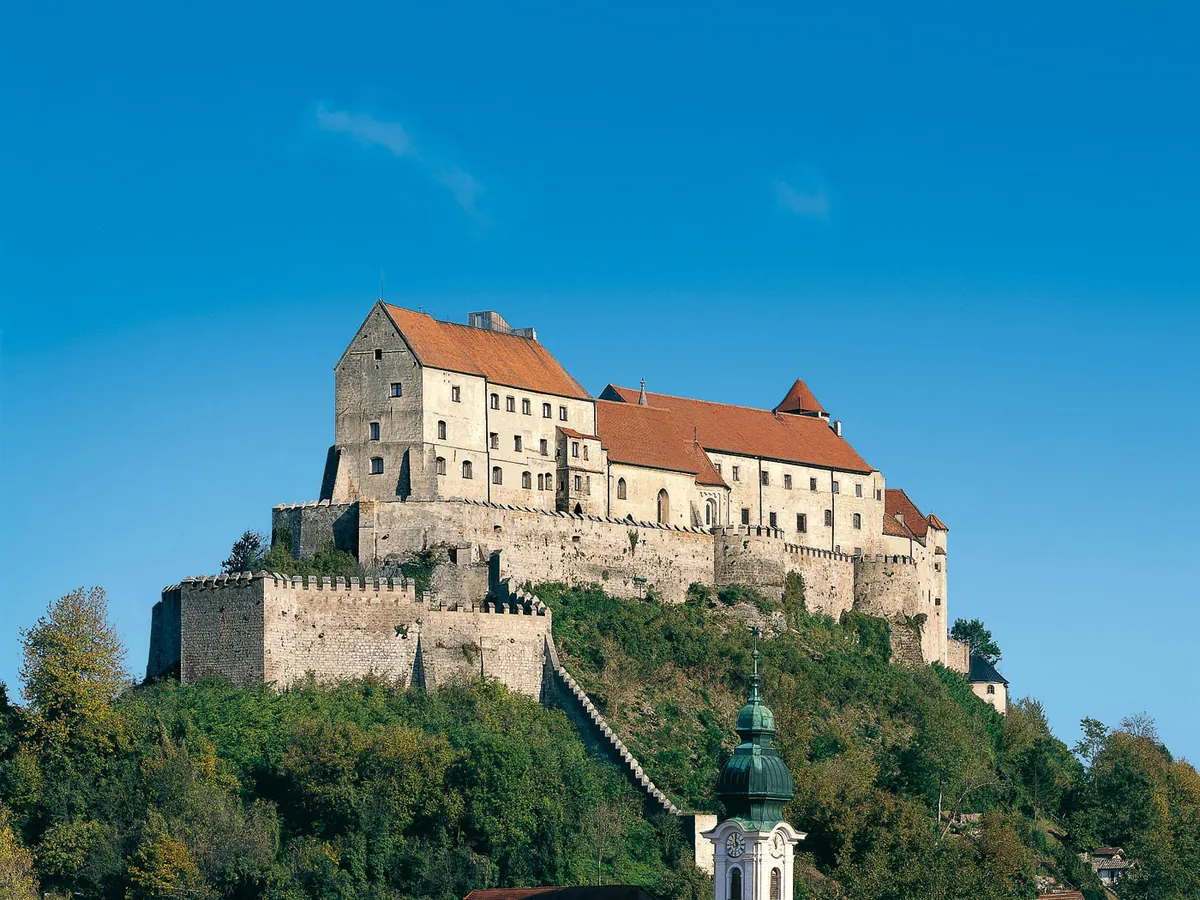
The biggest castle in Germany is Burghausen Castle (Burg zu Burghausen) in Bavaria. It stretches 1,051 metres along a narrow ridge above the Salzach River, and holds the Guinness World Record as the longest castle complex in the world. The castle developed between the 11th and 15th centuries as the main seat of the Bavarian dukes of Lower Bavaria. Instead of a single compact fortress, Burghausen consists of a linear sequence of six fortified courtyards, which served as independent defensive zones to trap and stall invaders.
even that of the Palace of Versailles), set within an extensive formal park system of canals, pavilions, and garden buildings. Nymphenburg is not a medieval castle, but it reflects a period in Germany when authority expressed itself through planned court life, ceremony, and administration, no longer centred on military fortification.
Small and Lesser-Known German Castles
Germany preserves many smaller castles with strong local character. Burg Pfalzgrafenstein stands on a rocky island in the Rhine near Kaub and was built in the 14th century as a toll fortress, its compact pentagonal tower designed to monitor and tax river traffic. Burg Hornberg in Baden-Württemberg sits on a steep hillside above the Neckar and is best known as the long-term home of the knight Götz von Berlichingen from 1517 until his death in 1562.
In Saxony, Kriebstein Castle, a knight castle, rises directly from a cliff over the Zschopau River and remains one of the best-preserved late medieval castles in the region, with residential wings, chapel, and defensive passages that point to how smaller noble seats functioned within local power networks.
Castle Tourism in Germany
Germany’s tourism sector is large and well documented. In 2022, the country welcomed 28.47 million international visitors and generated around $31.26 billion in tourism revenue. Cultural heritage sites account for a significant share of this activity, with castles among the most consistently visited attractions, especially in Bavaria, Rhineland-Palatinate, and Baden-Württemberg. Neuschwanstein Castle alone receives around 1.4 million visitors per year, while Hohenzollern Castle records over 350,000 annual visitors.
These figures show that heritage properties with ticketed or seasonal public access operate within a large and established tourism market. Regular visitor flows can support conservation obligations and generate recurring income through entry fees, guided tours, concerts, and limited on-site hospitality. The UNESCO World Heritage designation granted in 2025 to the Bavarian royal castles is expected to increase international visibility and spending for castles in Germany.
Most Elegant Castle Routes
Along the Middle Rhine, the Romantic Rhine Castle Trail (Rheinburgenweg) follows the river between Bingen and Koblenz, where medieval fortresses rise directly from vineyard slopes. Short drives, river cruises, and marked trails connect castles such as Marksburg, Pfalzgrafenstein, Rheinfels, and Stolzenfels within the UNESCO-listed Upper Middle Rhine Valley.
In southern Germany, the Romantic Road (Romantische Straße) traces historic towns and fortified sites between Würzburg and Füssen. While best known as a cultural route, it passes several important castles, such as the hilltop Marienberg Fortress above Würzburg, and Neuschwanstein near its alpine endpoint. The route is one of Germany’s most established long-distance heritage itineraries.
Best Time to Visit
The best time to visit castles in Germany is late spring to early autumn, from May to June and September to October, when weather is mild and most sites are fully accessible. July and August bring longer opening hours but heavier visitor numbers at places such as Neuschwanstein and Hohenzollern.
Winter visits from December to February suit travellers interested in snow-covered castles, particularly in Bavaria, Saxony, and the Harz Mountains. Alpine castles near Füssen, such as Neuschwanstein and Hohenschwangau, are often snow-covered, and many historic towns hold Weihnachtsmärkte (Christmas markets) near castle sites.
German Castle Events
German castle events give antique dealers and heritage enthusiasts limited, programmed access to protected castle sites through historically grounded public events.
Medieval Festival at Reichsburg Cochem: Reichsburg Cochem hosts a Medieval Castle Festival (Mittelalterliches Fest) in August, with rustic craft stalls, jugglers, food and drink, and demonstrations of medieval crafts and trades set around the historic fortress above the Moselle Valley.
Kaltenberg Knights’ Tournament: Held at Schloss Kaltenberg, near Munich, this is Germany’s most popular jousting event and takes place each July. The tournament uses the castle grounds for mounted combat, medieval music, and evening performances.
Castle Concerts at Wartburg Castle: Wartburg Castle runs a long-standing concert programme inside the Palas and Knights’ Hall, with classical and chamber music tied to the site’s cultural history. Events are curated by the Wartburg Foundation and are among the most elegant castle events in Germany.
Explore More Castles in Europe
If Germany’s hilltop Burgen, river castles along the Rhine and Moselle, and compact medieval fortresses sparked your interest, you may also enjoy exploring castle estates in France or the Netherlands. Our private office curates a collection of heritage properties across the continent.
Interested in owning a castle in Germany or elsewhere in Europe? Join our mailing list to receive updates when castles enter the market.