
Castles in Spain
Castles in Spain can be purchased from a starting price of €100,000. The most famous Spanish castles include the Alhambra, the Royal Alcázar of Seville, and the Alcázar of Segovia.
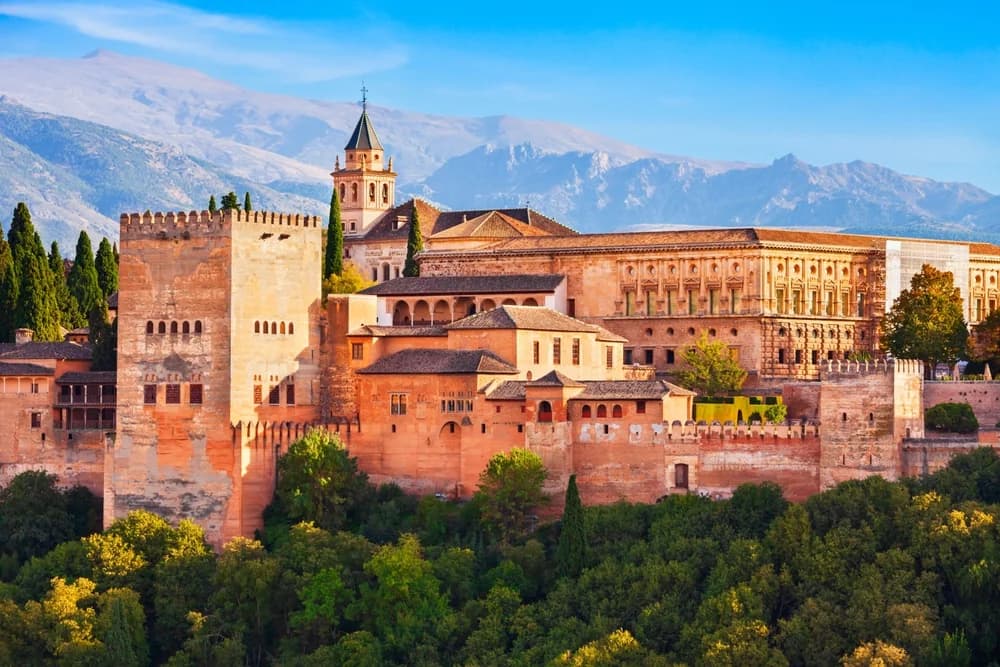
Spain contains one of Europe’s largest concentrations of stone fortifications. The legacy runs so deep that Castile, the country’s central heartland, takes its name from the Latin castella, meaning “land of castles.” Centuries of conflict between Islamic and Christian powers shaped this landscape and defined the Iberian Peninsula for nearly eight hundred years.
That prolonged frontier produced distinct defensive forms. Following the Moorish invasion in 711, advanced North African engineering introduced the alcazaba, a strategic citadel designed for absolute territorial dominance and the surveillance of critical trade routes, a defensive logic that differs markedly from the feudal tower-house traditions seen in France or the imperial strongholds that later emerged across Italy.
This collection of thousands of fortified sites, which include Roman foundations, Islamic citadels, and Templar strongholds, represents the physical remains of the Reconquista, a protracted struggle that lasted until the final fall of Granada in 1492. As the frontier shifted south, functional border strongholds were systematically adapted and became opulent residential palaces commissioned by the Catholic Monarchs to project the cultural presence of a newly unified state.
This guide answers key questions about how Spain’s castles were built, used, and preserved, and explains why centuries of frontier conflict produced one of the world’s most varied and concentrated castle landscapes.
How Many Castles Are in Spain?
Official records and historical inventories provide varying figures regarding the total number of castles in Spain, primarily due to differing definitions of what constitutes a defensive structure. Contemporary estimates suggest that 2,500 documented castles currently remain standing in various states of preservation. However, broader inventories that include watchtowers, auxiliary fortifications, and smaller fortified manor houses frequently indicate that the figure historically exceeded 10,000 sites.
Several factors contribute to these fluctuating counts. Many structures sit in a state of authentic ruin, often categorized more as archaeological sites than architectural entities. Ownership patterns also play a significant role: A high percentage of these properties remain in private hands or serve as underused agricultural outposts, which means they do not appear on standard tourism registers. Regional density varies significantly across the peninsula: The central heartland of Castile and Leon contains nearly 300 major castles alone, a concentration that traces back to its historical role as a central defensive buffer during the Middle Ages.
Famous Castles in Spain
Spain’s most famous castles stand out for their scale, preservation, and historical function as seats of power rather than isolated fortresses.
1. Alhambra (Granada)
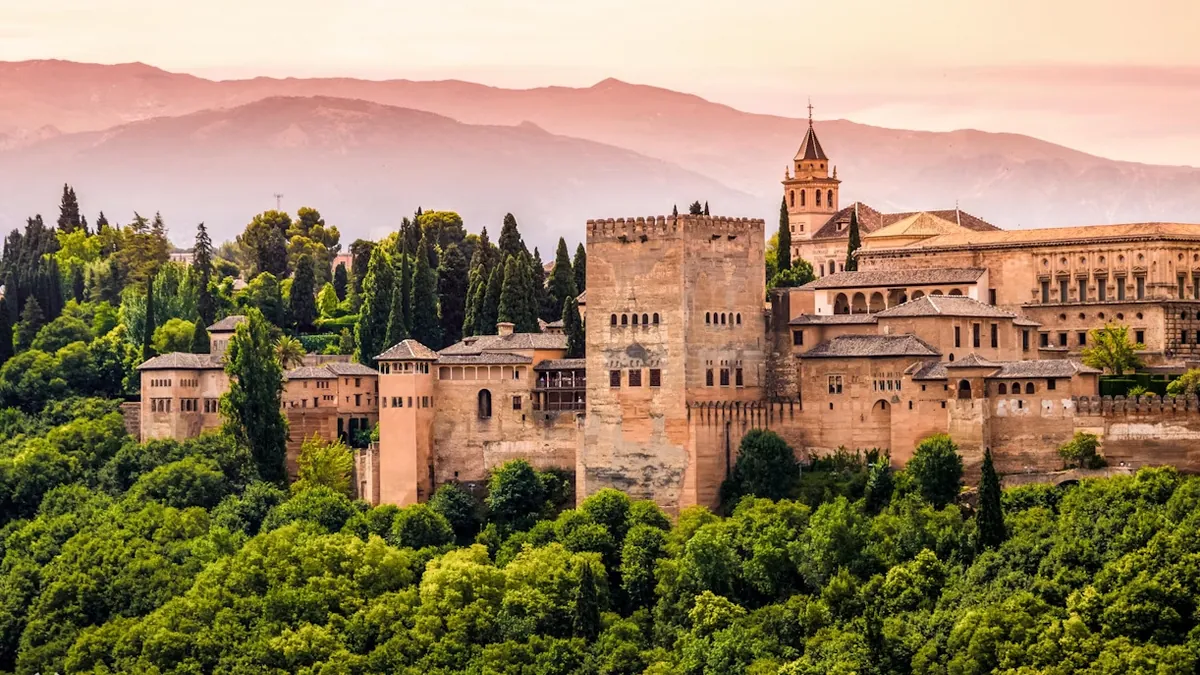
The Alhambra is a significant driver for the regional economy in Andalusia. In 2024, the site received
2.72 million visitors, up 6.8% from the previous year. Due to conservation requirements, the site implements strict caps on daily visitor numbers, which makes prior booking indispensable. Admission
ticketsfor the Nasrid Palaces and general grounds typically start at €28 when secured through guided providers, and the site mandates the provision of passport details for all nominative tickets. Visitors must follow a complex route through the lower gardens (Jardines Bajos), the older Alcazaba fortress, and the Palacios Nazaries, which house the Alhambra Museum and the Fine Arts Museum.
This castle is majestic and exceptionally hard to compare, probably because of its panoramic location and its elegant Arabic architecture high up in a European countryside. People who visit Granada will surely recall the story of a Mexican poet who, while touring the Alhambra for the first time, was intercepted by a blind beggar. When the beggar kindly asked for a cash donation, the Mexican poet sentimentally told his wife: “Give him alms, woman / for there is nothing [worse] in life / like the sorrow of being / blind in Granada.
2. Royal Alcázar of Seville (Seville)
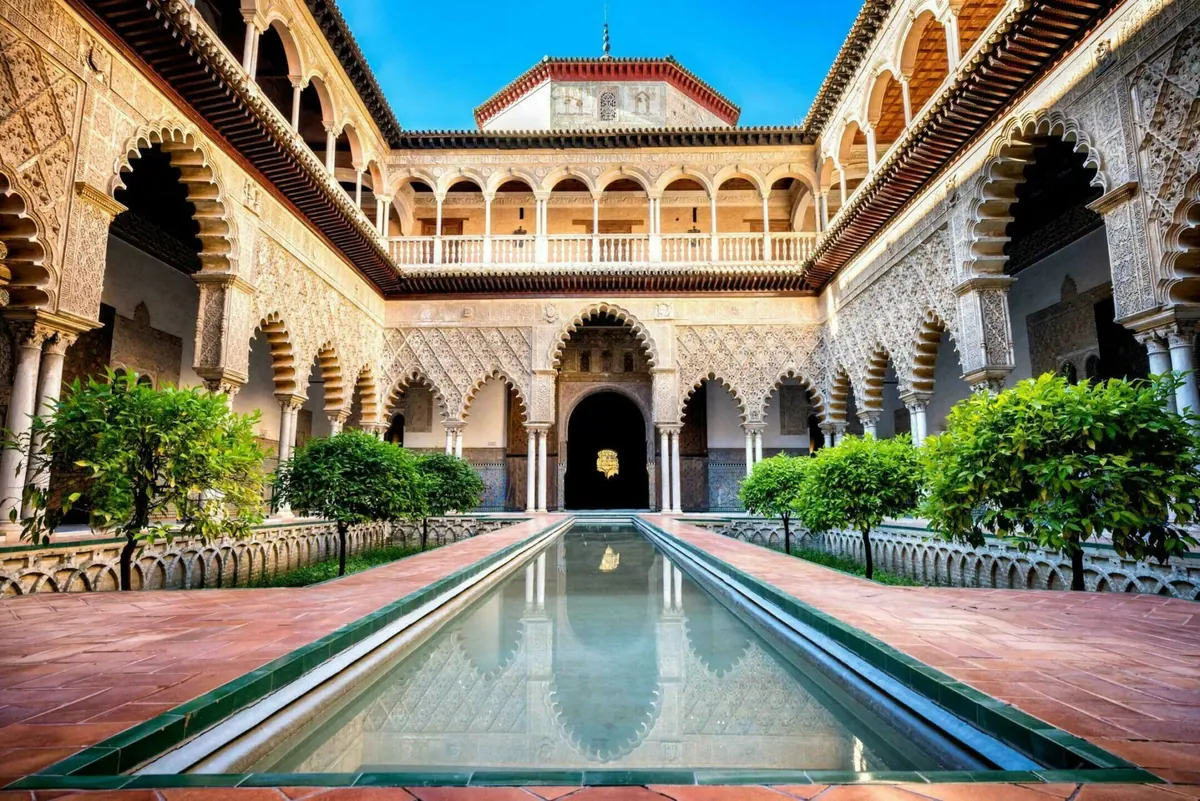
Tickets are priced at €15.50. The site gained additional global prominence as a filming location for Game of Thrones. Key areas of interest include the Patio de las Doncellas, the Salón de los Embajadores, and the Baños de Doña María de Padilla, which are underground rainwater cisterns that form part of the palace’s impressive hydraulic history.
3. Alcázar de Segovia (Segovia)
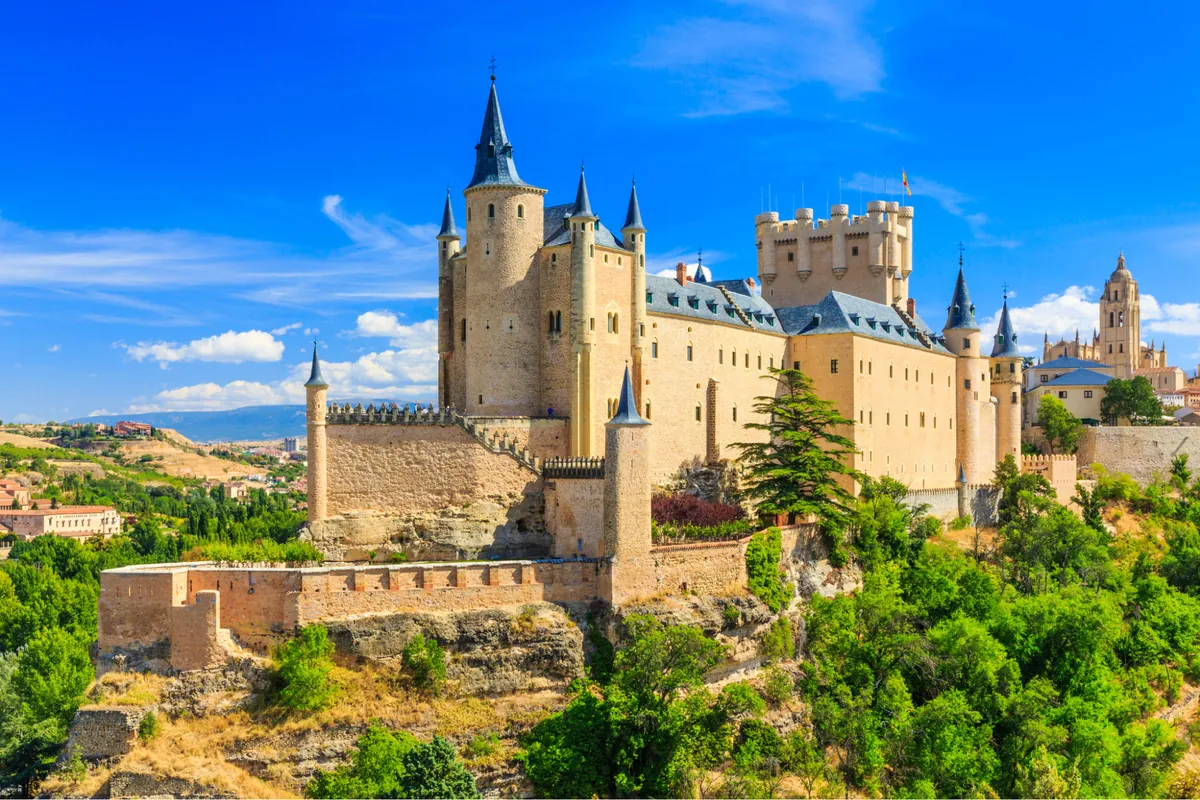
The interior contains the chapel where Philip II married Anna of Austria and several halls displaying noble standards and medieval armaments. Experts frequently cite Segovia as the best-preserved medieval castle in Spain, a distinction that supports its status as a leading UNESCO World Heritage landmark.
The site functions as a museum and houses the General Military Archive, one of the most important historical repositories in Spain. In 2024, the Alcázar recorded over 727,000 visitors. General admission is priced at €10.
4. Castillo de Coca (Segovia)
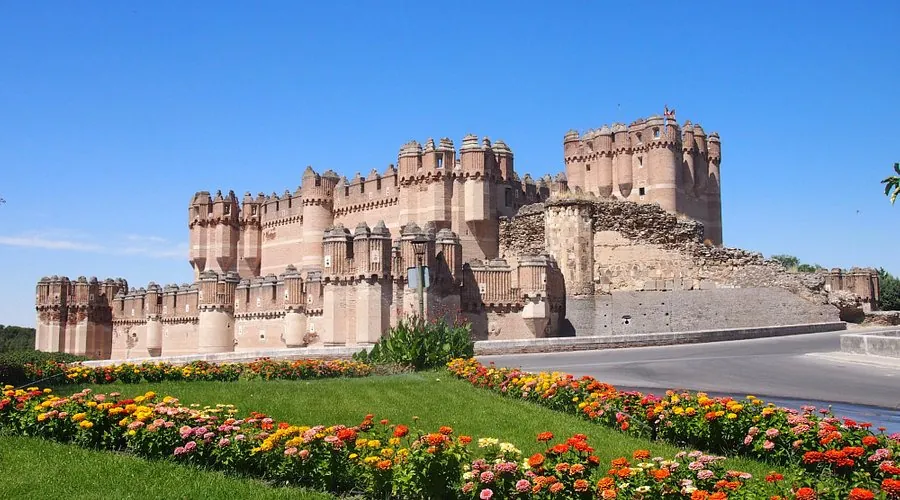
Historically, the House of Alba used Coca as a luxurious residence rather than a military bastion. The property transitioned into national ownership in 1926, and the government completed a restoration in 1958 to house a school for forestry training. Today, it serves as a significant tourist attraction in Castile and Leon. Ticket prices are among the most accessible at €3, and visitors can explore the interior halls, which retain luxurious Mudéjar decorations and reflect the economic power of the 15th-century Spanish clergy.
5. Castillo de Almodóvar del Río (Córdoba)
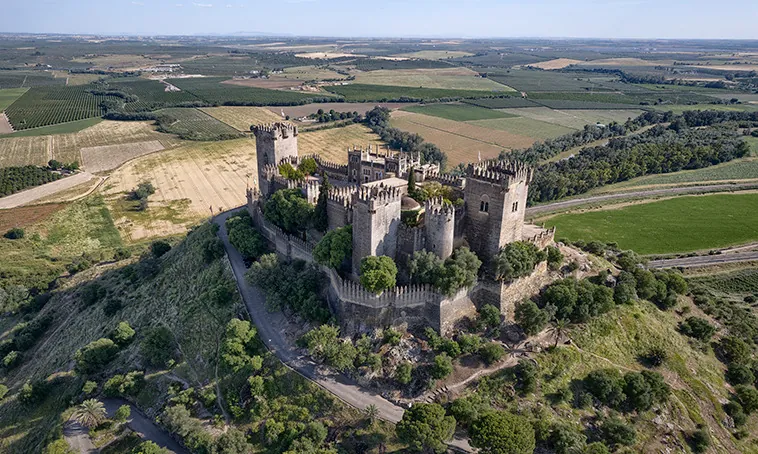
The castle gained modern international fame through its role as Highgarden in Game of Thrones. Adult entry to the site currently costs €10. Visitors tour the dungeons, the Tower of Tribute, and the Throne Room.
Medieval Castles in Spain
The development of medieval castles in the Iberian Peninsula followed the 800-year timeline of the Reconquista. Between 711 and 1492, constant border conflicts between Christian kingdoms and Moorish rulers caused a dense network of military fortifications designed for both local defense and the projection of territorial power.
Regional Patterns and Defensive Typologies
Spain’s medieval castles vary sharply by region. Early Muslim rulers introduced the alcazaba, a fortified citadel designed to establish strategic high points and oversee trade routes and surrounding territory. Sites such as the 9th-century foundations of the Alhambra reflect advanced North African engineering traditions adapted to the Iberian terrain, where elevation, visibility, and controlled access dictated defensive success.
During the 12th century, the Knights Templar (the influential order of warrior monks known for their involvement in the Crusades) established a network of fortresses to secure key corridors used by pilgrims traveling along the Camino de Santiago. Castles such as Ponferrada functioned as military and logistical hubs, and provided protection while reinforcing Christian territorial claims in contested frontier zones.
After the final conquest of Granada in 1492, the defensive role of many Spanish castles diminished. Noble families adapted former military strongholds into residential estates and retained fortified exteriors while reshaping interiors for comfort and status. These transformations produced a hybrid architectural language that combined Gothic structural forms with Mudéjar decorative elements and marked the transition from frontier fortification to noble residence.
Architectural Chronology
Military necessity drove the initial stone designs of the 10th to 13th centuries. They featured thick walls and minimal ornamentation. As the Reconquista progressed, the Mudéjar style emerged: A fusion where Christian architecture incorporated Islamic aesthetic elements like horseshoe arches and complex brickwork. By the 15th century, the Tudor period seen elsewhere in Europe appeared in Spain as nobles modernized castle interiors with lavish frescoes and tapestries while retaining defensive exteriors for status.
Castles for Sale in Spain
Spain’s historic real estate market currently holds hundreds of castles available for private acquisition. This market is defined by extreme diversity in both condition and pricing, with entry-level assets starting at roughly €100,000. At the opposite end of the spectrum, fully modernized medieval estates or 19th-century landmarks like Butrón Castle are valued at over €3 million, while the most opulent palatial residences reach a market ceiling of €15 million.
Acquiring a fortress in Spain will require dealing with specific legal frameworks that differ from standard residential transactions. Most high-status castles are designated as National Heritage monuments, a classification that requires all structural rehabilitation to be coordinated with state heritage authorities. Spain places no legal restrictions on foreign ownership of land, but non-Spanish buyers must obtain a Número de Identidad de Extranjero (NIE), a personal tax and identification number required to complete any property purchase.
Prospective investors should also account for transaction costs typically ranging from 12% to 19% of the property value and note that the Golden Visa residency pathway for €500,000 investments was abolished in early 2025.
Big Castles in Spain
The biggest castle in Spain is the Alhambra in Granada. It operates as a comprehensive palace complex that extends across more than 35 acres of elevated terrain, rather than functioning as a singular structure.
The scale of Spanish castles is typically assessed through surface area, the reach of their defensive wall circuits, or their historical function as self-contained palatial centers rather than single fortified buildings.
Other large-scale fortifications emphasize military footprint rather than palatial sprawl. Castillo de Ponferrada, constructed by the Knights Templar, occupies an 8,000-square-meter site reinforced by three distinct defensive belts designed to control access from multiple approaches. Castillo de Peñafiel presents a contrasting form. It stretches lengthwise along a narrow ridge in the Duero River valley, where its ship-like silhouette reflects a design shaped by topography rather than enclosure. Castillo de la Mota, situated in Medina del Campo, is a transitional model. It combines massive cylindrical towers with an extensive system of underground compartments that supported prolonged occupation and storage.
Castle Tourism in Spain
Heritage tourism is a fundamental pillar of the Spanish economy, with cultural tours making up the leading market segment. The Spanish heritage tourism market was valued at USD 1.09 billion in 2024 and is projected to reach USD 1.59 billion by 2033. This is part of the general growth that the castle hotel market expects. According to independent researchers, the castle hotel market is projected to grow at 8.7% from 2025 to 2033, which will take it from a market cap of roughly USD 3 billion to USD 6 billion.
Economic Impact
Tourism-related employment in Spain exceeded 2.85 million social security affiliates in October 2025, a 3.5% year-on-year increase. The sector contributes approximately 16% to the national economy. Castles play a central role in this growth and draw international visitors to rural regions such as Jaén, Castile, and Leon. Evidently, tourism is a main driver of the Spanish economy, but the sheer volume of visitors has triggered a backlash. Residents in cities like Barcelona and the Canary Islands have staged protests against overcrowding and rising housing costs. The government responded with strict new measures. They moved to eliminate the Golden Visa in 2025, which previously granted residency to non-EU buyers who purchased property. Authorities also tightened rules on short-term rentals to cool the market.
The Paradores Network
Spain’s secret weapon in heritage preservation is the Paradores network, initiated by King Alfonso XIII in 1910. This system converts historic castles, monasteries, and palaces into luxury hotels. The first location opened in 1928 in the 12th-century Siguenza Castle. Today, the network comprises 98 locations, which allow travelers to fund the ongoing stewardship of Spain’s architectural history through overnight stays.
Explore More Castles in Europe
If the castle landscape of Spain interests you, Germany has plenty of hilltop strongholds that are linked to the breakup of lands and the control of empires. Scotland's market, on the other hand, is made up of tower houses and fortifications based on clans. Our private office curates a collection of heritage residences across the continent.
Interested in owning a castle in Spain? Join our mailing list, and you’ll receive updates whenever a castle enters the market.