
Castles in France
Castles in France can be purchased for around €2 million. The most famous French castles are Château de Chambord, Mont-Saint-Michel, and Palace of Versailles.
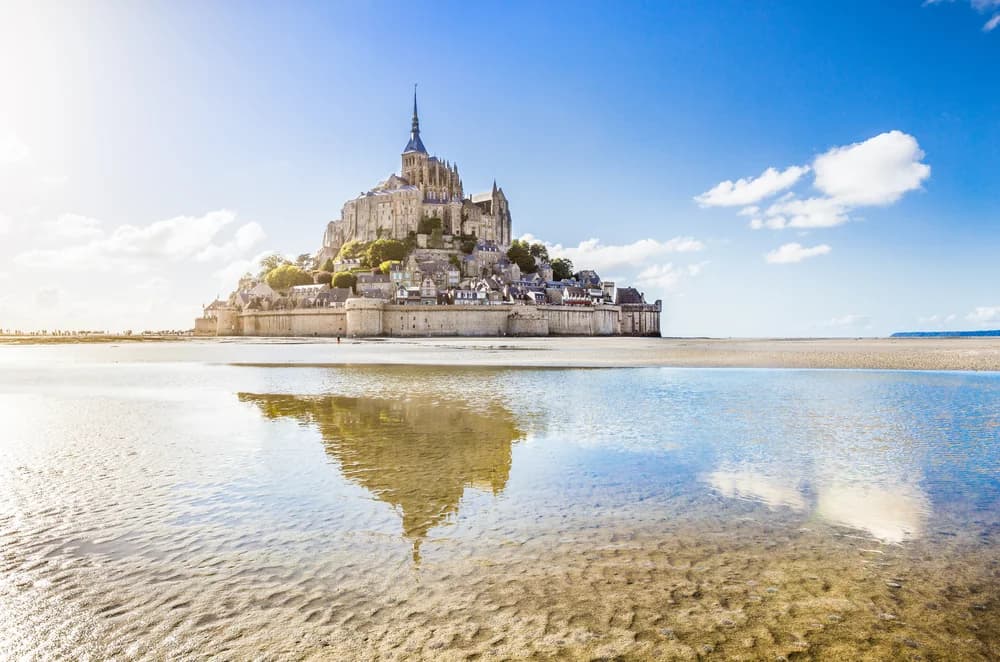
France has the most liquid and active castle market in Europe, and thus in the world. A recent investigation of listings demonstrated that France holds 67% of the online European castle inventory as of 2025. Roughly 3,000 castles are for sale in France at any given moment, and private estimates claims there’s around 400 transactions each year.
France happens to be the country with the most castles on Earth, and having such an active, liquid market demonstrates that most of these structures are habitable or have potential to be repurposed.
In French usage, the word château does not automatically mean a fortified castle. It can describe a medieval fortress, a Renaissance residence, a country house, or even a working vineyard property with no architectural or historical significance.
This variety also shapes the market. Some properties are widely documented and actively traded, while others remain privately owned or off the market entirely. As a result, the market is diverse and sometimes competitive, particularly for mid-range estates. Prices reflect this reality: a budget of around €2 million in France typically secures a well-maintained 19th‑century château, whereas the same amount in Belgium can buy an entire fortified estate.
This guide answers the main questions about castles in France: how many there are, what the terms château and castle mean, where they are concentrated, and what it takes to buy or visit one today.
How Many Castles Are in France?
France has around 45,000 castle and château-type structures. This figure reflects the broadest estimates and includes medieval fortified castles, Renaissance châteaux, and later-period manor houses, as well as partially standing structures and privately owned estates that are undocumented or unlisted.
There is no single, finished national inventory of all castles in France. What does exist is a heritage register, the Inventaire général du patrimoine culturel. The Ministry of Culture records nearly 11,000 castles and related structures as historic monuments, a figure limited to sites that have been formally identified, studied, or protected, and thus recognised as listed properties. It does not represent the total number of castles that stand across the country. Matter of fact, the gap exists because most French castles are privately owned and sit outside formal registers.
Roughly 85 percent of castles in France remain in private hands, many unlisted and documented just at regional level. The number of castles for sale in France is far lower than the headline estimates suggest. Only a small share of this total are habitable, actively traded, or visible on the heritage market. Reports from real estate firms allege that 3,000 castles are for sale at any given time. That’s, roughly, just 7% of the total figure of château-type structures.
What is the difference between a manor house, a castle, and a château?
In France, these terms carry specific historical meanings.
A castle refers to a fortified residence built for authority and defence, most often between the 9th and 15th centuries. These structures were designed to control land, roads, or river crossings and typically include defensive elements such as keeps, curtain walls, towers, and moats. In French records, this type aligns most closely with the term château-fort.
A manor house (manoir or gentilhommière) served as the rural residence of a lesser noble or landowner. These houses formed the centre of an agricultural estate and local administration. Their design prioritised domestic life, land oversight, and social standing, even when modest fortifications or thick walls were present.
A château is a broader term. It derives from the Old French castel and originally referred to fortified sites, but its meaning expanded over time. Today, château describes a residence associated with status or landownership. In some cases, this is a medieval castle or a Renaissance estate. In others, particularly in wine regions such as Bordeaux, the term refers to the estate itself, even when the buildings have no historic or architectural significance.
How Many Châteaux Are in France?
France has over 40,000 estates and buildings described as châteaux. This figure overlaps with castle estimates, as château in France refers to a wide range of estates that do not necessarily resemble castles or palaces.
In practice, château is a broad label. Some châteaux are medieval castles or palace-scale residences. Many others are country houses, farm estates, or vineyard properties with little architectural or historic weight. In wine regions such as Bordeaux, château commonly refers to the wine estate itself. The buildings may consist of a modest farmhouse, winery, or storage buildings, with no defensive or architectural link to a castle.
Only around 6,500 to 7,000 châteaux are listed properties, officially protected as historic monuments. The remainder fall outside heritage classification. This is where buyers need to be careful. Most castles in France are called châteaux, but not all châteaux are castles. When the figure of 40,000 châteaux is quoted, it includes thousands of vineyard estates that were never intended to be castles at all. It's a good idea that buyers looking for a château in the sense of a castle or palace speak to a specialist so they know what to expect.
Famous Castles in France
Certain castles in France function as large public sites that receive millions of visitors each year and sustained investment in conservation. France has some of the most impressive castles in the world, and it’s especially notable for having outstanding castles in many regions. If the Loire Valley, Normandy, or Nouvelle-Aquitaine were independent countries, they would be rivals for the prize of being home to the most impacting castles in the world.
1. Château de Chambord (Loir-et-Cher)
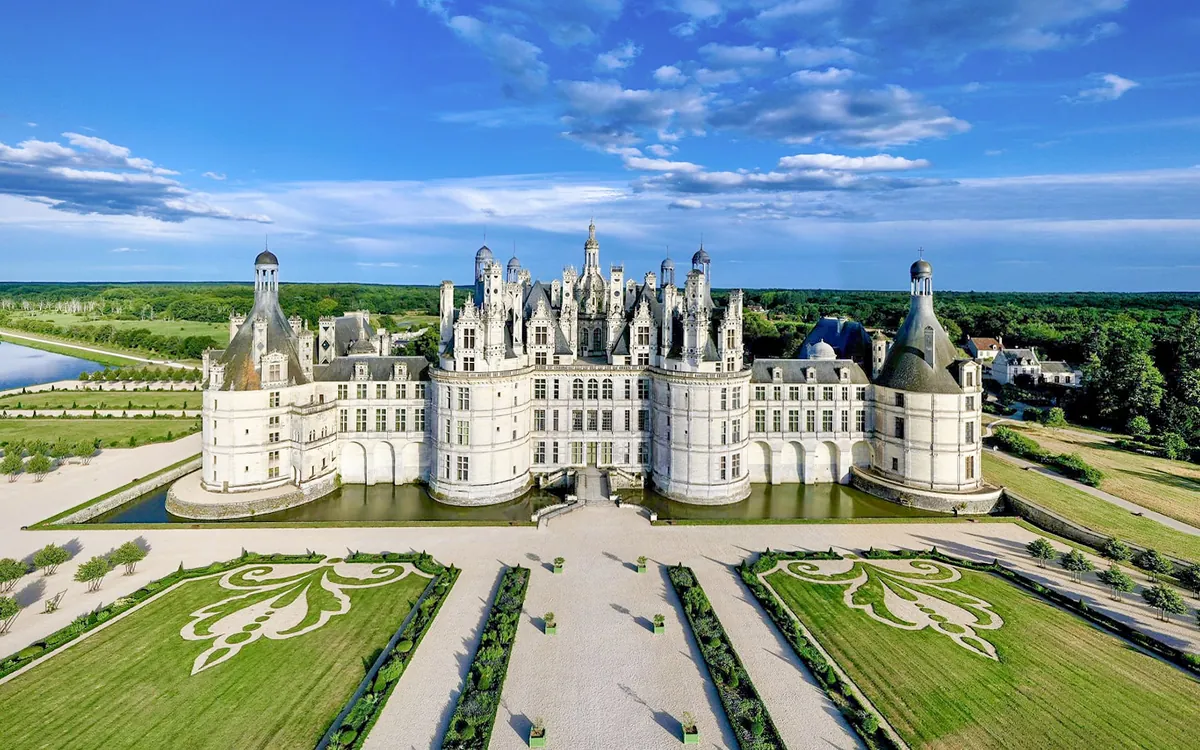
Leonardo da Vinci likely sketched the famous double-helix staircase. Two twisted spirals let people climb or descend and see others, yet they never meet. King François I invited Leonardo to France in 1516, but the luminary died before work started.
The King stayed at Chambord for only 72 days (during his entire reign!). To build the site took 1,800 men and 220,000 tonnes of stone over 30 years. UNESCO lists the place as World Heritage. The state now owns and manages the site.
The estate operates at a rare break-even level for a heritage site. In 2016, the site reported operating costs of €16.8 million, matched almost exactly by its income. Ticket sales accounted for roughly €11.7 million, with additional revenue from events and state support.
2. Palace of Versailles (Yvelines)
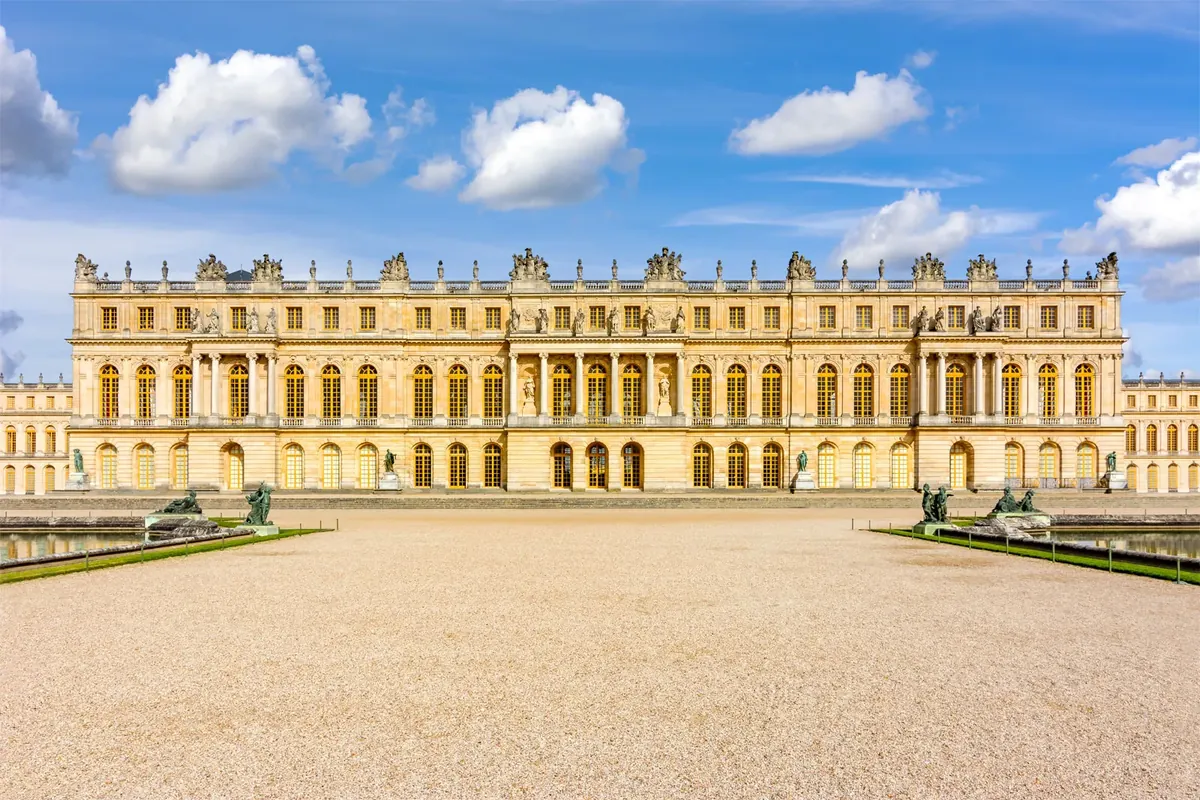
Versailles ranks as one of the most famous royal homes on earth. Approximately 15 million people visit the estate annually (either the palace or the gardens) to see how absolute monarchs lived. Louis XIV built this golden estate to prove his total power. The palace contains 2,300 rooms, which significantly exceeds the 400 rooms found at the Château de Chambord. The "Sun King" Louis XIV lived here alongside his successors, Louis XV and Louis XVI. Queen Marie Antoinette also resided within the palace until the French Revolution forced the royal family to flee to Paris in 1789.
Visitors can walk the State Apartments, Hall of Mirrors, temporary exhibitions, and spend time in the formal gardens, which host musical fountain and garden shows in season. The Trianon palaces and Marie-Antoinette’s hamlet serve as quieter, more intimate glimpses of royal life away from the main palace.
3. Mont-Saint-Michel (Normandy)
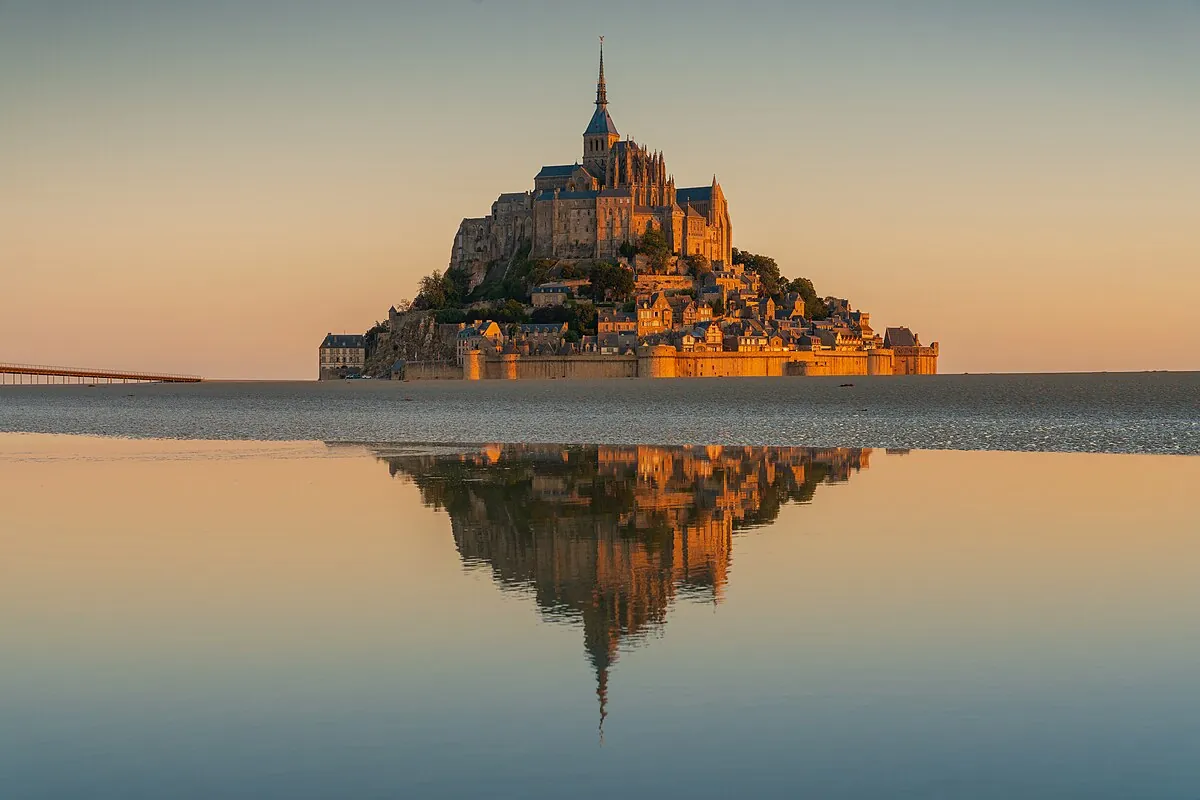
Mont-Saint-Michel rises from the bay like a stone mirage. Monks built this Gothic masterpiece, known as "The Marvel," on a granite rock that defies the sea. It ranks as one of the most photographed sites on earth because it inspired the castles in Lord of the Rings (although some fans dispute this.) This natural moat stopped English armies from ever capturing the fort during the Hundred Years' War. You climb 350 steps to reach the spire where Archangel Michael watches over the coast.
In 2014, the old solid causeway (road) was replaced by a modern walkway bridge built on stilts. This design allows water to flow freely around the mount to prevent silting. So, for most of the year, you can walk or take a shuttle bus across this bridge regardless of the tide.
The sea only covers the access point during exceptionally high spring tides, which occur roughly 15 to 20 times a year. When this happens, the mount becomes a true island, and access is cut off for about one hour.
4. Cité de Carcassonne (Aude)
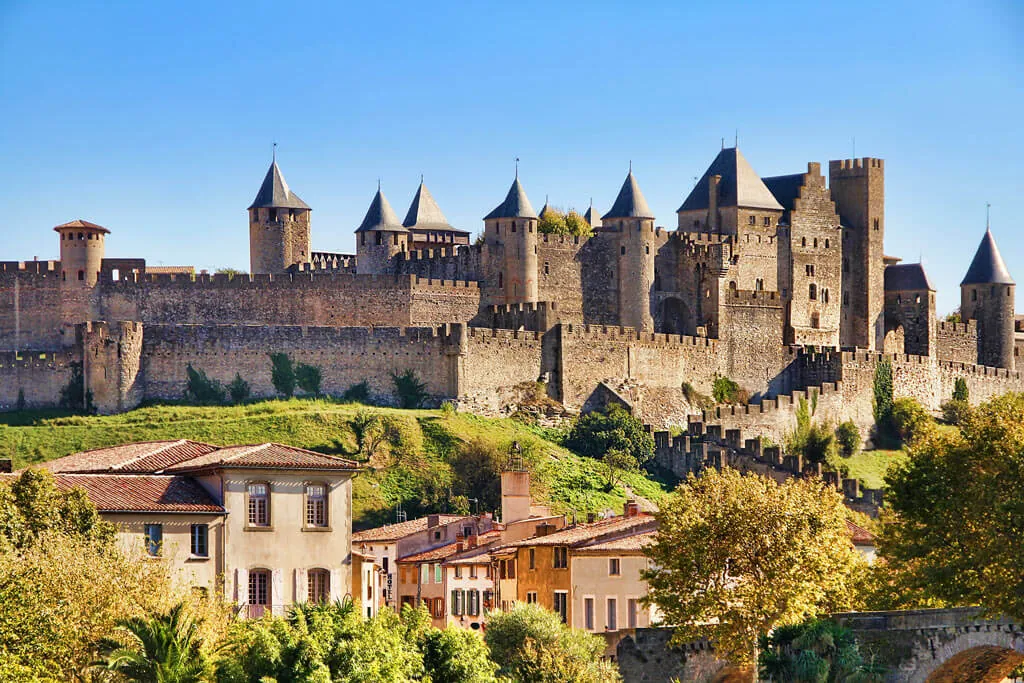
Medieval French Castles
The oldest castle in Europe is in France. Which medieval castle is this is disputed, since there are plenty of contenders, but all of them are French. For the ultimate origin story, visit the Château de Doué-la-Fontaine. Some historians classify this 10th-century site as the oldest standing castle in France and arguably all of Europe. Builders first raised these walls to protect the counts of Anjou, before stone keeps gradually became the standard for power.
Later architects pushed these defences further. Château de Loches features a massive donjon that served as a prison for kings. Château Gaillard, which Richard the Lionheart built to guard Normandy, introduced concentric walls to frustrate attackers. These structures prove that French lords prioritized military might above all else.
Key features of French medieval castles
- Keeps and donjons: The tall central towers were often the last line of defence and a symbol of the lord’s authority. Château de Loches (one of France’s foremost medieval castles) has a massive keep that dominates the surrounding town and remains one of the tallest medieval donjons in France.
- Round towers and concentric walls: By the 12th century, circular towers and layered defences became standard to reduce blind spots and deflect projectiles. Château Gaillard illustrates this shift through its tiered enceinte and forward-projecting towers.
- Machicolations and battlements: These stone openings allowed defenders to drop missiles onto attackers at the base of walls. They appear prominently at Château de Fougères, where they reinforce the main curtain walls and gate approaches.
- Gatehouses and drawbridges: Entrances were heavily defended. At Château de Fougères, successive gatehouses create a controlled sequence of entry, with room for defenders to position archers or early artillery.
Most famous regions for medieval castles
Large parts of the southwest, such as the Landes area, remained swampy and sparsely inhabited until the 19th century and host few medieval fortifications. By contrast, the regions below became enduring centres for medieval castles:
Loire Valley: One of France’s densest castle corridors, the Loire Valley is famous for later medieval castles adapted into residences during the Renaissance. Some retain a clear fortified character, such as Château de Chinon. The region also remains one of the most active markets for château ownership today.
Normandy: A strategic frontier between English and French crowns, Normandy developed defensive cliffside fortresses. Château Gaillard was built to control the Seine River routes, while Château de Falaise served as a ducal stronghold and symbol of Norman authority.
Languedoc: Limestone plateaus produced some of France’s most dramatic medieval ruins. Cathar castles such as Peyrepertuse and Quéribus sit on narrow ridges and isolated cliff edges chosen for natural defence during the Albigensian Crusade.
Île-de-France: Surrounding Paris, medieval castles served royal defence and administration. Sites such as the original Louvre castle and the fortress of Vincennes reflect the crown’s effort to secure the capital long before Versailles reshaped the region’s image.
Castles for sale in France
There are several castles for sale in France if one learns where to start looking for them. Recent years have seen both private investors and institutions acquire historic properties at prices far below initial valuations. For example, the fortified Château de Quéribus in southern France was previously marketed at around €3.78 million but sold at auction for roughly €890,000. Similarly, the 16th‑century Château de Tournon near Cannes was listed at around €4 million on the market but sold at auction for just over €2 million after a fortnight of bidding in late 2025.
So, in France, you can secure a massive estate for the cost of a small flat in Paris. The state offers tax breaks and grants to owners who repair these monuments.
In any case, the market presents some unique opportunities for collectors to acquire a French château with long history, redevelop it, and participate in preserving France’s rich architectural heritage.
Gothic Castles in France
In France, Gothic castles are medieval castles built during the high and late Middle Ages, mainly from the 12th to the 14th centuries. The term Gothic refers to construction techniques and defensive forms that emerged during this period, not to decoration or style in the modern sense. These castles belong fully to the medieval tradition, but they mark a later and more advanced phase of stone fortification.
Château de Vincennes in Île-de-France is the clearest surviving example. Built in the 14th century, its 52-metre donjon is the tallest medieval keep in Europe and functioned as a royal fortress guarding Paris. Château de Coucy in Hauts-de-France, constructed in the 13th century, once had one of the largest keeps in medieval Europe before its destruction in 1917.
Along the Loire, Château de Langeais preserves a late medieval fortress exterior dating to the late 15th century, and Château de Saumur retains Gothic towers and walls later adapted for residence. In Normandy, Château de Falaise shows Gothic stone construction layered onto earlier fortifications and remains one of the region’s most important medieval strongholds.
Largest Castle in France
The largest castle in France is Château de Chambord in the Loire Valley. Its estate covers about 5,440 hectares of park and forest, an area often compared in size to Paris intra muros. Built in the early 16th century under Francis I as a royal hunting lodge, it has remained under state ownership since 1930 and today operates as a national monument.
The idea of “largest” depends on what you measure. The Palace of Versailles is larger if you look at building size and number of rooms, but Versailles was never intended as a fortified château. Chambord’s main building is still enormous, with more than 400 rooms, nearly 300 fireplaces, and dozens of staircases. Francis I built it as a statement of power, and he even invited Leonardo da Vinci to live nearby. Its scale, both in building and estate, makes it unique in France’s castle landscape.
Castle Tourism in France
France is the world’s most visited country, a position it has held for over three decades. In 2024, international arrivals reached roughly 100 million visitors. The Palace of Versailles alone drew 8.4 million visitors in 2023, and generated around €180 million in ticket revenue. The Abbey at Mont‑Saint‑Michel and surrounding village attracted around 2 million visitors, and this footfall supports local services, guided tours, and hospitality sectors across Normandy.
These numbers show the scale of tourism around France’s top heritage sites. Compared with Spain or Italy, France attracts more heritage tourists, which helps explain why larger castles offer events, ticketed programmes, and visitor services to support upkeep. For collectors looking at private estates, this gives a sense of how visitor interest can influence revenue and maintenance.
Most elegant castle routes
The Loire Valley (Châteaux de la Loire) is France’s most established castle route and the easiest starting point for first-time visitors. The stretch between Orléans and Tours connects major estates such as Chambord, Chenonceau, Amboise, Blois, and Villandry within short driving distances. Official itineraries and maps are published by regional Loire Valley tourism authorities.
For a contrasting route, the Crusader Trail (Cathar Castles) in Languedoc follows a marked walking corridor between fortified sites such as Peyrepertuse, Quéribus, and Puilaurens. These castles sit on exposed limestone ridges and were built for defence during the Albigensian Crusade. Route stages, access points, and logistics are documented by regional tourism offices and specialist walking operators.
Best Time to Visit
The best time to visit castles in France is September, after the July–August holiday period and before seasonal closures begin. Weather remains stable, and major sites in the Loire Valley, Normandy, and southern France run full visiting hours with lighter crowds. For winter visits, late December through February offers quieter access to large monuments such as Versailles, Chambord, and Mont-Saint-Michel, which stay open year-round. Many smaller regional castles shorten hours or close interiors during this period.
French Castle Events
French castles give visitors different ways to engage with history and heritage. These events allow curators and enthusiasts to experience historic estates beyond standard tours.
Versailles Garden Spectacles: Versailles runs ticketed garden events alongside standard palace visits. The Musical Fountain Shows and Musical Gardens take place on scheduled dates from spring to autumn, with separate tickets required. Night Fountain Shows include fireworks and lighting in the gardens.
Vaux-le-Vicomte Candlelit Evenings: Every Saturday from late May through September, Vaux-le-Vicomte opens its gardens and château for Candlelit Evenings, when more than 2,000 candles illuminate the estate. Tickets for the full château and gardens are priced at €22, with a €16 gardens-only option. The ephemeral gourmet restaurant Les Charmilles operates only on these nights.
Carcassonne Festival: Each summer, the Carcassonne Festival stages concerts, theatre, and opera inside the medieval cité and the Bastide Saint-Louis. Performances include classical and contemporary shows and take place at sites such as the Théâtre Jean-Deschamps. The full programme and booking details are maintained by Grand Carcassonne Tourism.
Normandy Medieval Fairs: Normandy hosts recurring medieval fairs linked to historic towns and castle sites. Notable examples include Les Médiévales de Bayeux, held each June around the cathedral and free to attend, and Les Médiévales de Falaise at the Château de Falaise in early August. Entry at Falaise typically ranges from €8–10 for adults and €2–4 for children.
Explore More Castles in Europe
If the Gothic keeps of Vincennes and the Renaissance châteaux of the Loire Valley capture your interest, you may also enjoy discovering estates in Italy or Germany. These regions offer a mix of medieval castles and châteaux with rich architectural heritage and private ownership opportunities.
Interested in owning a castle in France? Join our mailing list to receive updates whenever a castle enters the market.